
Book an
Appointment
Best Cosmetic Surgeon in India | Dr. Preeti Saraswat

Dr. Preeti Saraswat (MBBS, ABHRS)

Dr. Preeti Saraswat is a leading Hair Transplant and Cosmetic Surgeon with 20+ years of experience. She holds an MBBS from Kanpur and a Postgraduate Diploma in Clinical Cosmetology from the University of Greifswald, Germany, and is a diplomate of the American Board of Hair Restoration Surgery (ABHRS). She is an active member of IMA, IACLS, and AAAM. She specializes in scalp micropigmentation, skin rejuvenation, laser treatments, and hair restoration, and is also the founder of Twachaa by Saraswat, a premium skincare and hair care brand. She practices at Saraswat Hospital, Agra.

Articles by Dr. Preeti Saraswat (MBBS, ABHRS)

Dos and Don’ts After a Laser Hair Removal Service
Medically Reviewed By Dr. Preeti Saraswat, MBBS, ABHRS | Last updated: May 04, 2026

Unwanted body hair is a challenge that all women have to face. It makes them feel underconfident and unattractive and stops them from wearing their favorite dress. Of course, there is no reason one should feel like this. But the society’s harsh standards for beauty often make some people insecure. An easy solution to make yourself feel beautiful again is to opt for a laser hair removal service. It significantly reduces your unwanted body hair and gives you smoother, hairless skin to flaunt.

Laser hair reduction is a safe, painless, and quick procedure. It gives effective results with minimal discomfort. Below, we look at some essential dos and don’ts after a laser hair removal service.

What To Do?

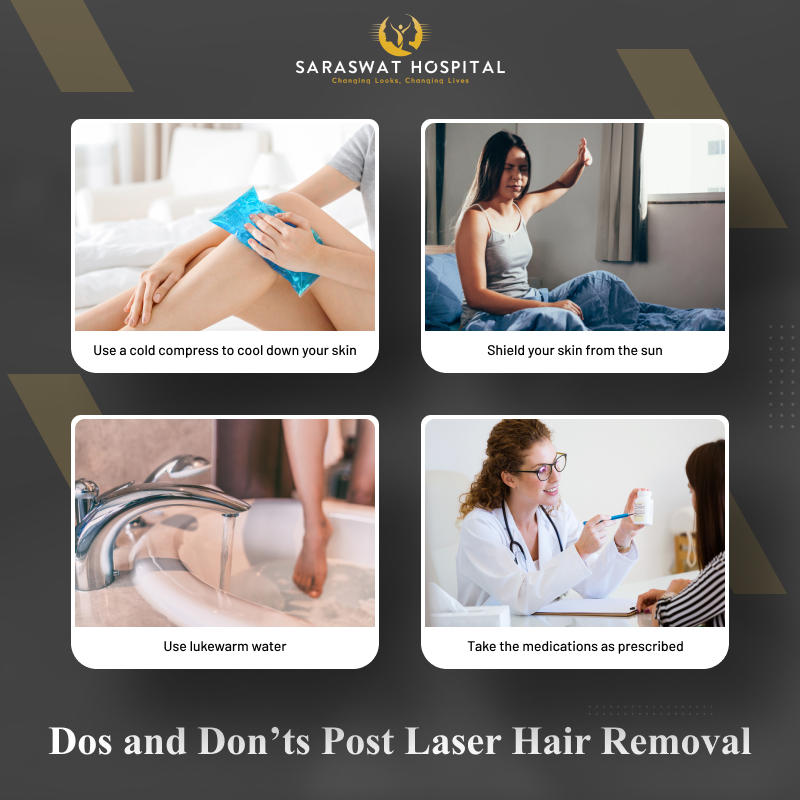
1. Use a cold compress to cool down your skin

The laser beams heat up your skin, and cooling it down can help you ease some of the burning sensation post-procedure. Use a soft, gentle cloth dipped in old water and apply it to the affected part of your skin. Alternatively, you can also use an ice pack wrapped in a towel and apply it to the skin in case of any swelling or redness.

Learn more: Skin care after laser hair removal

2. Take the medications as prescribed

If your cosmetologist has prescribed any cream or ointment to apply to the skin, make sure you use it. Similarly, if there are any anti-inflammatory drugs being given to you, take them as instructed.

3. Shield your skin from the sun

You need to keep away from direct sun exposure for at least a month after the procedure. Your skin is still sensitive at this point, and it can cause negative reactions. After the one-month period, make sure you apply lots of sunscreen before stepping out in the sun.

4. Use lukewarm water

Only take showers using lukewarm water for at least two weeks. Getting in contact with hot water can irritate your laser-affected skin. So, remember to always bathe in lukewarm water.

5. Use chemical-free and fragrance-free products

Use only natural and organic products for cleansing, scrubbing, and moisturizing. You need to treat your skin with gentle care after a laser hair reduction service. Using aloe vera gel would be your best option.
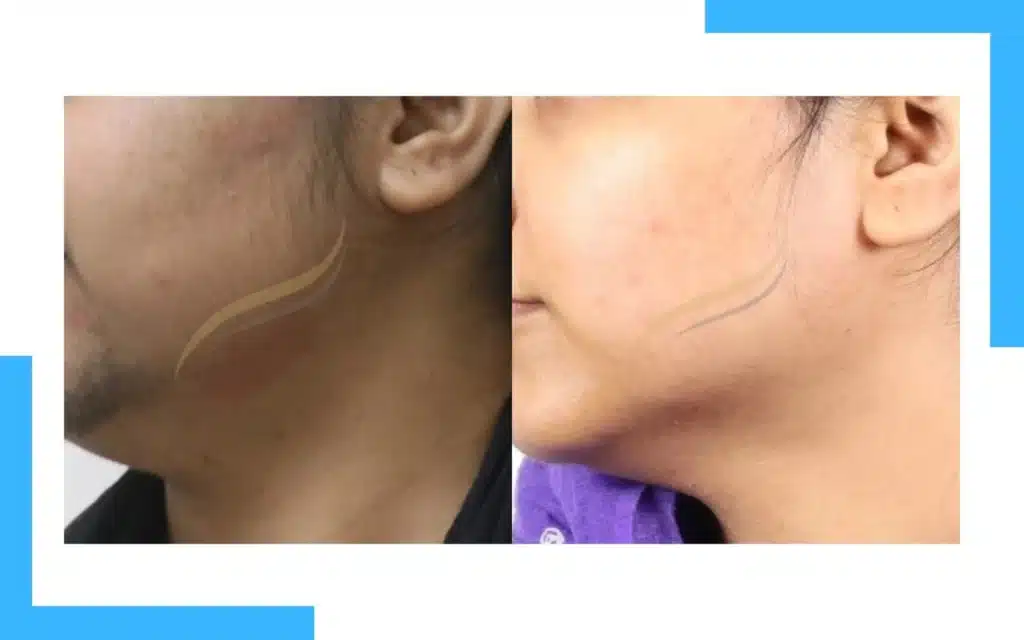
Laser Hair Removal Result

What Not To Do?

  • Do not book your next laser hair removal session till 4 to 6 weeks have passed. While multiple sessions are needed for effective results, give your skin the time to heal in between these sessions.
  • No waxing, tweezing, plucking, or shaving for a minimum of 4 weeks after the procedure. It will irritate your sensitive skin.
  • Avoid going out into the sun for one month. The exposure may increase your chances of getting a skin tan, sunburn, or hyperpigmentation. Tanning creams should also be avoided.
  • Do not use any fragrant or perfumed products, such as deodorants, body mists, or perfumes. They will end up irritating the laser-treated skin.
  • Do not use any chemically harsh products, such as moisturizers, creams, or shower gels. They may contain harsh chemicals, which will cause a negative reaction to the skin.
  • Avoid using body scrubs or other exfoliating products for at least two weeks. They will be harsh on sensitive skin.
  • Do not take any scalding hot showers for at least 7 days. Also, avoid using any sauna, steam rooms, or the jacuzzi.
  • Do not dip into the swimming pool. You must stay away from chlorine water and other harsh chemicals for at least a week.

Conclusion

Laser hair removal is a quick and effective procedure to permanently get rid of your unwanted body hair. At Saraswat Hospital in Agra, we have AAAM-certified cosmetologists who specialize in laser procedures. Patients need to follow the dos and don’ts instructions for the procedure to get successful results.

To get the best laser treatment, book an appointment with us today.

FAQs

1. What can I not do after getting laser hair removal?
No sun exposure, no hot water in the shower, no saunas, and no swims in the pool. No use of fragranced cosmetics on the treated area. Avoid doing vigorous exercises within 24–48 hours after the treatment session.

2. How can I maximize my laser hair removal results?
Shaving prior to the procedure, following the recommendations of your doctor, and not exposing yourself to the sun during the period of the treatment. Avoid waxing or plucking between sessions, and keep skin moisturized and protected with SPF daily.

3. What I wish I knew before laser hair removal?
Multiple sessions are required — usually 4–6. It can be mildly painful; choose the right doctor, results vary by person, and pre- and post-treatment care is crucial.

4. What are the downsides of laser hair removal?
It is expensive, needs several treatments, and not everyone finds it to be a permanent solution. It can also lead to temporary skin irritation or redness and even change skin pigmentation. Sun-sensitive skin needs extra care post-treatment.

5. What to expect one week after laser hair removal?
Hair that has been treated starts falling out, making it appear like the hair is growing back. The mild redness and irritation will subside within a few days. Skin becomes temporarily rough.

Follow us on:- FacebookInstagramPinterestYoutube

Medical Disclaimer

This article is for informational purposes only and does not constitute medical advice. Plastic, cosmetic, and laser treatments — including AI-assisted previews such as those generated by the Peek AI app — carry risks and results vary by individual. Always consult a licensed medical professional before undergoing any procedure.
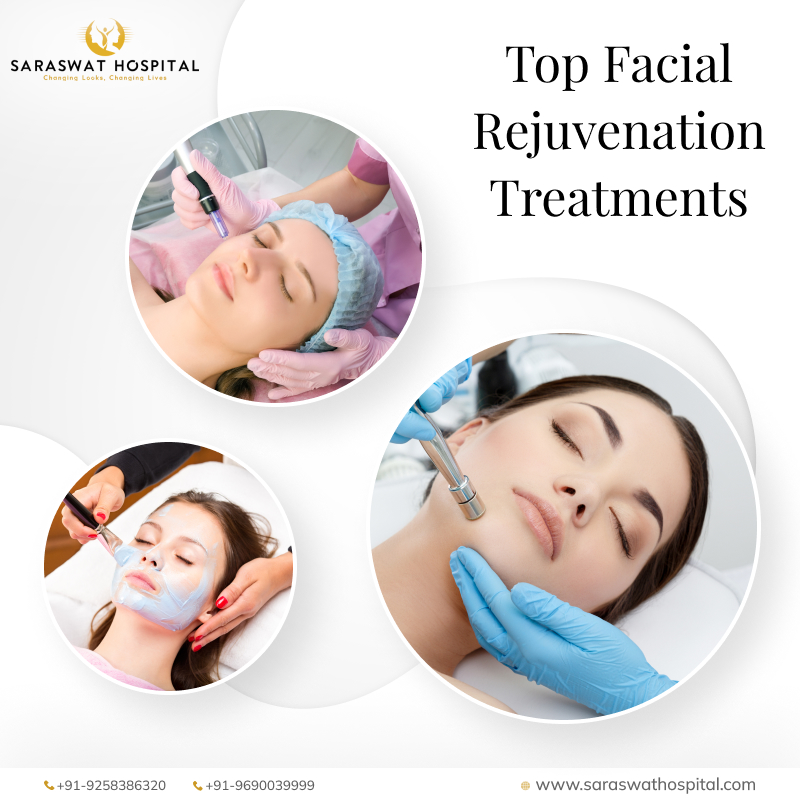
Facial Rejuvenation Treatments to Fight Acne Scars
Medically Reviewed By Dr. Preeti Saraswat, MBBS, ABHRS | Last updated: May 05, 2026

We, as a society, place a lot of value on our appearance. We often judge people on their looks and hence, feel conscious about our self-image. Acne scars are one thing that causes a lot of grief to many people. They are stubborn and refuse to go away, which makes some people feel anxious about their looks. Thanks to advancements in cosmetology, one can now opt for advanced acne scar treatment through various facial rejuvenation treatments. At Saraswat Hospital in Agra, we have AAAM-certified cosmetology expert Dr. Preeti Saraswat, who offers personalised treatment options for acne and other skin problems.

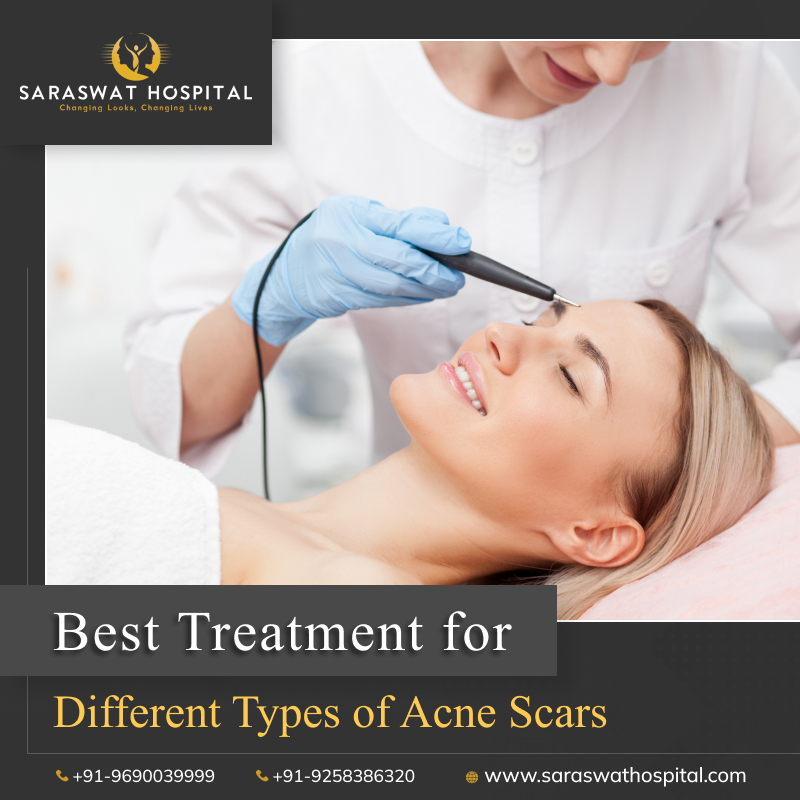
Below, we look at some popular methods for the improvement of Acne Scars used in Dermatology and Cosmetology (1).

Fractional CO2 Laser Skin Resurfacing

The fractional CO2 laser method is an effective acne scar treatment. Laser beams are targeted on the intended part of the skin to create small puncture wounds and damage the upper layer of the skin. This triggers the body to produce a higher level of collagen, which helps in healing the tiny wounds faster. A new layer of skin is formed in its place, which is known as skin resurfacing. This new layer of skin has visibly reduced acne marks. The patient gets brighter, younger-looking, and has radiant skin. This treatment also works well for signs of ageing and pigmentation marks.

Subcision

When acne happens, deep fibrous bands are formed between the acne scar and its underlying skin tissues. In the subcision method, a specialised needle is inserted into the skin to break down the acne scar’s fibrous bands. This treatment is effective in dealing with depressed acne scars. The insertion of the needle also kickstarts the process of collagen production, which further helps in reducing the acne scars.

Microdermabrasion

A handheld device, like a derma roller, is used for this particular method. The derma roller is applied to the face in long, straight motion, which creates a pathway of tiny wounds on the skin. This causes the body to produce collagen and elastin at a much faster rate, helping the wounds to heal faster. New skin resurfaces in the process. This acne scar treatment is useful for mild acne scars.

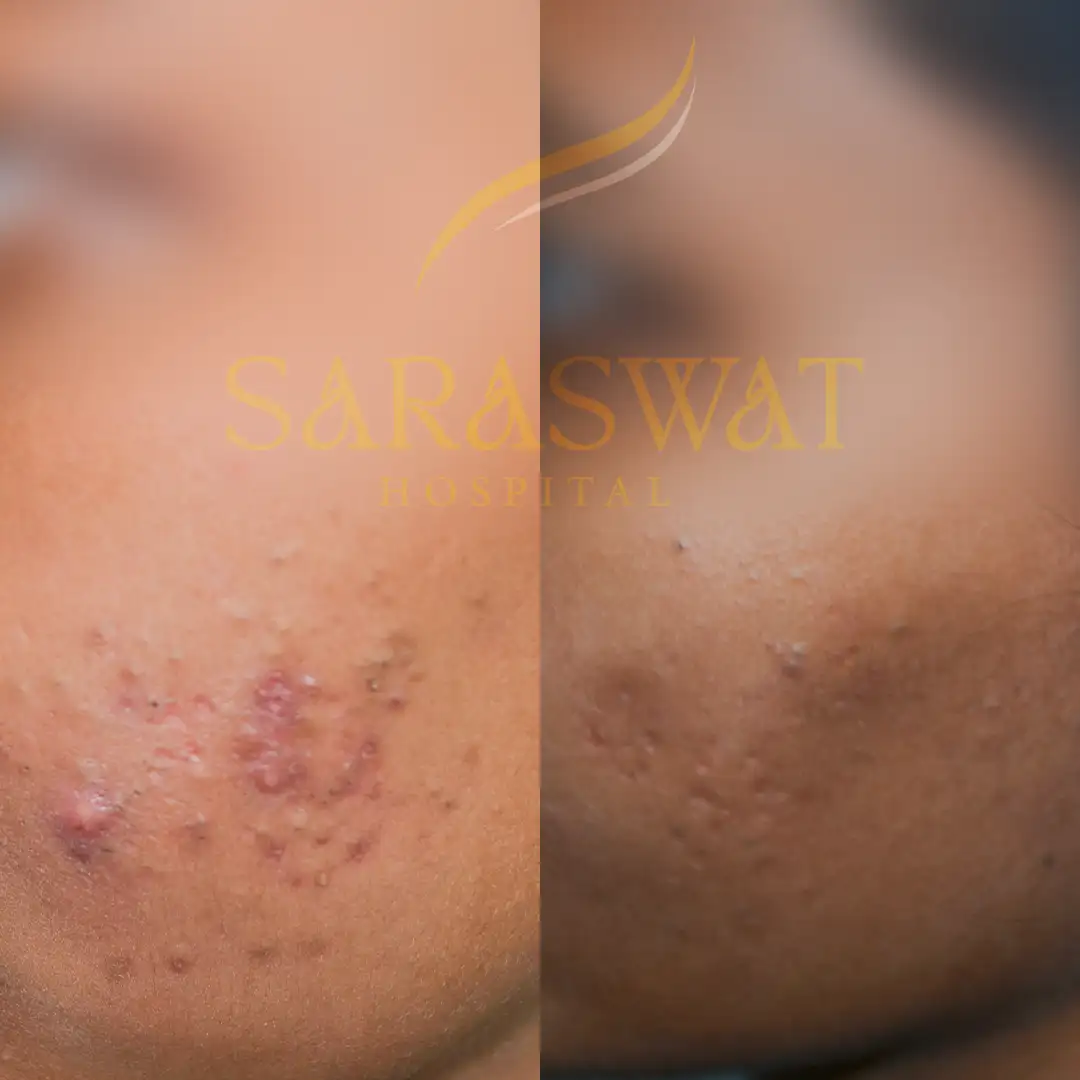
Acne Scar Treatment Results

Dermabrasion

This can help deal with severe acne scarring. A rapidly rotating device, such as a high-speed brush, is used to remove the uppermost layer of the skin. In the process, the surface-level scars get completely eliminated, and the deeper scars become less visible. The body also produces more collagen, which results in a new layer of skin resurfacing. This treatment can be used for all types of scarring, including hyperpigmentation.

Chemical Peels

In this method, purified fruit acids or synthesized chemical solutions are applied to the affected area of the skin. The solution is targeted at the concerned scar tissue with the intention of removing the upper layers of the skin. Applying the chemical peel stimulates more production of collagen in the body and promotes cell renewal to form new and brighter skin. This method visibly reduces the appearance of deeper acne scars.

Micro Needling

In this procedure, the intended part of the skin is repeatedly pricked by small microscopic needles over and over again. The goal here is to stimulate the production of more collagen and elastin in the body at a much faster rate. As the wounds heal and new skin forms, it visibly reduces light acne scars, fine lines, and wrinkles.

Conclusion

Acne scars are difficult to get rid of using over-the-counter cosmetic creams. At Saraswat Hospital, we have internationally certified experts specialised in facial rejuvenation treatments. We offer personalised acne scar treatment to patients based on the severity of their acne conditions. For more information, book an appointment with our team.

Sources:

(1) Popular methods for the improvement of Acne Scars used in Dermatology and Cosmetology. (PubMed Central)

FAQs

1. Which facial treatment is best for acne scars?
The best options include microneedling, chemical peel, and CO2 laser. Your doctor will advise you on the most suitable treatment depending on your skin color and scar type.

2. How to get rid of acne scars and get clear skin?
You should try professional treatments, such as a chemical peel or laser, and have a good skincare routine. It is essential to wear sunscreen, avoid touching your skin, and use retinol or niacinamide.

3. Which is better for acne scars, CO2 laser or microneedling?
Although the CO2 laser offers quicker results, it takes more time for recovery than microneedling. If you have a darker complexion, microneedling might be the better choice.

4. Does retinol help with acne scars?
Retinol enhances cellular turnover and lightens post-inflammatory hyperpigmentation gradually. It is most effective against superficial pigmentation rather than deeper scars. Apply regularly during the evening hours to see results.

5. At what age is it worst for acne?
Acne occurs most frequently during adolescence, specifically between 14-20 years old, because of hormonal changes during puberty. Adult acne is also prevalent among females aged 20-40 years.

Follow us on:- FacebookInstagramPinterestYoutube

Medical Disclaimer

This article is for informational purposes only and does not constitute medical advice. Plastic, cosmetic, and laser treatments — including AI-assisted previews such as those generated by the Peek AI app — carry risks and results vary by individual. Always consult a licensed medical professional before undergoing any procedure.
What are the Factors Influencing Cost of Laser Hair Removal?
Medically Reviewed By Dr. Preeti Saraswat, MBBS, ABHRS | Last updated: May 05, 2026

Are you tired of making a salon visit every 3-4 weeks to wax your arms and legs? Feeling unsatisfied with the poor results of shaving your unwanted hair? Well, there’s no need to worry! You can choose the quick and effective solution of a laser hair removal procedure to get rid of your body hair. The laser beams completely destroy the hair follicles, thus giving you permanent hair removal results with zero side effects. At Saraswat Hospital in Agra, we have internationally-certified skin experts who guarantee a safe and painless procedure. But before you book your first session, it’s important to understand the cost of laser hair removal and what factors can make it vary from person to person.

Unwanted hair removal using laser treatment is applicable for both men and women. It is popular because it is safe, painless, hassle-free, saves time, and has no side effects. In terms of cost, laser hair removal can be expensive. But it is far more cost-effective in the long run because of the long-lasting results.

What is the Cost of Laser Hair Removal?

This is among the most asked questions by patients. The cost of laser hair removal actually depends on a variety of different factors. We discuss them below:

A. Size of the Treatment Area

Laser hair removal is suitable for almost every part of the body. This includes arms, underarms, legs, back, chest, face, upper lip, chin, and bikini line. The cost of the procedure will depend on which part of the body you want to get treated. If it is a smaller area like the upper lip, chin, or face, the cost will be on the lower side. But if you want to go for hair removal on a larger area like the back, chest, arms, or legs, then the cost will be higher.

B. Number of Sessions Required

Since the laser beams are only effective against hair that is in the active phase of growth, the same area of the skin has to be treated multiple times to destroy all the hair follicles in that area permanently. So, the cost may vary based on the number of sessions.

C. Skin Colour

Your skin tone and skin colour are important factors in the effectiveness of laser treatment. Patients with darker skin tones need a greater number of sessions to complete a treatment as compared to patients who have lighter skin tones. As a result, the cost also increases.

D. Hair Colour

When the laser beams destroy a hair follicle, they are essentially trying to remove the hair pigment from your skin. So, patients with darker-coloured hair need fewer sessions than patients with lighter-coloured hair. This again influences the final cost of the procedure.

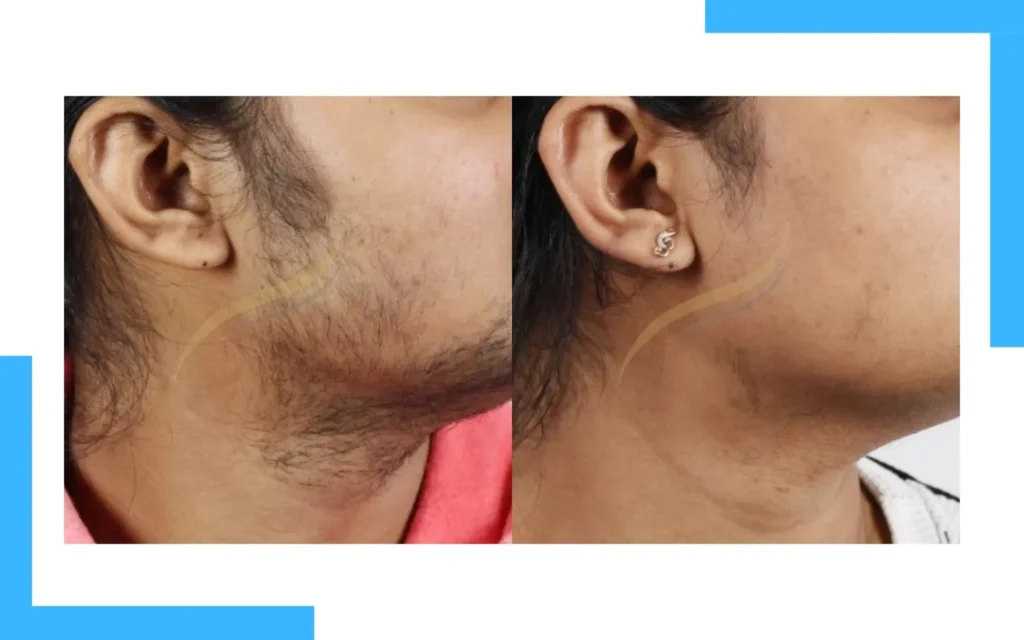
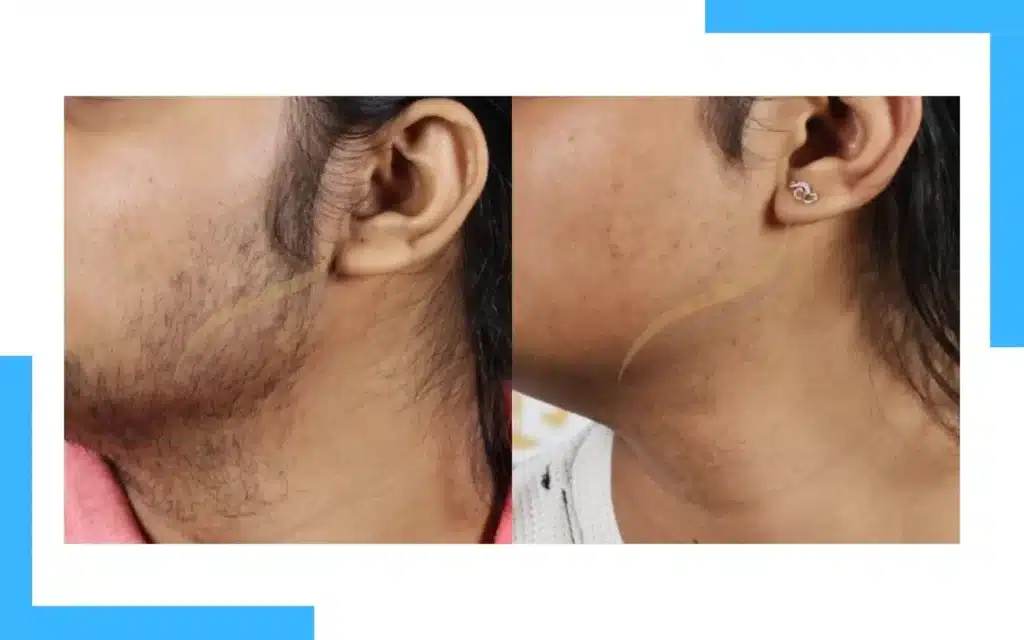
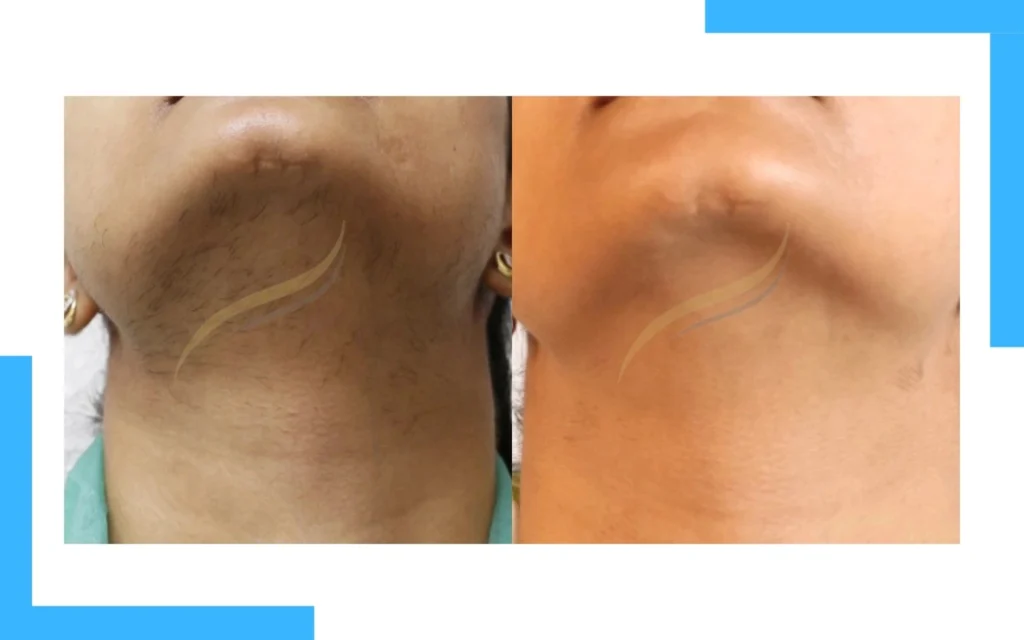
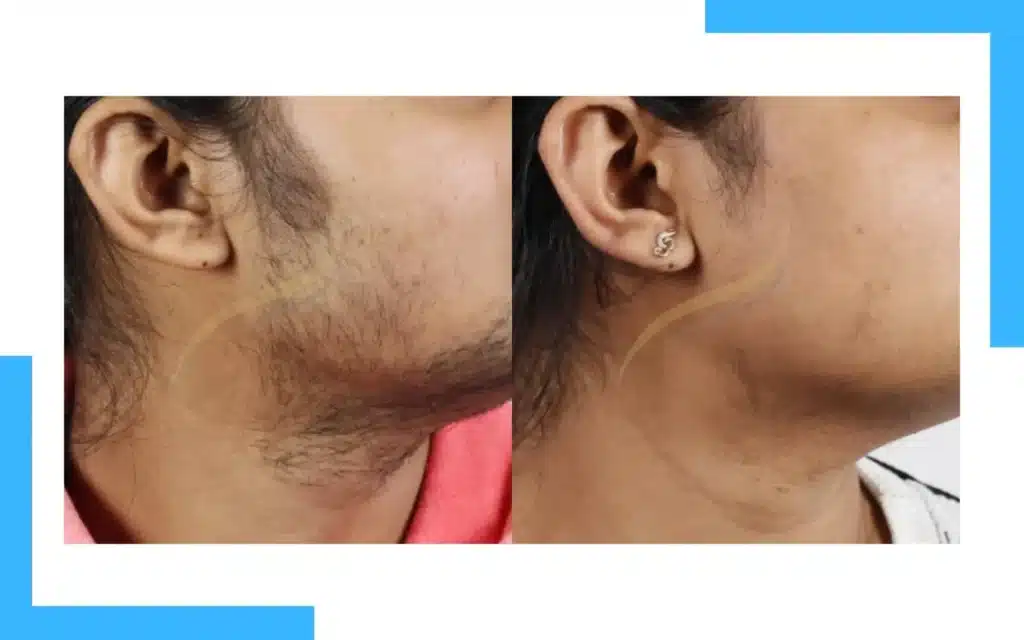
Chin Laser Hair Removal Result

E. Hair Density

The price is also influenced by how much body hair a person has. People who have a higher density of body hair will have to pay more than people who have less hair. This is because the former will need a larger number of sessions to get rid of all unwanted hair.

F. Hair Texture

The texture of your hair is also a significant factor. A person with rough hair will need to go through more sessions of the laser procedure, vis-à-vis a person with softer hair. And if you have more sessions, then your cost will go up.

G. Choice of Laser Equipment

The type of equipment used for laser hair removal is an important factor in determining the cost. You must choose a reliable and trustworthy clinic that only uses the latest and technologically advanced laser machine for the procedure.

H. Experience of the Doctor

Qualified and certified doctors should perform laser-based procedures to ensure safety and effectiveness. When consulting with a qualified and experienced cosmetologist, expect to pay higher fees.

Conclusion

At Saraswat Hospital, we provide safe laser hair removal in Agra at affordable rates. While the cost of laser hair removal may vary for each patient, you can be assured that the many benefits absolutely justify the final cost. Book an appointment to find the best laser hair removal treatment for you.

Follow us on:- FacebookInstagramPinterestYoutube

Medical Disclaimer

This article is for informational purposes only and does not constitute medical advice. Plastic, cosmetic, and laser treatments — including AI-assisted previews such as those generated by the Peek AI app — carry risks and results vary by individual. Always consult a licensed medical professional before undergoing any procedure.
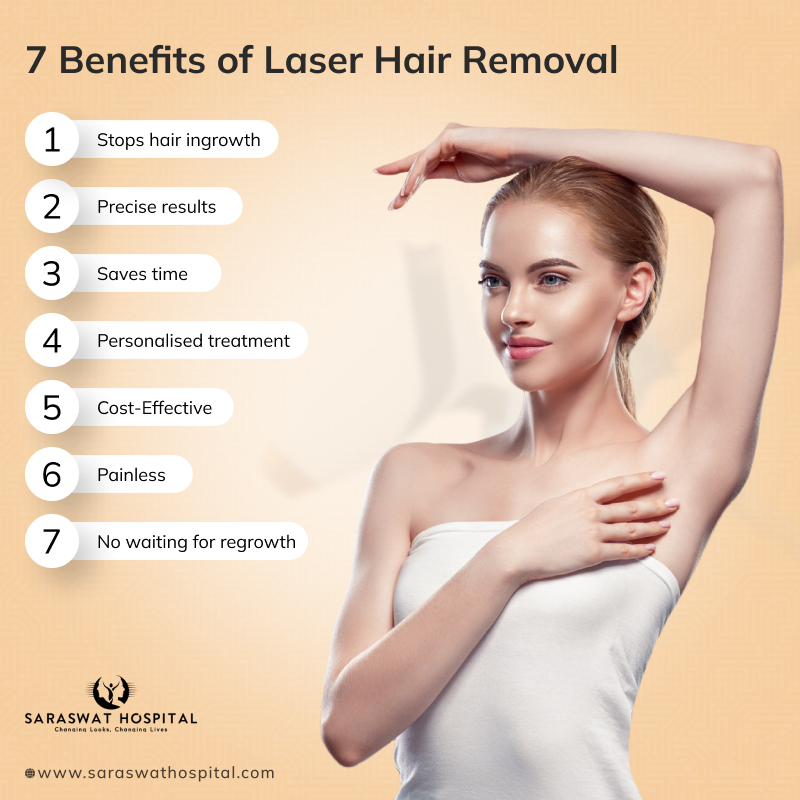
Top 7 Benefits of Laser Hair Removal Treatment
Medically Reviewed By Dr. Preeti Saraswat, MBBS, ABHRS | Last updated: May 06, 2026

Unwanted body hair is a hassle that no one wants to deal with. In today’s society, where looks and grooming have become so important, people want to flaunt their smooth, hairless skin. Waxing and shaving are one way to eliminate body hair, but the results are often unsatisfactory. This is why many people nowadays opt for laser hair removal treatments. During this procedure, the high intensity of the laser destroys the hair follicle underneath the skin. It is a safe and painless procedure that ensures permanent hair removal results. We’ll explore the 7 benefits of laser hair removal and why it might be the perfect solution for smooth, hair-free skin.

Discover the 7 Benefits of Laser Hair Removal

Laser hair removal is more than just a beauty treatment—it’s an investment in convenience and confidence. Here are the top 7 benefits of laser hair removal that make it worth considering:

1. Saves Time

Other alternatives, like waxing and shaving, require a lot of time and effort. Both processes need to be repeated every 3-4 weeks to maintain completely hairless skin. One ends up spending a lot of their hours in the salon due to this.

With laser treatments, each session doesn’t take more than 30 minutes. Since the laser machine targets multiple hair follicles simultaneously, it becomes a quick procedure. The results are precise and effective, thus saving time.

2. Cost-Effective

In India, a salon appointment for hands and leg waxing charges between Rs. 800 – Rs. 2000 based on the kind of parlour you visit. Imagine spending this much every month! And if you prefer the shaving method, then calculate the estimated cost of razors, shaving creams, and lotions that you spend monthly.

Now compare the waxing and shaving costs to the one-time price of a laser hair removal procedure. Once you finish the treatment, the results are permanent. So, even if the price is a little on the higher side, think of it as a lifetime investment. Hence, laser treatments are cost-effective in the long run.

3. Painless

In waxing, the hair follicles are forcefully uprooted from their roots. It is an uncomfortable and often painful experience for most people. With shaving, there are chances of small cuts or nicks, which may cause minor bleeding.

Using laser treatment for unwanted hair removal involves zero pain. At most, patients may feel a similar sensation of a small pinprick. There is no other discomfort or side effect. The laser hair removal procedure is completely safe, painless, and comfortable.

Facial Laser Hair Removal Result

4. Personalised treatment

The settings in the laser machine can be customised as per the individual skin colour and skin tone of the patient. Always choose a reputable clinic where certified experts perform the procedure.

5. Precise results

Thanks to the advancement in technology, the laser machine targets only a specific part of the body. Hence, laser procedures are the best way to remove unwanted hair from selected areas such as the upper lip, chin, or bikini line. The procedure gives you precise results.

6. Stops hair ingrowth

In a laser procedure, the microbeams destroy the hair follicle from underneath the skin (1). The laser completely destroys the hair root from within, eliminating any chances of ingrown hair on the skin.

7. No waiting for regrowth

One big problem with hair removal via waxing is that people have to allow the body hair to grow up to a certain point. If there is not enough hair to pull, waxing cannot be done properly. With laser hair removal, there is no need to wait for this hair regrowth to happen. The procedure can be performed at any time if the hair is in the active (anagen) phase. Also, it’s important to follow proper laser hair removal aftercare to ensure the best results.

Is Laser Hair Removal Worth It?

Yes, these 7 benefits of laser hair removal show why it’s the preferred choice for permanent hair reduction. It’s convenient, effective, and safe, helping you achieve smooth, confident skin with minimal effort.

Conclusion

Laser hair removal is a great way to eliminate unwanted body hair. But one must be very careful while choosing a cosmetic clinic. Make sure you find a reputable clinic that uses FDA-approved equipment to ensure a safe and painless experience. If you want a place for laser hair removal in Agra or nearby cities, then choose Saraswat Hospital in Agra. We have certified cosmetologists who offer personalised treatments. Book an appointment to find the best laser hair removal treatment for you.

Sources:

(1) Laser hair removal procedure destroys the hair follicle from underneath the skin. (Medical News Today)

Follow us on:- FacebookInstagramPinterestYoutube

Medical Disclaimer

This article is for informational purposes only and does not constitute medical advice. Plastic, cosmetic, and laser treatments — including AI-assisted previews such as those generated by the Peek AI app — carry risks and results vary by individual. Always consult a licensed medical professional before undergoing any procedure.
Busting the Most Common Myths About Acne
Medically Reviewed By Dr. Preeti Saraswat, MBBS, ABHRS | Last updated: May 07, 2026

Acne is a common sight. Tiny or large swellings that look reddish and are quite painful, break out on your face and give you an undesirable appearance. Most people tend to prick it, thinking it to be the end, but sadly, it is not so. Bursting acne causes trauma to your skin and leaves behind dark spots, or what we commonly call acne scars. Sadly, there are a lot of myths related to acne surrounding us. Before opting for any treatment, it is important to get a clearer view of the most common myths about acne.

Top 7 Common Myths About Acne

Getting to the depths of the common myths about acne will reveal the facts that remain shrouded and should necessarily surface. Here are those common myths that must be busted!

# Myth 1: Pollution causes acne

This is quite a common belief, but you need to know better. Acne occurs because of a bacterium called Propionibacterium acnes. Hormonal imbalances can also be held responsible for the acne outbursts, but it is not the only reason. Moreover, keeping your skin safe from pollution is a good thing, irrespective of the fact that it does not lead to acne.

# Myth 2: Unhealthy food habits trigger acne

People widely believe that excessive consumption of oily food items makes the skin unclear with clogged pores (1). This, in turn, leads to acne. But let us tell you that it is not so. Food items that have a high glycaemic index and dairy products give rise to acne eruptions. Research has shown that there is no link between oily food and acne outbursts.

# Myth 3: Acne eruptions are common only among teenagers

A man or a woman, a boy or a girl, all can get acne. There is neither any gender nor age for the acne outbursts. So, the belief that only teenagers suffer from painful acne outbursts is completely wrong. Adults in their 30s, 40s, and even 50s suffer from the brunt of acne. At Saraswat Hospital, we provide acne scar treatment for individuals who are above the age of 18 years old.

Acne Scar Treatment Results

# Myth 4: Blackheads are different from acne

You will be surprised to learn that blackheads are another form of acne. As a matter of fact, acne is an umbrella term for cysts, nodules, whiteheads, pustules, and blackheads. All these look different but are categorised under acne. Please remember it is advisable that you do not touch them with unclean hands or tamper with them, as it will cause you pain and might lead to severe scarring.

# Myth 5: Acne is a manifestation of a stressed mind

It might just be a coincidence that you get acne at the same time when you are stressed out. But there is no connection between the two. However, we can argue over this because when you are stressed out, your hormones might fluctuate, and as a result, you suffer from acne outbursts. If you keep getting acne that causes you pain and embarrassment, get professional help immediately.

# Myth 6: Avoiding makeup on acne is good

There is nothing good or bad about applying cosmetic products to the acne. It is just that putting makeup on acne only hides it from glaring on your face. Doing so will not cause any harm or prevent a series of acne outbursts from occurring. However, it is important to remove the makeup before going to bed as it helps your skin to feel fresh and breathe.

# Myth 7: Scrubbing and cleansing can help acne disappear

Yes, using a good face wash, a scrubber, a cleanser, and a toner is a good skincare regimen and keeps your skin replenished. But it certainly does not help the acne to subside or disappear. Especially using a scrubber might hurt the tender spots, causing further swelling, pain, and discomfort. If you really want the acne to leave your back, go for a specialised treatment.

Conclusion

Saraswat Hospital offers you safe and effective acne scar treatment at an affordable cost. The treatment diminishes acne scars, and also the progress of the sessions reduces the acne outbursts. If you are tired of seeing acne and acne scars on your face, you must visit Saraswat Hospital and get professional guidance from their AAAM-certified experts. Book an appointment and get rid of these stubborn acne today.

Sources:

(1) People widely believe that excessive consumption of oily food items makes the skin unclear with clogged pores. (PubMed Central)

FAQs

1. Do foods really cause acne?
Foods may cause acne since high-glycemic foods and dairy can trigger acne because of the rise in insulin levels in the body. Still, there is not enough evidence to confirm that consuming foods actually causes acne.

2. How to 100% prevent acne?
While there is no foolproof way to 100% avoid getting acne, having clean skin, a healthy diet, hydration, keeping hands off the face, and using non-comedogenic products reduces the likelihood of breakouts.

3. Is acne 100% genetic?
Though genetics plays an important part in having acne, many other factors contribute to whether someone develops acne.

4. What is the No. 1 cause of acne?
Excessive secretion of oil/sebum is the key factor. Oil gets accumulated, blocks pores, and causes bacterial growth along with inflammation.

5. Can drinking water improve your skin?
Indeed, it helps cleanse the body of toxins, keeps skin supple, and prevents dry skin patches. However, drinking water alone can’t treat acne problems; it supports overall healthier, clearer-looking skin.

Follow us on:- FacebookInstagramPinterestYoutube

Medical Disclaimer

This article is for informational purposes only and does not constitute medical advice. Plastic, cosmetic, and laser treatments — including AI-assisted previews such as those generated by the Peek AI app — carry risks and results vary by individual. Always consult a licensed medical professional before undergoing any procedure.
Dos & Don’ts of Fractional CO2 Laser Treatment
Medically Reviewed By Dr. Preeti Saraswat, MBBS, ABHRS | Last updated: May 07, 2026

Acne is one of the most common skin problems that affects individuals irrespective of gender and age. While some people suffer from acne during puberty, many struggle with acne scars throughout their lives. Acne scars can have a very bad impact on people as they can lower their confidence and make them feel insecure. However, fortunately, people nowadays don’t have to live with their acne scars, unlike in yesteryears. With acne scar treatments such as Fractional CO2 Laser Treatment, one can bid goodbye to their acne scars. However, one should keep in mind to get such treatments from reputed cosmetic clinics such as Saraswat Hospital for the best results.

What is Fractional CO2 Laser Treatment?

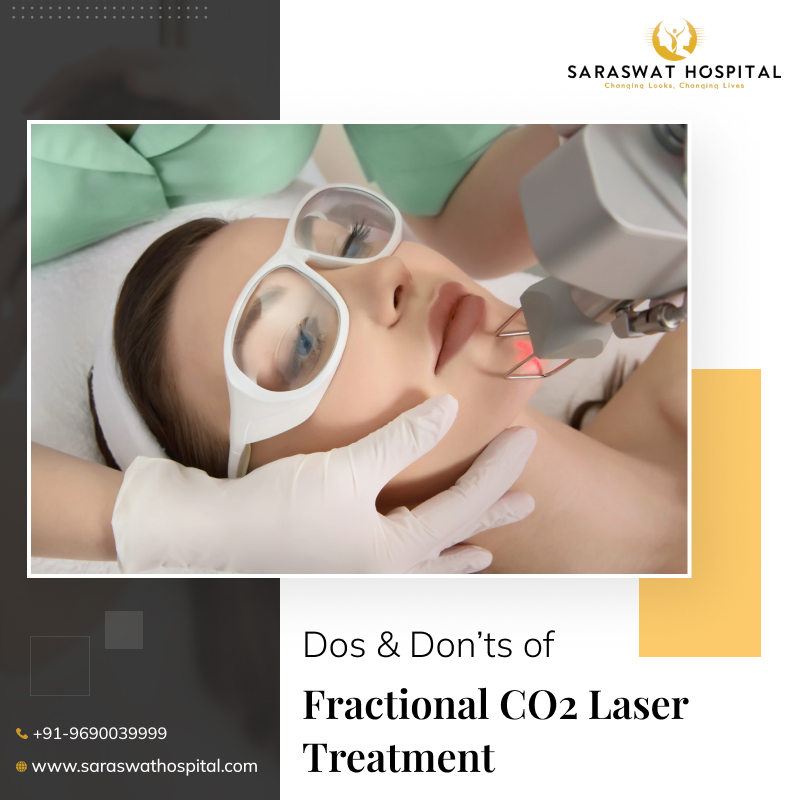
Fractional CO2 laser treatment is a non-invasive skin treatment for treating acne scars. With the help of laser beams, the physicians reduce the appearance of acne scars. To explain clearly, in the affected area, doctors send laser microbeams to create tiny punctures. These microscopic holes on the skin trigger the body to produce more collagen that heals the tiny wounds completely and allows new skin to develop naturally in their place. The new skin covers the wounds, reduces the acne scarring, and adds a healthy and glowing look to the area. Since the process is non-surgical and allows the skin to heal naturally, it is one of the safest acne scar treatments available.

The effectiveness of the Fractional CO2 Laser Treatment lies in the fragmented nature of the procedure. As it is a spot treatment, the laser beams are not passed over all parts of the skin. This boosts the recovery time, and the effectiveness of the results increases.

Acne Scar Treatment Results

Essential Dos & Don’ts Before and After the Procedure

A patient undergoing Fractional CO2 laser treatment must follow a few instructions before and after the procedure.

Pre-Treatment Instructions

Dos

  • Notify the doctor if you have a history of cold sores, so that you can take medications before the treatment day
  • Eat a light breakfast before the treatment
  • Make sure that someone is there to accompany you after the treatment
  • Wear comfortable clothes that are loose-fitting
  • Do make sure to bring a large hat with you when you visit

Don’ts

  • Don’t expose yourself to the sun. Keep in mind to avoid the sun one week before the treatment. Always make sure to wear a broad-spectrum sunscreen.
  • Don’t apply products that can irritate the skin, such as AHAs and retinoids, at least one week before the appointment.
  • Female patients should not wear makeup, lotion, or perfume around or on the area where they will receive the treatment. Male patients can shave in the morning, but should not apply any lotion or aftershave on or around the area on the appointment day.
  • Don’t wear contact lenses. They should be removed before the procedure. If required, patients can bring their eyeglasses.

Post-Treatment Instructions

Dos

  • For the first 2 to 3 days, apply an ice pack wrapped in a clean and soft cloth to the area that has received treatments. Apply these 1 to 5 times a day. After 3 days, apply the ice pack as and when required.
  • Gently wash the area with diluted white vinegar and water in the morning and the doctor’s prescribed soap at night or as suggested by the doctor.
  • Only apply the doctor’s prescribed ointments.
  • Use distilled water to clean the treated area.
  • Keep the treated area covered with a band-aid and change it two times a day after cleaning the area.

Don’ts

  • Avoid direct sunlight.
  • Don’t rub, pick, or scratch your eyes.
  • Avoid heavy exercise for a minimum of three days.
  • Avoid salty food.
  • Don’t apply makeup or sunscreen for at least three days.
  • Don’t apply any over-the-counter ointments to the area.
  • Don’t use sauna, swimming pools, hot tubs, or go for a bath for 1 to 2 weeks after the treatment.
  • Don’t shave the treated area.

Remember After Fractional CO2 Laser Treatment

After going through the fractional CO2 laser treatment, keep the affected area moisturised. This will help the skin to heal faster and better.

Conclusion

Fractional CO2 laser treatment effectively fights acne scars and also gives you rejuvenated, radiant skin. When you decide to go for such acne scar treatment, it is always better to know about the necessary dos and don’ts so that you can prepare yourself beforehand. However, make sure you choose a safe and respectable clinic for the best results. Book an appointment today to get the best laser treatment to keep your skin radiant and rejuvenated.

FAQs

1. How do you take care of your skin after a CO2 fractional laser?
Ensure your skin is clean, apply an ice pack wrapped in a clean and soft cloth, apply the recommended healing cream, stay out of the sun, avoid wearing makeup, and adhere to your doctor’s recommendations on post-treatment skincare.

2. What foods should I avoid after a laser?
Avoid spicy foods, salty meals, processed foods, alcohol, and citrus fruits. They contribute to swelling, inflammation, and delayed healing.

3. How can I speed up CO2 laser healing?
Drink plenty of water, apply healing creams gently, rest your head high when sleeping, avoid picking your skin, and follow all post-procedure recommendations. Proper nutrition hastens wound healing.

4. How to avoid hyperpigmentation after CO2 laser?
Use SPF 50+ sunscreen, avoid sunlight exposure, wear headgear when you go out, and use prescribed skin brighteners or barrier creams.

5. How can I improve my facial results after the CO2 laser?
Develop a regular skin care regime, avoid picking at treated skin, drink plenty of water, and keep follow-up visits. Staying hydrated and eating healthy enhances your facial outcome.

Follow us on:- FacebookInstagramPinterestYoutube

Medical Disclaimer

This article is for informational purposes only and does not constitute medical advice. Plastic, cosmetic, and laser treatments — including AI-assisted previews such as those generated by the Peek AI app — carry risks and results vary by individual. Always consult a licensed medical professional before undergoing any procedure.
What are the Common Causes of Hair Loss?
Medically Reviewed By Dr. Preeti Saraswat, MBBS, ABHRS | Last updated: May 16, 2026

The natural hair growth cycle is divided into anagen, catagen, and telogen. This refers to the growing phase, the transition phase, and the resting phase, respectively. In the resting phase, hair gets detached from the root before it finally sheds. This type of hair shedding is part of the natural cycle. We lose about 50-100 hair strands daily on average.

Hair loss affects millions worldwide, and understanding the common causes of hair loss is the essential first step toward effective hair loss treatment. In Agra and surrounding regions, Saraswat Hospital specializes in diagnosing and treating hair loss, recognizing that the most common causes of hair loss are genetic, hormonal, nutritional, or lifestyle-related. When you visit a hair loss specialist for professional treatment, a thorough investigation of the root cause of your hair loss is the foundation of any effective treatment plan.

When you go for professional hair loss treatment, the first course of action taken is to investigate the root cause of your hair loss problem. Below, we look at the detailed common causes of hair loss that may result in advanced hair loss conditions.

What Are The Possible Common Causes of Hair Loss?

In order to plan the best hair loss treatment, it’s crucial to diagnose the common causes of hair loss behind your hair loss. Share your medical history and current medications with your doctor and help him/her plan the best treatment for you. 

Genetic Factors

Androgenetic Alopecia refers to hair loss caused by hereditary factors. This type of hair loss affects both men and women. Over 80 percent of men and close to 50 percent of women lose their hair due to this condition.

Androgenetic Alopecia in men is known as male pattern baldness. General characteristics include a receding hairline in the front and sides, a thinning crown area, and diffuse thinning all over the scalp. In women, it is referred to as female pattern baldness. A common symptom is a widening middle partition in the centre of the scalp. The treatment for genetic hair loss includes medication, low-light therapy, hair transplants, and scalp micropigmentation.

Hair Loss Before and After Result

Hormonal Imbalance

Any significant change in a person’s regular hormone levels can cause serious hair loss. Hormonal changes can happen due to thyroid problems, pregnancy, and childbirth, among other reasons. The hair loss treatment will vary based on the type of hormonal imbalance happening in one’s body.

An overactive or underactive thyroid gland causes hair to fall in a general pattern. Medication keeps your thyroid levels at a normal range. This contains the hair loss problem.

The hair loss after giving birth is temporary in nature. As soon as the estrogen levels in the body become stabilised, the hair loss stops.

Lack of Nutrition

Our hair needs the proper vitamins, minerals, and nutrients to grow nicely. Without sufficient nutrition, hair becomes weak and brittle, ultimately resulting in hair loss.

Your daily diet should be rich in protein, zinc, iron, vitamin E, vitamin D, vitamin B, selenium, omega-3 fatty acids, and more. Fresh fruits, green vegetables, eggs, seafood, chicken, nuts, and pulses are some of the essential foods one must consume to grow healthy hair. You can also ask your doctor about foods that reduce hair loss and promote new hair growth.

Medical Factors

There are plenty of medical factors that can cause hair loss. A person may suffer from autoimmune diseases such as Alopecia Areata, anaemic conditions, or scalp infections.

Alopecia areata is a type of autoimmune disease in which the white blood cells in one’s body attack the hair follicles. This causes hair fall with circular bald patches seen all over the scalp.

Bacterial or viral infections on the scalp or blood-borne diseases like anaemia can also contribute to hair loss. Cancer patients undergoing chemotherapy or radiation may also suffer from hair loss.

If you’re clueless about which doctor you should consult for your hair loss treatment, watch this video: 

Conclusion

These are some of the most common causes of hair loss, as explained. Visit a hair doctor to treat the cause of hair loss. If you live in Agra or a nearby city, visit the best hair specialist in Agra at Saraswat Hospital. Our ABHRS-certified doctors provide customized treatment based on individual hair loss conditions. Book an appointment today to get the best hair loss treatment.

Follow us on:- FacebookInstagramPinterestYoutube

Medical Disclaimer

This article is for informational purposes only and does not constitute medical advice. Plastic, cosmetic, and laser treatments — including AI-assisted previews such as those generated by the Peek AI app — carry risks and results vary by individual. Always consult a licensed medical professional before undergoing any procedure.
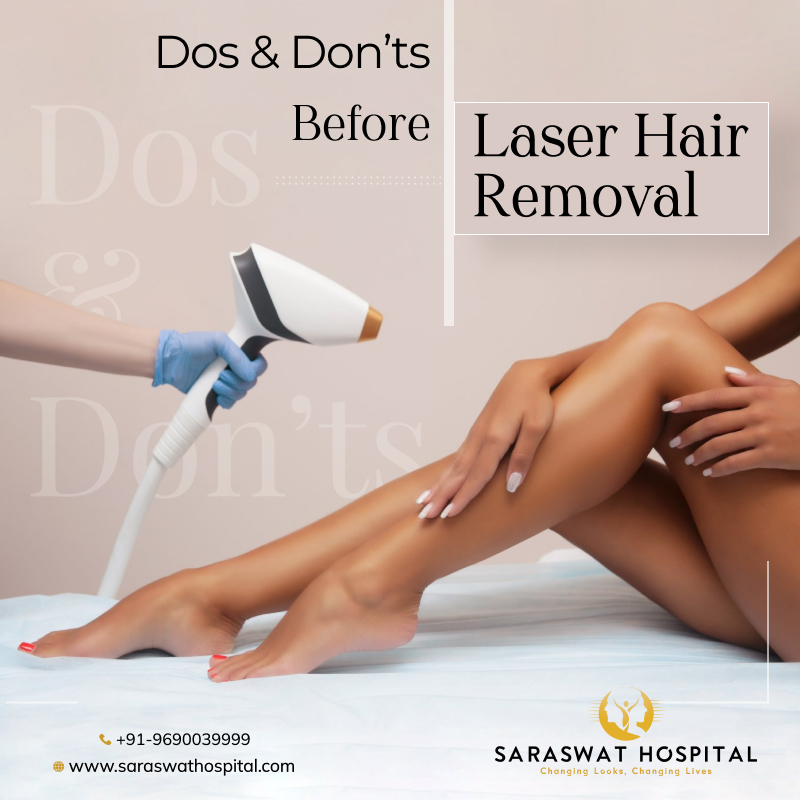
Dos & Don’ts Before Laser Hair Removal
Medically Reviewed By Dr. Preeti Saraswat, MBBS, ABHRS | Last updated: May 16, 2026

Are you absolutely exhausted with the traditional methods of hair removal? Do you feel there is more hassle than benefit in waxing and shaving? Well, then, it is time that you look at other avenues to eliminate your unwanted body hair. Go for a permanent hair removal procedure with the help of laser treatment. If you’re living in Agra and looking for a safe and advanced clinic, then Saraswat Hospital is the best choice for laser hair removal in Agra. Let’s discuss some necessary precautions before laser hair removal.

Before undergoing laser hair removal, several key precautions should be followed to ensure the best results. Avoid waxing, threading, or plucking for 4-6 weeks as the laser needs intact hair roots to target effectively. Similarly, steer clear of sun exposure and tanning, stop bleaching the area, and do shave the treatment area 24–48 hours before your session, as this clears surface hair while keeping the roots intact for precise targeting. Finally, arrive with completely clean skin free of makeup, creams, moisturisers, and oils to allow the laser to work at its full efficiency.

What is Laser Hair Removal?

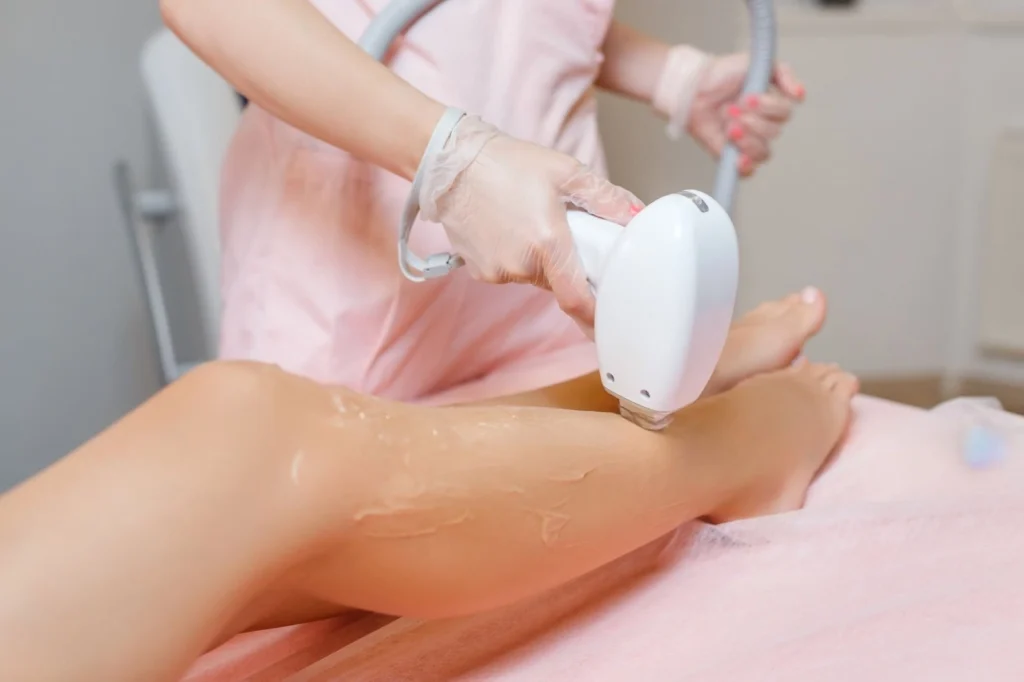
Laser hair removal is a cosmetic procedure that targets a particular intended area to completely eliminate body hair. It is a safe and painless technique to get rid of all the unwanted hair growth from every part of the body. It is applicable for your arms, underarms, legs, bikini line, face, upper lip, back, chest, and stomach.

Our body hair grows in three stages: anagen, catagen, and telogen. Anagen is the active hair growth phase. During a laser hair removal procedure, the intended skin of the area is exposed to high-power laser beams. This completely destroys all the hair follicles from deep within the skin’s surface, thus stopping hair growth permanently. But the laser can only reach those hairs that are in the anagen phase, so multiple sessions are required for flawless results. The settings on the laser machine are changed as per the patient’s skin tone and body hair density.

At Saraswat Hospital, we have AAAM-certified doctors and specialists who are supported by the latest technology and state-of-the-art equipment. We offer the best treatment for laser hair removal in Agra.

Necessary Precautions Before Laser Hair Removal

Taking proper precautions before laser hair removal is essential for a safe and effective treatment. Avoid sun exposure and tanning for at least two weeks prior, as tanned skin can increase the risk of burns or discolouration. Shave the treatment area 24-48 hours before the session to ensure the laser targets the hair follicle effectively, but avoid waxing or plucking, as these remove the hair root needed for the procedure. Refrain from using skincare products with retinoids or acids for a week before treatment to prevent irritation. Finally, consult with a qualified technician to discuss your skin type, medical history, and any medications to minimise potential side effects.

No waxing, threading, or plucking

As explained above, the laser hair removal procedure only works on hairs that are in the active growth phase. Hence, it is advised to avoid treatments like waxing, threading and plucking for at least 4-6 weeks before your appointment. This is done to preserve the roots of your hair follicles, since the laser beams aim to target the hair roots for body hair elimination. If you do any waxing or plucking, then the laser will have nothing to aim for.

Facial Laser Hair Removal Result

Avoid sun exposure and tanning

Long hours of sun exposure can lead to sun tan, skin discolouration, and sunburn. The settings on the laser machine are adjusted as per the patient’s skin tone and skin colour. Hence, a change in your skin tone may reduce the effectiveness of the treatment. This is why patients must keep out of the sun for 2-4 weeks prior to their appointment. Moreover, if a patient gets sunburn, then it may cause immense pain and blisters to undergo the procedure. Most likely, the laser appointment will get rescheduled to another date.

Say no to bleaching

Like tanning can alter the skin tone, applying bleach to your skin changes the hair pigment or colour of the hair root. This can confuse the settings of the laser machine and produce ineffective results. To avoid such a thing, patients must stop bleaching 6 weeks before their laser hair removal appointment. This will give enough time for your hair roots to go back to their natural pigment.

Shave the area

It is advised to shave the intended area 24 to 48 hours before the laser hair removal procedure. Shaving does not remove the hair root, but clears the skin surface of extra hair growth. This allows the laser machine to precisely target the pigment in each hair root hidden under the skin’s surface. It gives more efficiency.

Remove any creams or make-up

Before you go for your appointment, make sure you nicely wash up the intended area. Remove all make-up, creams, moisturisers, and body oils. Ensure your skin is completely clean before each session in order to achieve the best results.

Conclusion

Laser hair removal treatments are quick and efficient. Each session doesn’t last for more than 15 minutes and can be finished within a lunch break. But if you want to get the best result out of them, then you need to follow all the said precautions. Book an appointment today to get the best laser treatment to keep your skin radiant and rejuvenated.

Follow us on:- FacebookInstagramPinterestYoutube

Medical Disclaimer

This article is for informational purposes only and does not constitute medical advice. Plastic, cosmetic, and laser treatments — including AI-assisted previews such as those generated by the Peek AI™ app — carry risks and results vary by individual. Always consult a licensed medical professional before undergoing any procedure.
What are the Different Types of Acne Scars and Their Best Treatment?
Medically Reviewed By Dr. Preeti Saraswat, MBBS, ABHRS | Last updated: May 18, 2026

Acne is a common skin problem faced by both men and women, especially in people with oily skin. It is more common in the adolescent years, but can be troubling in the adult years, too. Acne is caused by the clogging of skin pores due to excessive oil particles, dead skin cells, and dust. This can lead to pimples, whiteheads, blackheads, and different types of acne scars on the skin.

Everyone hates going through the experience of angry, red acne on their skin. But what’s even more terrible are the scars left behind by acne. Acne scars are notoriously hard to get rid of. You need to seek advanced acne scar treatment from professional experts to regain clear and smooth skin.

At Saraswat Hospital in Agra, we offer advanced treatment for all types of acne scars. Below, we look at the different types of acne scars.

What Are The Different Types of Acne Scars?

The severity of acne can be graded into mild, moderate, and severe. In cases of severe acne, it can cause aching, pus-filled bumps, referred to as cysts or nodules, below the skin, which may lead to different types of acne scars, like Atrophic scars, Hypertrophic scars, and Keloid scars.

On the other hand, pus-filled pimples and red bumps are referred to as moderate acne. Mild acne is indicated by less irritating blackheads or whiteheads that may or may not appear with pustules or red bumps.

Different Types of Acne Scars

Usually, mild or moderate acne leaves behind brown or light red marks, which disappear over time on their own. However, severe acne tends to leave a permanent scar on the skin. Moreover, a permanent scar generally develops when you squeeze or pick your acne rather than allowing it to heal or treat it under a dermatologist’s supervision.

Atrophic scars

Atrophic scars refer to the shallow and flat depressions that heal below the uppermost layer of the skin. Scars like these are generally outcomes of severe cystic acne that are painful in nature. Nonetheless, several other kinds of acne can lead to these atrophic scars at the same time. Atrophic scars can be classified into three types:

  1. Ice pick scar: Ice pick scars can be identified when you observe narrow and smaller indentations pointing toward the skin surface that are clearly visible. Treating this kind of scar is nothing less than a challenge. Also, they might require aggressive and persistent acne scar treatment to see positive results over time.
  2. Boxcar scar: Boxcar scars are identified by depressions that appear like a box with sharp edges. Generally, chickenpox, widespread acne, or varicella lead to the formation of Boxcar scars. They usually form on the jaw and lower cheek areas, where the skin is comparatively thick.
  3. Rolling scar: Rolling scars don’t have a fixed depth. They make the skin appear wavy and uneven because of the sloppy edges of the scars.
Acne Scar Treatment Results

Hypertrophic scars

Hypertrophic scars appear as raised lumps of scar tissue in the area of the acne. This scar is formed by the buildup of scar tissue that sometimes may be the outcome of previous acne spots.

Keloid scars

Unlike hypertrophic scars, keloid scars grow beyond the border of the place where the acne once was. Keloid scars generally have a smooth and firm natural overgrowth of fibrous tissue on a healed acne region.

Fractional CO2 Laser Acne Scar Treatment

The fractional CO2 laser is considered to be one of the best acne scar treatment procedures recommended by experts. In this method, laser beams are used to create small wounds on the uppermost layers of the skin. This increases the collagen production in our body to speed up the healing process. As a result, a new layer of skin is formed with visibly reduced scars and a revitalized glow.

Fractional CO2 laser treatment is a great cure for people with acne scars, dark spots, pigmentation, wrinkles, and fine lines. At Saraswat Hospital, we have AAAM-certified international experts to guide you with personalized treatments based on the severity of your acne scars.

Conclusion

Highly visible acne scars on the face can lead to self-consciousness and a lack of confidence for many people. The best way to combat such acne scars is to consider opting for Fractional CO2 laser treatment, which is recommended by experts. Book an appointment with Saraswat Hospital in Agra for a personalised consultation and get the best treatment for acne scars.

Follow us on:- FacebookInstagramPinterestYoutube

Medical Disclaimer

This article is for informational purposes only and does not constitute medical advice. Plastic, cosmetic, and laser treatments — including AI-assisted previews such as those generated by the Peek AI™ app — carry risks and results vary by individual. Always consult a licensed medical professional before undergoing any procedure.
What are the Common Areas of the Body for Laser Hair Removal?
Medically Reviewed By Dr. Preeti Saraswat, MBBS, ABHRS | Last updated: May 18, 2026

Excessive body hair can be a nuisance for most people. No one likes to have unwanted body hair, and the traditional hair removal methods may not be fully effective. Waxing or shaving does not give permanent results, and it also takes up a lot of time and effort. This is why more and more people are now gravitating towards laser hair removal procedures. Approved by the US-FDA, it is a safe and painless hair removal method. Lasers are targeted directly to the skin to destroy the hair follicles from within. Since the hair root is destroyed, hair growth stops permanently.

What is Laser Hair Removal?

Laser hair removal is a cosmetic procedure that uses concentrated light energy to target hair follicles beneath the skin. It targets a particular intended area to completely eliminate body hair. This is a safe and painless technique to get rid of all the unwanted hair growth from every part of the body. It is applicable for your arms, underarms, legs, bikini line, face, upper lip, back, chest, and stomach.

Body Parts Where Laser Hair Removal Can Work Effectively

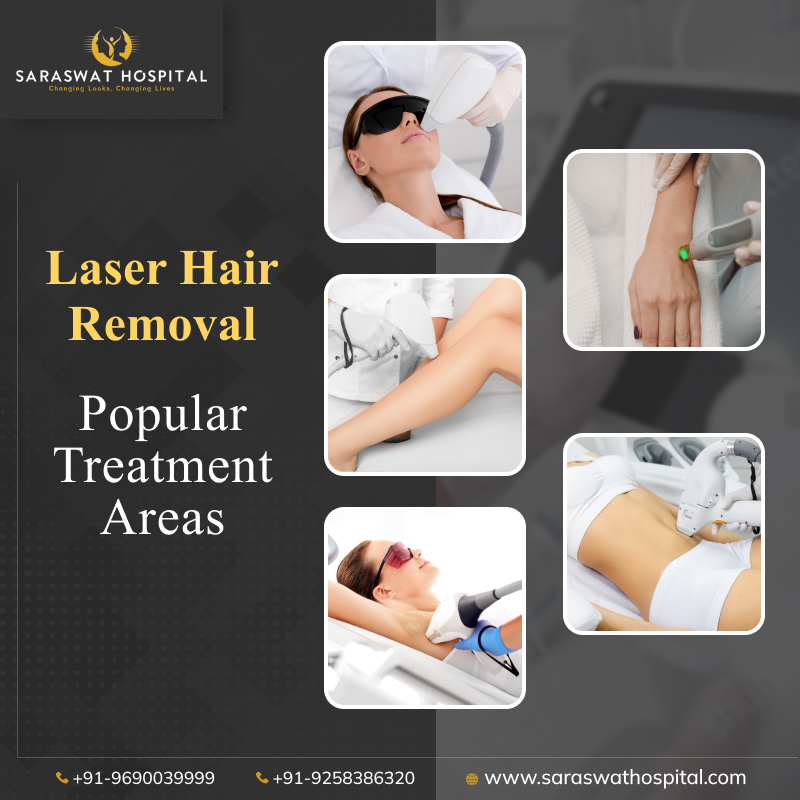
Laser hair removal is a versatile treatment that can target unwanted hair on almost every part of the body. From small facial areas to larger body parts, laser technology helps reduce hair growth, minimize ingrown hairs, and provide smoother skin over time. Some of the common body parts that can be treated with laser hair removal include the face, upper lip, chin, neck, underarms, arms, abdomen, bikini line, legs, and hands. Below, we look at the complete details of laser hair removal for the body.

Face

Removing facial hair can be a treatment opted for by both men and women. It is commonly done to remove the extra hair growth from facial areas like the chin, upper lip, cheeks, and sideburns. Laser hair removal sessions for facial hair need about 4-5 sessions that are spread out over 3-4 weeks. Each session doesn’t last more than 15 minutes, but long breaks are taken to give the treated areas a chance to heal properly. It is much more preferable to waxing or shaving as it provides a long-lasting solution and is also relatively painless.

Laser Hair Removal Result

Arms

Arm hair removal is a popular procedure among women. For those who want to flaunt their bare skin always, laser treatments give them a great option to get rid of their unwanted, fuzzy arm hair. Repeated waxing or shaving can cause rashes, cuts, itching, or dryness. Opting for laser-assisted hair removal gives a clean and effective solution.

Underarms

This is again commonly opted for by both men and women. Excessive growth on the underarms can feel icky and sweaty for many people. A laser treatment gives them a clean and hygienic solution to bare underarms for a lifetime.

Legs

Imagine the luxury of never having to wax or shave your legs ever again! Most women like to opt for laser hair removal treatment for their legs. The number of sessions required in this kind of procedure will depend on the patient’s natural hair growth cycle and the thickness of the existing hair on the legs. Removing leg hair also includes any hair growth on the feet and toes.

Common Areas For Laser Hair Removal

Bikini line

Traditional hair removal methods, such as waxing and shaving, are extremely painful for the bikini line region of the body. Moreover, the short-term results mean women have to go through the pain repeatedly. Undergoing a laser procedure gives them painless hair removal with long-lasting effects, thus making life easier.

Abdomen

Many people have excess hair in the area around their navel. Both men and women can opt for a laser procedure to have a smooth, hairless abdomen. With multiple sessions, the hair growth can be at first diminished and then permanently stopped.

Back

While waxing is a viable option, shaving one’s back by oneself is fairly impossible to do. Many women like to go for laser hair removal on the back as it allows them to wear backless dresses whenever they want without having to worry about body hair. Men who have an excessively hairy back may also opt for this procedure.

Chest

Some men are known to have an extra hairy chest, a trait that’s not desirable for many. Hence, removing chest hair by laser treatment is a common procedure among men. Depending on the thickness of hair and the natural hair growth cycle, it may take multiple sessions. A laser procedure is a much simpler and less painful solution than regular grooming methods of waxing or shaving.

Conclusion

Unwanted body hair can cause many woes for both men and women. It requires time, effort, and money to regularly groom it month after month. Opting for laser hair removal treatment permanently removes all body hair from the roots. Book an appointment with Saraswat Hospital in Agra, as we provide safe and painless laser procedures for all types of hair removal needs.

Also Read: 4 Tips to Take Care of Your Skin After a Laser Hair Removal

Follow us on:- FacebookInstagramPinterestYoutube

Medical Disclaimer

This article is for informational purposes only and does not constitute medical advice. Plastic, cosmetic, and laser treatments — including AI-assisted previews such as those generated by the Peek AI™ app — carry risks and results vary by individual. Always consult a licensed medical professional before undergoing any procedure.
whatapp icon