
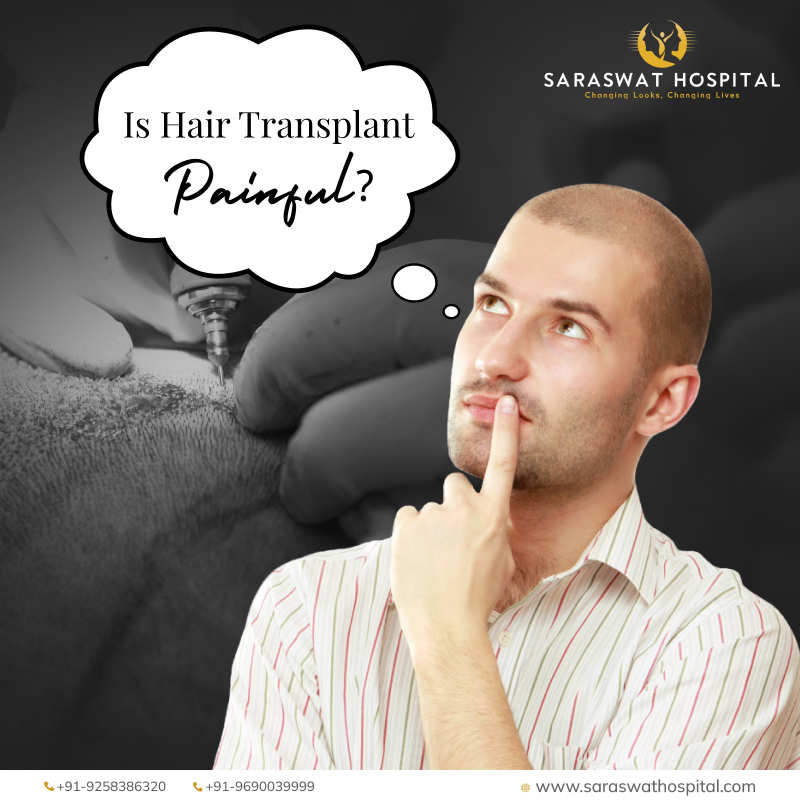
Is hair loss becoming a growing concern for you? Are you forced to deal with receding hairlines and hair-thinning problems? Then, you must seek advice from a professional expert at the earliest. Get a personalised consultation from ABHRS-certified doctors at Saraswat Hospital in Agra. Worried about “are hair transplant procedures painful” or not? Below, we take an in-depth look at the procedure and find out if the patient feels any pain or discomfort.
What Is a Hair Transplant Procedure?
Hair transplants are cosmetic procedures that aim to restore the natural hairline of a balding person. The back side or two sides of the head are known as donor areas in the scalp. Healthy hair follicles are extracted from the donor area and transplanted to the recipient area, the balding portions of the scalp.
When you opt for a hair transplant, there are primarily two methods of performing the procedure:
FUE (Follicular Unit Extraction): In this technique, hair follicles are extracted directly from the scalp using a low-torque, low-RPM machine. There are no cuts or stitches involved in this process. This type of surgery has a quick recovery process.
FUT (Follicular Unit Transplantation): A thin strip of skin is surgically removed from the donor area of the scalp, containing healthy follicles. The strip of skin is put under the microscope, and then hair grafts are collected. Stitches are required on the scalp in the area where the skin is removed. This type of surgery has a longer recovery period.
Are Hair Transplant Procedures Painful?
Hair transplant procedures are done under the effects of local anaesthesia. Once the numbing injection is given, the patient feels no pain or discomfort during the procedure. The surgery is a completely painless experience.
Once the anaesthesia wears off, the patient may feel slight discomfort or dizziness for some time. But this is nothing to worry about. The heavy feeling goes away after a couple of hours.
What Can Be Expected During the Procedure?
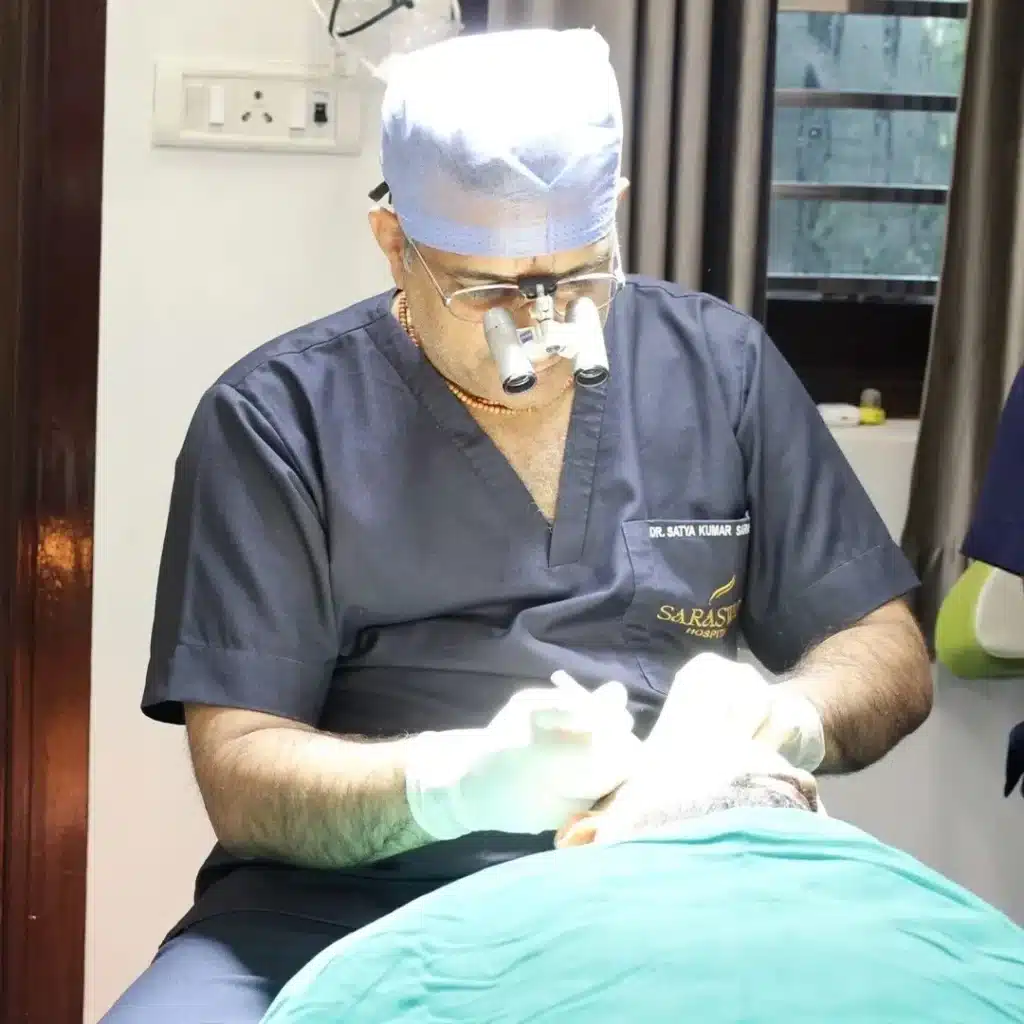
Surgeons perform hair transplants using local anesthesia. They administer a numbing injection to the patient before surgery to anesthetize the scalp area. This ensures that the patient does not feel any pain or discomfort during the procedure.
FUE and FUT methods are used for the extraction of hair follicles. FUE is the most advanced and non-invasive technique for doing a hair transplant. In this, the patient feels no pain or discomfort at all.
FUT is comparatively more invasive. The process requires stitches to be performed on the scalp. This may cause pain or discomfort to the patient during the recovery period.
Do You Experience Pain in the Recovery Period?
Hair transplant patients must take it lightly for the first 3-5 days post-procedure. Avoid exercising or any strenuous activities to give your body the time to adjust and replenish after undergoing the trauma of surgery (however minor it may be).
Typically, most patients do not feel any pain during the recovery period. At most, there might be some minor discomforts like swelling or heaviness. They may also feel scalp itchiness as the scabs start to dry on the head.
In case you experience any severe pain, immediately consult your doctor. He/she will thoroughly examine you and prescribe antibiotics or painkillers to manage the pain.
Conclusion
Are you looking for a safe and trusted clinic for hair transplant in India? Choose Saraswat Hospital in Agra and get treated by ABHRS-certified experts, Dr. Satya Saraswat and Dr. Preeti Saraswat. They provide personalised treatments at affordable rates. Book an online consultation with our team and learn more about hair transplant, find out how many grafts are required in your case, and get a customised plan for a natural-looking hairline.
FAQs
1. How long does the head hurt after a hair transplant?
Mild soreness and tenderness typically last 3–5 days post-procedure. Most patients manage discomfort with prescribed medicines, and pain significantly reduces within a week.
2. How bad do hair transplants hurt?
The procedure itself is nearly safe and not painful due to local anesthesia. Afterwards, expect mild to moderate soreness, tightness, and swelling — usually manageable with over-the-counter or prescribed pain relief.
3. Do people regret hair transplants?
Most patients are satisfied with natural-looking, permanent results when a hair transplant is performed at a reputable clinic. Regret is rare but can occur due to unrealistic expectations, poor clinic choice, or continued hair loss requiring additional procedures later.
4. Is 27 a good age to get a hair transplant?
Hair loss can begin in the early 20s. Most professional doctors recommend waiting until the late 20s to early 30s because hair loss stabilises at this stage.
5. Is it hard to sleep after a hair transplant?
Yes, initially. You must sleep with your head elevated at 45° for the first few nights to reduce swelling and avoid disturbing grafts. A travel pillow helps greatly.
Follow us on:- Facebook, Instagram, Pinterest, YouTube
This article is for informational purposes only and does not constitute medical advice. Plastic, cosmetic, and laser treatments — including AI-assisted previews such as those generated by the Peek AI™ app — carry risks and results vary by individual. Always consult a licensed medical professional before undergoing any procedure.