
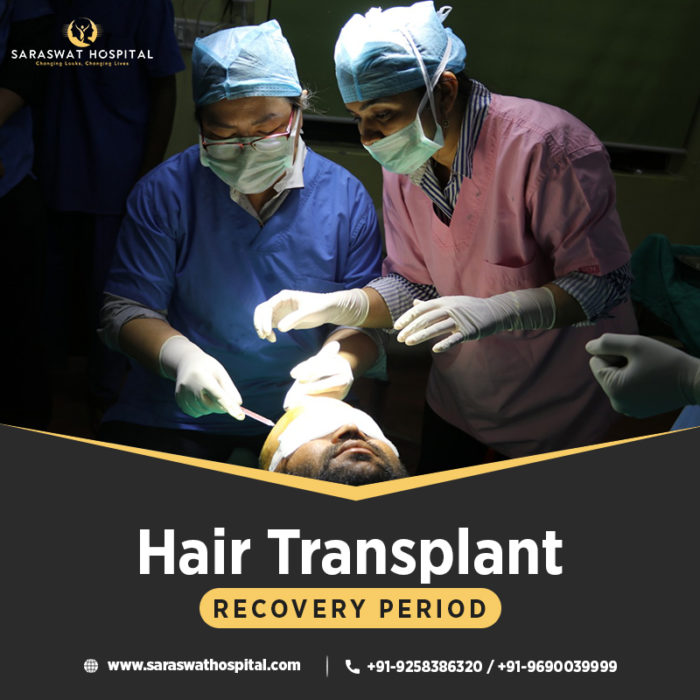
The best treatment for Androgenetic Alopecia known to man today is the hair transplant. If undergone at a reputable clinic, the results are permanent and quick. However, most people are still worried about the time they have to take off work to be able to give it the proper rest and work fruitfully. In this blog, we’ll explore what the recovery period for hair loss looks like, factors that influence it, and how to ensure smooth and speedy recovery.
What is Hair Transplant Surgery?
Before moving on to the subject, let us understand what hair transplant surgery entails. Well, if we have to summarize the entire procedure in a few lines, we can say that hair transplant surgery involves taking healthy hair follicles from the “donor area” and implanting them into the “recipient area.”
The definition of the donor area may change from person to person, depending on the amount of hair on the safe donor area. For a majority of the patients, the safe donor area is the back of the head, while for a completely bald person, since there is no donor area on the scalp, follicles from other parts of the body, such as the beard, chest, or legs, can be used for the process.
The surgeons first perform a computerized and software-based Trichoscopy analysis for meticulous treatment planning. It helps determine the number of grafts present, those that can be taken out, the area to be covered per square centimeter, and the density of the hair the patient wants to achieve. Once the hair transplant is performed, after a few days, the patient might encounter some shedding, and then the hair grows back at its normal pace.
Understanding the Recovery Period for Hair Loss
The recovery period for hair loss varies depending on the type of treatment chosen—be it a hair transplant (FUE or FUT), or medical treatments like Minoxidil and Finasteride.
On average, the recovery period for hair loss treatment ranges from a few days to several weeks. Let’s take a closer look at each stage.
Stages of the Recovery Period for Hair Loss
1. Immediate Post-Procedure (Days 1–3)
During the first few days, patients might experience slight redness, swelling, or mild discomfort in the treated area. This is completely normal and part of the natural healing process. Keeping the scalp clean and avoiding touching or scratching it helps speed up the recovery period for hair loss.
2. Early Healing Phase (Days 4–10)
Scabs start to form around the transplanted follicles, which fall off naturally after about 10 days. Gentle washing and following the doctor’s instructions are crucial in this phase to ensure healthy graft survival and a smooth recovery period for hair loss.
3. Shedding Phase (Weeks 2–4)
Some shedding of transplanted hair is expected, which might worry some patients. However, this is a sign of new growth preparing to emerge. Staying patient during this part of the recovery period for hair loss is important.
4. Regrowth Phase (Months 2–6)
New hair starts to grow around the 3rd or 4th month. This period is exciting as visible progress begins. Maintaining a healthy diet and following prescribed medications support the recovery period for hair loss.
5. Full Recovery (6–12 Months)
By 12 months, most patients see noticeable, natural-looking results. The recovery period for hair loss ends when the hair has fully grown and thickened, restoring both appearance and confidence.
Frequently Asked Questions
When the patient goes for a hair loss treatment in Agra, he or she might have a few queries about the recovery period, and that is pretty common. Some of the most popular questions asked, along with their answers, are:
Is exercise after surgery allowed?
Similar to what you would have done after other surgeries, the patients need to take some time off from exercising regularly. This is because of two factors: 1) Exercise puts unwanted pressure on the body, and 2) it makes you sweat. Neither of these two is suitable if you are looking forward to faster and better results. The ideal timeframe the patient has to wait before they head back to exercising daily is seventy-two hours. However, it is always advised that you speak to the specialists before heading back to the gym.
Do you have to take time off from work?
The answer to this is dependent on the type of procedure you have undergone. The FUE or the Follicular Unit Excision method is less invasive than the Linear Excision Method and thus has a faster healing process.
So, when do the results start to appear?
Immediately after the treatment, you will be able to see the new hairline taking shape. Yes, it might not be aesthetically pleasing to look at, but the small incisions made for the process would heal in a few weeks. You may also encounter inflammation and tenderness for some time.
The small hair would start shedding in three weeks post-treatment, and that is a physiological process. The follicles would be replaced, and new hair growth would start from the roots. The desired hair growth and density would be visible, starting from the third month itself.
Tips for a Smooth Recovery Period for Hair Loss
Follow the Doctor’s Advice Strictly: Every instruction is designed to optimize the recovery period for hair loss.
Avoid Strenuous Activity: Physical exertion can cause sweating and affect healing.
Stay Hydrated and Eat Well: Nutrition plays a vital role in the recovery period for hair loss.
Use Recommended Hair Products Only: Avoid harsh chemicals or shampoos that can irritate the scalp.
Protect Your Scalp: Avoid direct sunlight or dust exposure during the early healing phase.
ABHRS-certified doctors performing the treatment
If you are looking forward to not only the best treatment but also a customized consultation from well-trained doctors, you can rely on Saraswat Hospital. The hospital is led by Dr. Satya Saraswat and Dr. Preeti Saraswat, both of whom are certified by ABHRS (American Board of Hair Restoration Surgery).
Dr. Satya Saraswat is an MBBS, MS, DNB, and M.Ch., who has received a Gold Medal from the Honorable Health Minister of India for his contribution towards the community.
Dr. Preeti Saraswat completed her MBBS and then appeared for the American Board of Hair Restoration Surgery examination, and she is now an ABHRS diplomate. She also went on to become a Clinical Cosmetologist from the University of Greifswald, Germany. She specializes in various types of laser treatments and skin and anti-aging procedures.
Conclusion
Hair loss can become a source of low confidence for a lot of people, and it is crucial to understand the matter before it gets too late. Should you want to consult specialists for undergoing a surgical hair loss treatment in Agra, dial +91-9258386320 or +91-9690039999, and get in touch with the professionals today!
Follow us on:- Facebook, Instagram, Pinterest, Youtube