
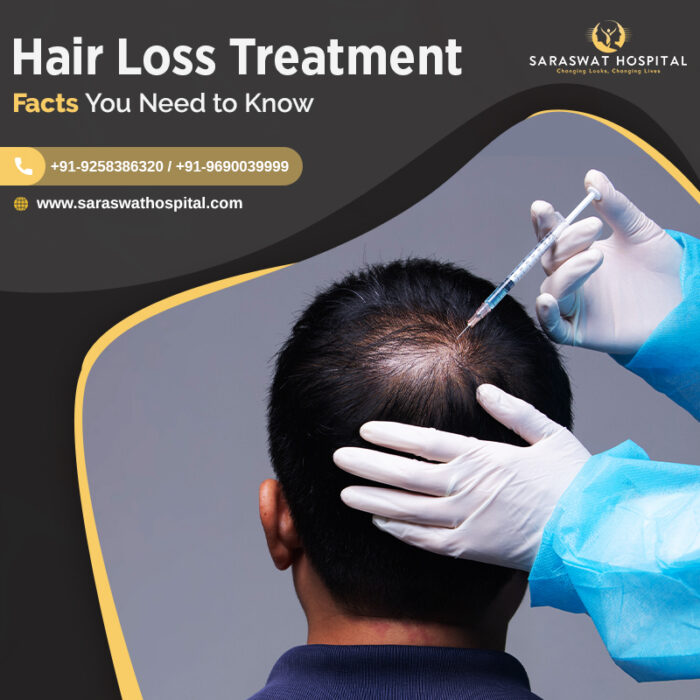
Today’s society is fast-paced and forever changing, and the perception of beauty has changed over the years. Today, a person with thinning hair or baldness is often treated as an outcast, thereby hampering their confidence level. To think of it, this has also given rise to several chemical solutions that claim to bring the hair back on the head, and have failed drastically. That is why people are opting for options such as hair transplant surgery under expert supervision. Today, through this blog, let us check out a few interesting and important hair loss treatment facts.
Understanding Hair Loss
Hair loss can occur due to genetics, hormonal changes, medical conditions, or lifestyle factors. Knowing the hair loss treatment facts starts with recognizing that every individual’s hair loss pattern is unique. Male and female pattern baldness, alopecia areata, and telogen effluvium are among the most common causes that require different treatments.
Intriguing Hair Loss Treatment Facts
First off, when it comes to transplant surgery, most people think that the results are temporary, and that is where they go wrong. As per the hair transplant procedure, where healthy hair follicles are taken from the safe donor site and implanted in the recipient site, the results are pretty much permanent. The surgery aims at masking any balding issues and allowing new hair to grow in the same zone. This means that the surgery is permanent, and once you have undergone it, there is no going back. Some of the other facts pertinent to the surgery are:
1. General Facts
Common for even celebrities: Trust your instincts in the fact that hair fall and balding spare no one. It is more common than you would think, and several celebrities all over the world have either suffered from the condition or are suffering from it right now. While most of them opt for non-surgical solutions, a lot of them often opt for a hair loss treatment under an expert.
Post-Op Rest: Immediately after the surgery is complete, you need to take a few days of rest. This is because you would need to give time to the scars formed on your scalp during the procedure (especially if you have undergone the Linear Excision Method or strip surgery) so that they can heal before you expose them to the sun and your busy life.
Time-Consuming: The thing with hair transplant is that the time taken for the surgery depends heavily on the number of follicular units to be grafted and the health of all of them. It also depends on the hair transplant technique used to perform the procedure and the experienced professional. That is why it is always suggested that you visit someone who is both transparent and reputable, so that you have a rough estimate of the time to be taken.
As you note all of this, also keep in mind that there is a window for the failure of the surgery. Very few doctors would even mention this to you because there is still a hope that even though a few follicles are lost, the overall result would be natural and overshadow any loss of grafts. The final cost of the procedure, however, depends on the number of grafts implanted and the base price per graft plus taxes, along with other elements.
2. Not All Treatments Work for Everyone
Among the key hair loss treatment facts is that what works for one person might not work for another. The success of a treatment depends on your scalp condition, hair density, and the cause of hair loss.
3. Multiple Treatment Options Exist
There are several methods available today, including:
- Medications such as Minoxidil and Finasteride
- Hair Transplant Surgery (FUE and FUT techniques)
- Laser Hair Therapy
- PRP Therapy
- GFC Therapy
Knowing these hair loss treatment facts helps you understand that combining treatments can sometimes yield the best results.
4. Hair Transplant Offers Permanent Results
When discussing hair loss treatment facts, it’s essential to note that hair transplant surgery offers long-lasting, natural-looking outcomes. Advanced methods like Follicular Unit Extraction (FUE) and Follicular Unit Transplantation (FUT) ensure minimal scarring and maximum density.

5. Results Take Time
Another vital point among hair loss treatment facts is that patience is key. It can take 6–12 months to see noticeable hair growth after starting treatment.
6. Lifestyle Plays a Major Role
One of the most overlooked hair loss treatment facts is the impact of lifestyle. Stress, poor diet, and lack of sleep can worsen hair loss. Adopting a balanced diet rich in proteins and vitamins supports treatment results.
7. Professional Expertise Matters
A crucial hair loss treatment fact is that the success of your procedure heavily depends on the expertise of your hair restoration specialist. Always choose ABHRS-certified surgeons with proven experience in hair transplantation or restoration.
8. Maintenance Is Necessary
Even after successful treatment, maintaining results is one of the significant Hair Loss Treatment Facts. Regular follow-ups, a proper hair care routine, and continued use of prescribed medications help sustain results.
Common Myths vs. Hair Loss Treatment Facts
| Myths | Hair Loss Treatment Facts |
| Only men experience hair loss. | Women also suffer from various forms of hair loss. |
| Hair loss treatments are uncomfortable | Most modern treatments are safe and virtually effective. |
| Hair transplant results look artificial. | With advanced techniques, results are completely natural. |
| Only expensive treatments work. | Cost-effective options like minoxidil and laser therapy can also deliver excellent results. |
Understanding these hair loss treatment facts helps debunk common misconceptions and encourages realistic expectations.
ABHRS-certified doctors performing the same at Saraswat Hospital
Saraswat Hospital, based in Agra, is known for its exceptional services for hair transplant surgery by doctors certified by the American Board of Hair Restoration Surgery (ABHRS). The hospital specializes in hair repair and celebrity hair transplant, along with other aesthetic and cosmetic surgery procedures.
Dr Satya Saraswat and Dr Preeti Saraswat have 20+ years of experience in the field, along with connections to several international boards, which makes them one of the top-ranked doctors in the country.
Dr Preeti Saraswat is a PGDCC from the University of Greifswald, who has undergone training to sharpen her skills in laser treatment. It has not only given her the knowledge she would need to treat her patients but also given her the capability to customize each treatment plan as per requirements.
Dr Satya Saraswat is a Gold Medalist Plastic Surgeon who also has MBBS, MS, M.Ch, and DNB degrees to his credit. He has been recognized as one of the top doctors for hair loss treatment in Agra with complete knowledge of the subject.
Conclusion
Understanding accurate hair loss treatment facts empowers you to make informed decisions about restoring your hair. From knowing the root cause to selecting the right professional and treatment type, every step matters. With advancements in technology and expert care, achieving natural, fuller hair is now more possible than ever. Saraswat Hospital makes use of state-of-the-art equipment and the latest technologies to provide the best treatment to the patients. Should you want to know more about the subject or book a consultation with doctors?
Frequently Asked Questions
Que 1: Is hair loss treatment only applicable to men?
No, hair loss is not only applicable to men. Although the majority of hair loss patients requiring hair transplantation are men, comprising 84.7% of the total patients requiring hair transplantation, women comprise the remaining 15.3% (1), and the figure is steadily increasing year by year.
Que 2: What are the most effective non-surgical hair loss treatments available?
The most effective non-surgical hair loss treatments include Finasteride tablets, Minoxidil solution, Low-Level Laser Therapy (LLLT), PRP Therapy, GFC Therapy, and Mesotherapy, which stimulate hair follicles using different methods depending on the condition of the patients.
Que 3: When is the right time to opt for a hair transplant?
The best time for a hair transplant is when the receding hairline or hair thinning is quite prominent, especially in people suffering from genetic hair loss, where other treatment options can only delay the process of hair loss, not stop it. Consulting an ABHRS-certified doctor at the right time is advisable for better results.
Que 4: Can hair loss affect mental health?
Hair loss can cause serious psychological impacts, including anxiety, depression, body dysmorphic disorder, and social phobias, resulting in social withdrawal and a drastic decline in self-confidence.
Sources:
(1) ISHRS 2025 Practice Census Results
Follow us on:- Facebook, Instagram, Pinterest, Youtube