
Book an
Appointment
Avatar photo

Dr. Satya Saraswat, MBBS, MS, MCh, DNB (Gold Medalist)

Dr. Satya Saraswat, MBBS, MS, MCh, DNB (Gold Medalist), FISHRS, is a cosmetic and plastic surgeon with an experience of over 20+ years and has performed 17,000+ cosmetic and plastic surgeries. He is a Diplomate of the American Board of Hair Restoration Surgery (ABHRS) and Fellow of ISHRS, as he has been continuously attending the International conferences and adopting the latest advancements in hair restoration science, and he has also submitted his research papers. His hands-on involvement ensures a natural hairline and high graft survival.

Articles by Dr. Satya Saraswat, MBBS, MS, MCh, DNB (Gold Medalist)

Do Hair Transplants Leave Scars?

Hair transplant is one of the safest surgeries and the most preferable option when it comes to dealing with genetic hair loss. However, one of the most common questions people have is: Do hair transplants leave scars? Thankfully, the scars are not something that you have to put up with for a long time if you choose the right doctor. Renowned and reliable clinics like Saraswat Hospital in Agra make sure to perform the surgery with utmost care and minimal pain and scarring. In this blog, we will discuss scars left by different hair transplant procedures.

Understanding Why Hair Transplants Leave Scars

No matter which technique you choose, hair transplants leave scars because the procedure involves removing hair follicles from the donor area (usually the back of your scalp) and implanting them into thinning areas. The degree of scarring, however, depends on the method used, your skin type, and your surgeon’s skill.

There are two major techniques when it comes to hair transplant – FUT or strip surgery, and FUE.

  • FUT (Follicular Unit Transplantation)

In FUT, a strip of scalp is removed, and individual follicular units are separated and transplanted. Since this involves cutting a strip of skin, a hair transplants leave scars in the form of a thin, linear scar at the back of the head. Skilled surgeons can make this scar almost invisible by closing it neatly and recommending proper aftercare.

  • FUE (Follicular Unit Extraction)

In FUE, individual hair follicles are extracted using micro punches, leaving tiny dot-like scars. These are much less noticeable and often fade over time. While hair transplants leave scars even with FUE, they are scattered and barely visible, especially if your hair grows out.

So, the idea of hair transplant being a scarless procedure is incorrect, but when it is performed by a qualified surgeon, the surgery leaves very little evidence that it was ever even performed. Apart from trichophytic closure and growing hair, the scars can also be covered through Scalp Micropigmentation. Organic black ink is implanted into the scalp through this technique, which helps in creating the impression of natural hair follicles. As it covers the bareness of the scar, the evidence of ever undergoing a hair transplant surgery is concealed.

Factors That Affect How Hair Transplants Leave Scars

The visibility of scars can vary depending on several factors:

  • Surgical Technique – FUT tends to leave more noticeable scars, whereas FUE scars are tiny and spread out.
  • Surgeon’s Experience – A skilled surgeon ensures minimal scarring and natural results.
  • Skin Type & Healing Ability – People with certain skin types may scar more easily.
  • Post-Operative Care – Following aftercare instructions reduces scar visibility.

Conclusion

So, do hair transplants leave scars? The answer is yes, but modern techniques make them far less noticeable than ever before. If you are hesitating about undergoing a hair transplant surgery in fear of scars, you have nothing to worry about. The scars can be concealed easily, and they are no longer visible once your hair grows. The experts at Saraswat Hospital make sure to provide you with the best results at the end of the surgery. If you are struggling with hair transplant scars, modern technology in Saraswat Hospital has evolved and helped many in getting their desired solution. Book an appointment to know more and get your hair trichoscopy done today.

Follow us on:- FacebookInstagramPinterestYoutube

Hair Loss Treatment

An important part of appearance, a head full of hair lifts the mood of people, and it is never easy to lose it. Hair loss can lead to various emotional and psychological issues regarding how a person perceives themselves, and how they seek the approval of other people. The easiest way to deal with this devastation is to opt for a permanent solution, which is a hair transplant surgery in India. Expert professionals at Saraswat Hospital offer FUT and FUE hair transplants to patients for the best results. Let us discuss the psychological effects of hair loss and its solution in hair transplant today.

Psychological Effects of Hair Loss

It is essential to understand that hair loss brings emotional distress along with it, and so it must not be brushed aside but addressed properly. Here is a list of psychological and emotional effects associated with hair loss and balding, so you can have a better understanding of this serious matter:

Losing Confidence in Appearance

Hair loss has a huge effect on the way someone looks. The loss of the hairline causes a more aged appearance. It dramatically affects the way someone sees themselves and often leads to them losing confidence. Studies have shown that women tend to suffer mentally and emotionally due to hair loss and develop a negative body image. On the other hand, most men have experienced being ridiculed for baldness, which makes them upset as well.

It is especially difficult for younger people to deal with. Some may relate early hair loss to the end of youth and desirability, while some people in relationships may feel like they are less attractive compared to their partners. It takes a blow to their self-esteem, making them insecure.

Anxiety and Depression

The psychological effects of hair loss can be more serious than you think. Some people may even enter the stage of anxiety and depression due to the chronic stress of hair loss. Anxiety can lead to excessive worrying, a feeling of increased tension, and finding it difficult to control these negative feelings. They also suffer from palpitations and sweating. Additionally, disorders like body dysmorphic disorder and obsessive-compulsive disorder can be triggered by hair loss. Depression can lead to a loss of energy, lack of interest in activities, and sleep deprivation.

Social Phobia and Social Anxiety Disorder

The experience of anxiety symptoms is followed by social phobia, which is avoidance behaviour, and it can cause social and economic suffering. Social anxiety disorder, on the other hand, is characterized by being judged negatively or the fear of humiliation in social gatherings. People tend to avoid any kind of social or performance situations as well due to this reason.

The Solution – Hair Transplant

While it is difficult to deal with hair loss, thankfully, there is a permanent solution to this problem now. Hair transplant has become the most preferred hair loss treatment in India these days. It is a method of extracting the patient’s own hair from their donor area to implant on their balding area. Since no artificial hair is used in the procedure, but natural hair is transplanted that is free from the effects of DHT, the results are also natural and permanent.

Top Techniques of Hair Transplant

Top clinics in India perform several types of hair transplant surgeries, based on the patient’s condition and requirements, such as:

  • FUE Hair Transplant (Follicular Unit Excision)
  • FUT Hair Transplant (Follicular Unit Transplantation)
  • Combination of FUE and FUT
  • Bio-FUE Hair Transplant
  • Body Hair Transplant
  • Special Area Hair Transplant
  • Long Hair Transplant
  • Repair/Failed Hair Transplant
  • Eyelash Hair Transplant
  • Eyebrow Hair Transplant
  • Board and Moustache Hair Transplant

How Can the Experts at Saraswat Hospital Help You?

Run by internationally recognized doctors with more than 20+ years of experience, Saraswat Hospital in Agra is the best hair transplant clinic in India. The clinic offers customized hair transplant plans to patients at the most reasonable rate.

ABHRS-certified surgeon Dr. Satya Kumar Saraswat (MBBS, MS, M.Ch, and DNB in Plastic Surgery) is one of the most sought-after hair transplant doctors in India to perform the UGraft punch method during the surgery. He was awarded a Gold Medal by the Health Minister of India in 2007 for his achievements in the cosmetic surgery field.

Dr. Preeti Saraswat (MBBS and PGDCC from the University of Greifswald, Germany) is a well-known expert in scalp micropigmentation treatments. She has been rendering hair transplant treatments to her patients for more than 10+ years. Apart from being a diplomate of ABHRS, she is also a member of the American Academy of Aesthetic Medicine (AAAM).

Conclusion

If you are depressed because of hair loss, act fast. Book an appointment with an expert to consult on the subject. Saraswat Hospital in Agra offers permanent solutions regarding this matter, and the clinic has a high success rate in hair transplants. Write to Saraswat Hospital at saraswathospitalagra@gmail.com for more information.

Follow us on:- FacebookInstagramPinterestYoutube

How to Fix Hair Transplant Failure with Repair Hair Transplant?

Hair transplant is the ideal solution for people who are suffering from Androgenetic Alopecia and want a permanent solution to hair loss. However, although very rare, a hair transplant surgery can still fail due to various reasons, such as technical errors and faults in surgical methods. In case of failure, the patient can visit Saraswat Hospital, which offers the best repair hair transplant in India. In this blog, we will discuss how to fix hair transplant failure, and how a repair hair transplant can help.

Major Reasons behind the Failure of a Hair Transplant Surgery

There can be many reasons behind a failed hair transplant surgery. First, if the patient is not the right candidate for a hair transplant, the surgery will not provide satisfactory results. There can be faults during the procedure as well, such as drying grafts due to exposure in the air for more than 20 seconds, grafts left out of the body for an extended time, rough handling of grafts, and implantation of grafts too deep into the scalp. You also need to consider aftercare. A hair transplant surgery can fail if you do not take care of your hair and scalp well for at least two weeks after the surgery until the area heals completely.

How to Fix Hair Transplant Failure

Fixing a hair transplant failure requires a tailored approach based on the specific issue. Below are practical steps to address the problem and achieve the desired results.

1. Consult a Reputable Hair Transplant Specialist

The first step in fixing a failed hair transplant is to consult a board-certified, experienced hair restoration surgeon. Look for a specialist with a proven track record in corrective procedures. They will:

  • Assess the damage: Evaluate the donor and recipient areas to determine the extent of the failure.
  • Identify the cause: Pinpoint whether the issue stems from surgical errors, poor graft survival, or patient-specific factors like scalp health.
  • Recommend solutions: Suggest corrective techniques such as additional grafts, scar revision, or alternative treatments.

2. Consider a Revision Hair Transplant

A revision or corrective hair transplant is often the most effective way to fix a failed procedure. This involves:

  • Adding more grafts: To address sparse or patchy areas, additional hair follicles can be transplanted from the donor area (typically the back of the scalp).
  • Redesigning the hairline: If the original hairline looks unnatural, a skilled surgeon can create a more aesthetically pleasing design.
  • Camouflaging scars: Techniques like FUE can be used to transplant hair into scarred areas, making them less noticeable.

3. Address Scarring with Advanced Techniques

Visible scarring, especially from older techniques like Follicular Unit Transplantation (FUT), can be a significant concern. To fix this:

  • Scalp Micropigmentation (SMP): Scalp Micropigmentation is a technique that involves tattooing tiny dots on the scalp to mimic hair follicles, camouflaging scars or sparse areas.
  • Scar revision surgery: A surgeon can excise and minimize linear scars from previous procedures.
  • Laser therapy: Fractional laser treatments can reduce scar visibility and improve skin texture.

4. Explore Non-Surgical Treatments

If a revision transplant isn’t an immediate option (due to limited donor hair or other factors), non-surgical treatments can help improve the appearance of your hair and scalp:

  • Minoxidil: This topical treatment can stimulate hair growth in areas with thinning or poor graft survival.
  • Low-Level Laser Therapy (LLLT): This non-invasive treatment uses laser light to stimulate hair follicles and enhance growth.

5. Optimize Post-Operative Care

Poor post-operative care is a common cause of hair transplant failure. To prevent further issues during a corrective procedure, follow these guidelines:

  • Follow your surgeon’s instructions: Adhere strictly to post-op care protocols, including avoiding sun exposure, heavy exercise, or touching the grafts.
  • Maintain scalp hygiene: Keep the scalp clean to prevent infections that could compromise graft survival.
  • Stay hydrated and eat well: A nutrient-rich diet with vitamins like biotin, zinc, and vitamin D supports hair growth.
  • Avoid smoking and alcohol: These can impair blood flow to the scalp, reducing graft survival rates.

When Should You Go for a Repair Hair Transplant?

You should consider a repair hair transplant if you notice any of the signs mentioned below:

  • Defective hairline

In cases of unnatural hairline design and the low or high lying placement, the forehead may look too small or too large after the patient recovers. It gives the forehead an unnatural appearance. Hence, the patients end up being dissatisfied with the procedure.

  • Wrong density and angulations

Hair transplant is a highly precise procedure that must always be performed by experienced experts. However, when surgery fails, the hair may look less dense where the scalp is visible. You can implant new hair follicles in the visible parts to reverse the effects through repair hair transplants in India. The angulations of the newly-implanted grafts are also crucial when it comes to obtaining natural-looking results from the transplantation.

  • Bushy temples

The temples of every patient usually have fine and light-coloured hair compared to the other areas of the scalp. When you undergo a hair transplant surgery, the results must maintain the same pattern. However, if the surgery is performed by inexperienced doctors, you may end up with an increased density on the temples. Hence, it will leave a bushy look that will require redesign and fixing through a repair hair transplant.

Repair Hair Transplant Methods

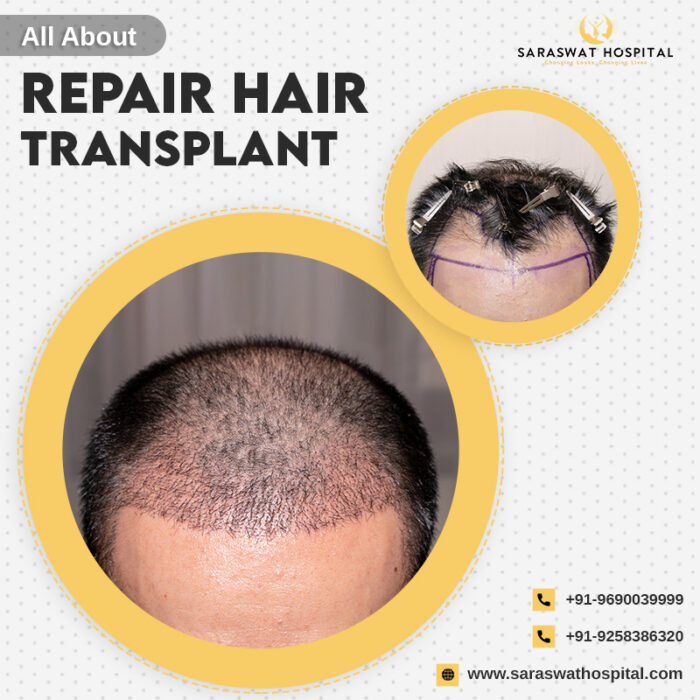
A fundamental technique of repair hair transplant is replacing the unsightly grafts with smaller follicular units or micro-grafts for a more natural look. It is the best option if the patient is dealing with a limited portion of the hair. However, it cannot restore hair that has been transplanted very low on the forehead, and thus, it can be used in conjunction with the graft excision method.

Graft excision is a popular method of repair hair transplant. In this process, the abnormal grafts that were implanted in the previous surgery are removed from the scalp carefully. Afterwards, the grafts are distributed into the individual follicular unit. They are then re-implanted in the right locations. The overall appearance is improved because the underlying scarred tissues are removed as well during the procedure.

The methods are also combined in some cases of failed hair transplants. In such a case, the larger grafts are first extracted and replanted, and then micro-grafts are used to cover the entire area.

Where Should You Go for a Repair Hair Transplant in India?

You must choose a skilled and experienced doctor for a repair hair transplant. Saraswat Hospital in Agra is run by ABHRS-certified doctors with more than 20+ years of experience in the field, and the clinic has a high success rate in hair transplant surgeries.

Conclusion

A failed hair transplant can be disheartening, but it’s not the end of the road. By understanding how to fix hair transplant failure? Through consultation with a skilled specialist, revision procedures, non-surgical treatments, and proper care, you can achieve the fuller, natural-looking hair you envisioned. If you are suffering from a failed hair transplant, do not wait for the situation to get worse. To consult the experts at Saraswat Hospital, book an appointment or write to the team at saraswathospitalagra@gmail.com.

Follow us on:- FacebookInstagramPinterestYoutube

A Guide to Preparing for Your Hair Transplant Surgery

Hair transplant surgery is very important for most patients as it is the permanent solution to genetic hair loss. So, it is crucial to consult a doctor before deciding on anything so you can take the right steps accordingly. The last thing you would want is for the surgery to fail due to any mistake from your end. Saraswat Hospital in Agra offers proper guidance and performs hair transplant surgeries under the supervision of Dr Satya Saraswat, the best hair transplant doctor in India. By following this comprehensive guide for hair transplant, you’ll be well-equipped to achieve the best results.

Why Preparation is Key in This Guide for Hair Transplant

A hair transplant, whether Follicular Unit Transplantation (FUT) or Follicular Unit Extraction (FUE), involves transferring hair follicles to areas of hair loss. Proper preparation, as outlined in this guide for hair transplant, reduces complications, enhances graft survival, and supports faster healing. Let’s dive into the steps you need to follow in this guide for hair transplant preparation.

Step-by-Step Guide for Hair Transplant Preparation

1. Choose a Qualified Surgeon

The success of your procedure depends on your surgeon’s expertise. This guide for hair transplant emphasizes researching board-certified dermatologists or plastic surgeons with proven experience. Check reviews, credentials, and before-and-after photos. During your consultation, discuss your goals and medical history to ensure the surgeon tailors the procedure to your needs, as recommended in this guide.

2. Understand the Procedure

Educating yourself is a cornerstone of this guide. Learn the differences between FUT and FUE, the number of grafts required, and the timeline for results (typically 6–12 months). Ask your surgeon about the best technique for you.

3. Adopt a Healthy Lifestyle

A healthy body supports better outcomes, as noted in this guide for hair transplants. In the weeks before your procedure:

  • Eat nutrient-rich foods: Focus on proteins, vitamins (A, C, E), and zinc to promote healing and hair growth.
  • Stay hydrated: Proper hydration supports skin health.
  • Exercise moderately: Light activity boosts circulation, but avoid intense workouts close to the procedure date.

4. Mental Preparation

Hair transplants require patience, as full results take time. This guide for hair transplant encourages setting realistic expectations and discussing concerns with your surgeon to feel confident.

Are Any Blood Tests Required?

Depending on each patient’s condition, they may need to have some routine blood tests before undergoing hair transplant surgery. Your hair transplant clinic will let you know if you need any. Some simple tests usually recommended by doctors are CBC, HHCV, PT, APTT, bleeding time, clotting time, HIV ELISA, and ECG (EKG). These tests are done to make sure that the patient does not have any undetected medical issues that may complicate the surgery. According to ISHRS, it’s crucial to share your medical history with hair restoration physicians before undergoing the treatment procedure. It helps them plan better and ensure optimal results.

What Precautions Must a Patient Take before Surgery?

You should take some precautions before a hair transplant surgery if you want the best results, such as:

  1. It is a must to stop smoking a few days before the procedure. Refrain from smoking for at least two weeks before the day of your hair transplant surgery.
  2. Wash your hair with shampoo for a couple of days before the surgery.
  3. Do not have any spicy food the day before the surgery.
  4. Disclose all medications you take to your doctor. Some medications may have to be stopped until the surgery is over.
  5. Make sure to inform your doctor if you have any allergies.

Getting Ready for the Day of Hair Transplant

There is no need to be tense about a hair transplant surgery. It is a very simple, painless, minimally invasive surgery that uses local anaesthesia. It means that you can go home the same day, right after the surgery is over. However, it is recommended to avoid any strenuous activities for a few days until your scalp heals. Here are some tips you can follow:

  1. There are no restrictions on eating before the surgery. You can have your breakfast or lunch before coming to the clinic.
  2. If you are coming from outside Agra, you can come on the same day in the morning, or you can arrive a day before the surgery, as per your choice. You can also travel back on the same day or the night after the surgery as you wish.
  3. Even if you live in Agra, make proper transport arrangements to go home after the surgery. Keep in mind that you cannot drive, and you cannot use public transport either. It would be best to rent a cab service.
  4. You may also bring a companion or attendant with you to the clinic on the day of the surgery if you want.

Aftercare is very important after a hair transplant surgery. So, make sure to focus on everything your doctor advises you, and follow it for the next few days.

Why Should You Choose Saraswat Hospital?

Led by internationally recognized doctors with more than 20+ years of experience in the field of hair restoration, Saraswat Hospital in Agra is well known for providing all kinds of hair transplant surgeries using top-notch equipment.

Conclusion

Going for a hair transplant surgery may seem stressful to many of you, but in reality, it is a very simple treatment with a high success rate. This guide for hair transplant preparation is your roadmap to a successful procedure. Even hair transplants can be done with grey hair. You just need to follow the doctor’s instructions well for the surgery to be a success. Book an appointment with the professionals for more information.

Follow us on:- FacebookInstagramPinterestYoutube

How to Get a Flawless Skin with Acne Scar Treatment?

Acne scars can be depressing at times, especially when they spread continuously. Instead of being on a small part of the skin, the scars sometimes cover both cheeks, as well as the shoulders and back. Thankfully, acne scars can be reduced through various procedures, based on skin analysis, and the affected area can be made to look better. Experienced cosmetologists at Saraswat Hospital in Agra offer an extensive range of effective acne scar treatment options you may choose from. Today, we will talk about different acne scars and their solutions to get flawless skin with acne scar treatment.

What is Acne and What Kind of Scars they Leave on Skin?

Acne is caused when enlarged oil glands are infected by bacteria, creating obstructions in the skin. You can see acne spots on your face, shoulders, and back when the skin pores are blocked with dead skin, oil, or bacteria. All pores on the skin are openings to follicles that contain oil glands. These oil glands release sebum that comes out of the pores on your skin. It keeps the skin soft by lubricating it. When the pores are blocked, sebum cannot come out, which results in acne. The worst part of acne is that, even when it disappears, it leaves scars. Some acne scars are papules, pustules, nodules, and cysts.

Top Methods for Flawless Skin With Acne Scar Treatment

Clinics in India offer various acne scar treatments. Some of the most effective methods are:

Fractional CO2 Laser

The fractional CO2 laser is one of the advanced laser treatments for skin rejuvenation and acne scar treatment. With its microbeams, the laser creates tiny wounds and leaves them to be healed by the body naturally, producing epithelium and collagen to aid the process. As the skin heals, a more radiant and healthier layer appears, and you cannot see the acne scars anymore, or they are significantly reduced.

Flawless Skin With Acne Scar Treatment

CO2 Laser

Compared to the fractional CO2 laser, the CO2 laser goes a bit deeper to shrink collagen in a specific way. This method is applied to treat severe acne scarring, wrinkles, and sun damage. You are the ideal candidate for this procedure if you are in your 40s to 70s.

Subsicion with Dermarollers/Dermapen

It is a time-tested acne scar treatment method. When the acne is in the eruption process, it forms fibrous bands between its base and the dermal tissue. In this treatment, a special needle is used to break these fibrous bands. As a result of this process, a haematoma is formed that elevates the base of the acne scars and forms fibrous tissues, which shallows the pits permanently. Dermapens or Dermarollers create microscopic holes in the skin. When the skin tries to heal these, the rest of the skin is also rejuvenated through this process.

Lifestyle Tips to Support Flawless Skin with Acne Scar Treatment

  1. Healthy Diet: Eat foods rich in antioxidants, like fruits and vegetables, to support skin repair. Avoid excessive sugar, which can trigger inflammation.
  2. Hydration: Drink plenty of water to keep skin hydrated and promote healing.
  3. Avoid Picking: Picking at acne can worsen scarring, so resist the urge to touch active breakouts.
  4.  Stress Management: Stress can exacerbate acne. Practices like yoga or meditation can support overall skin health.

How Experts at Saraswat Hospital Can Help

Saraswat Hospital in Agra is one of the best clinics offering acne scar treatment in India. Led by highly qualified and experienced doctors, the clinic makes sure to treat acne without leaving any side effects.

Dr Satya Kumar Saraswat is an MBBS, MS, M.Ch., and DNB in plastic surgery. He is a member of many international boards and is very well recognized in the plastic surgery sector. Hair restoration surgery is his specialization.

Dr Preeti Saraswat, the Chief Clinical Cosmetologist of Saraswat Hospital, is an MBBS and holds a Post Graduate Diploma from the University of Greifswald, Germany, in Clinical Cosmetology. She is a member of the Indian Medical Association and the Indian Association of Cosmetic Laser Surgeons.

Conclusion

Achieving flawless skin with acne scar treatment is possible with the right combination of professional treatments, at-home care, and healthy lifestyle habits. If you are having trouble with acne and acne scars, then you must act fast. Saraswat Hospital in Agra is well known for providing customized acne scar treatments according to the skin condition of the patients. Book an appointment and get flawless skin.

Follow us on:- FacebookInstagramPinterestYoutube

How a Hair Transplant Surgery Fixes Baldness?

Although a large number of people suffer from genetic hair loss in India, many are prejudiced against hair transplants. It is because they think that the cosmetic procedure cannot offer a natural hairline. However, contrary to popular belief, a hair transplant involves implanting natural hair follicles extracted from the donor area of the patient. ABHRS-certified experts at Saraswat Hospital in Agra specialize in offering FUT and FUE hair transplants in India with a high success rate. Let’s look into how hair transplant surgery fixes baldness.

What Is a Hair Transplant and How Does It Work?

A hair transplant surgery is a minimally invasive cosmetic procedure that involves extracting hair follicles from a certain part of the scalp, known as the donor site. The grafts are then transplanted onto the balding part of your scalp, called the recipient area. In a nutshell, a hair transplant stands for taking your own natural hair that is not affected by DHT and moving it to areas that are balding or thinning.

The Science Behind How Hair Transplant Surgery Fixes Baldness

Hair transplant surgery involves transferring hair follicles from a donor site—typically the back or sides of the head, where hair is resistant to balding—to areas experiencing hair loss.

The Science Behind How Hair Transplant Surgery Fixes Baldness

Hair transplant surgery involves transferring hair follicles from a donor site—typically the back or sides of the head, where hair is resistant to balding—to areas experiencing hair loss. This is where hair transplant surgery fixes baldness by relocating healthy hair follicles to balding areas, ensuring natural, lasting growth.

DHT is the primary hormone that causes baldness. However, not all of the hair on our head is affected by it, and that is the reason hair transplant is an effective solution to genetic hair loss. By transplanting DHT-resistant hair from the back of your head to the crown area, you can have a fuller head of thicker hair.

However, the method is a lot more sophisticated today. Surgeons can extract hair follicles using FUE or FUT methods and transplant them in groups of one to three hairs after creating a natural-looking hairline.

What Is the Difference between FUT and FUE?

FUT (Follicular Unit Transplantation) and FUE (Follicular Unit Excision) are two of the most popular hair transplant methods. The results produced by both methods are similar, with only a few differences. However, the main difference between the two methods is the way hair follicles are extracted.

In an FUT method, a strip bearing hair follicles is taken from the safe donor area at the back of the scalp. On the contrary, the FUE method involves extracting hair follicles directly and individually from the safe donor area. The advantage of the FUE method is that it does not leave a linear scar. Instead, hundreds of tiny scars are created during the extraction, and these scars are a lot less visible after healing. The linear scar after FUT is less visible too after trichophytic closure, so much so that hair shafts are seen coming out of the scar.

Success Rate of Hair Transplant

A hair transplant is your perfect option if you want a permanent solution to hair loss. If you are the right candidate to undergo the surgery and follow the pre- and post-surgery instructions mentioned by the surgeon properly, the surgery is most likely to be a success. Hair transplant clinics offer both FUE and FUT techniques with a high success rate of hair transplants. However, make sure to rest for a few days after the surgery. Please follow the post-operation instructions shared by the surgeon and his team at the end of the procedure.

How Can the Experts at Saraswat Hospital Help?

Led by a team of ISHRS and ABHRS-certified doctors, Saraswat Hospital in Agra is one of the best hair transplant clinics in India. With more than 20+ years of experience in the field, the surgeons offer custom treatment plans based on the patient’s requirements.

Dr. Satya Kumar Saraswat holds an MBBS, MS, M.Ch, and DNB degree in plastic surgery. He specializes in various types of hair restoration surgeries and is also a member of several international boards. He presented his view on a modified DUT method at the 24th World Congress of ISHRS.

Dr. Preeti Saraswat is an MBBS and PGDCC from the University of Greifswald, Germany. Apart from being a member of ISHRS, she is also a diplomate of ABHRS. Well-known in the field of scalp micropigmentation treatments, she has more than 10+ years of experience in hair transplant surgeries.

Conclusion

For those struggling with hair loss, hair transplant surgery fixes baldness by delivering a permanent, natural-looking solution. Once you decide to get rid of baldness permanently, hair transplant surgery is what you should opt for. International board-certified doctors are your best option for consultation.

Follow us on:- FacebookInstagramPinterestYoutube

Will Undergoing Hair Transplant Surgery Damage the Existing Hair

The whole thought of undergoing a life-changing surgical process, such as a hair transplant, might be extremely overwhelming. Not knowing how it would turn out and the consequences can also bring a lot of stress to the patient. You can rest assured, though. The medical and technological advancements in the field have ensured higher success rates and natural results for both FUE and FUT hair transplants. Hair loss can be a distressing experience, prompting many to consider hair transplant surgery as a solution. However, a common concern among potential candidates is whether hair transplant surgery damage to existing hair is a significant risk. Today, let’s take a look at the process and see if the surgery can damage your already existing.

Understanding Hair Transplant Surgery

Hair transplant surgery is a procedure where hair follicles are moved from a donor area (typically the back or sides of the scalp) to areas experiencing hair loss. Techniques like Follicular Unit Transplantation (FUT) and Follicular Unit Extraction (FUE) are the most common methods. While these techniques are advanced, the fear of hair transplant surgery damage to existing hair persists among prospective patients.

Does Hair Transplant Surgery Damage Existing Hair?

The short answer is that hair transplant surgery does not damage existing hair when performed by a skilled surgeon. However, there are scenarios where temporary or, in rare cases, some damage can occur.

  • Shock Loss (Telogen Effluvium)
  • Improper Surgical Technique
  • Overharvesting in the Donor Area
  • Infection or Complications
  • Pre-existing Hair Conditions

What is the Natural Hair Cycle Like?

Hair typically grows from the hair follicles present in the skin. The protein cells present at the bottom of the follicles are where the hair growth happens. These follicles are supplied with blood vessels that promote the healthy growth of hair to maintain the natural cycle. This cycle we are talking about is divided into 4 major stages: Anagen (Growth), Catagen (Transition), Telogen (Resting), and Exogen (Shedding).

When the hair starts to slowly grow from the follicles, it starts to pierce through several layers of the skin before it becomes visible. These follicles are supplied with sebaceous glands that supply the essential oils to keep them lubricated. There are moments when, due to genetic predisposition, aggravated by lifestyle issues, the follicles are damaged permanently. This prevents hair growth from the follicle and thereby results in hair thinning or baldness.

What Happens to the Existing Hair During the Surgery?

Hair across the scalp is not affected by hair loss at the same time, but when they are hit by genetic baldness, the results are striking. The best solution to Androgenetic Alopecia (genetic hair loss) is through a permanent FUT or FUE hair transplant. In India, this procedure is performed by experts at Saraswat Hospital to provide natural-looking results without any side effects.

Through this surgery, healthy hair follicles are first extracted from the donor area and then implanted into the balding or thinning area. The existing hair present in the balding area (recipient zone) undergoes something known as miniaturization. To get the best results, professionals perform the implantation through miniaturized hair.

This condition typically occurs when working on the recipient site where the grafts have been implanted, as it cuts the circulation around the scalp, and the miniaturized hair starts falling (during the shedding phase). Once that period is over, the new hair follicles go back to their growth cycle, and you can start seeing results. The one thing doctors have to keep in mind is the proper placement of the grafts to ensure they stay in place throughout the recovery period.

When Might Your Existing Hair Be Damaged?

While the shedding period is a common sight post a hair transplant procedure, it is when you see prolonged hair damage that you should realize that the surgery wasn’t successful. Some of the most common reasons that your existing hair has been damaged from the surgery include:

  1. Lack of Expertise: Hair transplant is known as an aesthetic procedure that should be performed by experienced doctors with steady hands. If you get it done by someone who isn’t experienced in the domain, you might experience sustained hair thinning, permanent scarring, and hair fall.
  2. Trauma to the Follicles: Since hair transplant is an outpatient procedure where the patients are allowed to go home post-treatment, it is the after-care that plays a vital role in getting successful results. While the doctors provide a list of instructions to follow once you get home, if you aren’t careful, the results might be adverse.

If you’re witnessing massive hair loss even after the hair transplant surgery, the reason might be an unprecedented reaction to the medication. In this case, consulting the doctor is the first step you should take.

Factors That Minimize Hair Transplant Surgery Damage

To reduce the risk of hair transplant surgery damage, several factors are crucial:

Choosing a Qualified Surgeon: A board-certified surgeon with experience in hair restoration minimizes complications. Researching credentials and patient reviews is essential.

Advanced Technology: Clinics using state-of-the-art tools, like robotic FUE systems, enhance precision and lower the chances of hair transplant surgery damage.

Post-Operative Care: Following the surgeon’s aftercare instructions, such as avoiding harsh shampoos or excessive touching of the scalp, protects both transplanted and existing hair.

Healthy Lifestyle: Proper nutrition and stress management support hair regrowth and reduce the risk of complications post-surgery.

Why the Concern About Hair Transplant Surgery Damage?

The concern about hair transplant surgery damage often stems from misinformation or outdated techniques. Earlier methods were less precise, leading to visible scarring or harm to existing hair. However, advancements in hair transplant technology have significantly reduced these risks. By choosing a reputable clinic and following proper protocols, the likelihood of hair transplant surgery damage is minimal.

Why Contact the ABHRS Certified Surgeons for Hair Transplant Surgery?

Saraswat Hospital is run by a team of experts certified by ABHRS (American Board of Hair Restoration Surgery) that provides the best hair transplant in India using the latest equipment and modern technologies.

Conclusion

Hair transplant surgery is a safe and effective solution for hair loss when performed by a skilled professional. While concerns about hair transplant surgery damage are valid, modern techniques and proper care significantly reduce risks. Going through a hair transplant surgery might be a very stressful situation for a lot of you, but when you are investing as much money into this aesthetic procedure, you should always get in touch with professionals for the same. For more information, book a consultation with the experts today.

Follow us on:- FacebookInstagramPinterestYoutube

Acne Scar Treatment Recovery Timeline

Excessive active acne or acne scarring can be the cause of a lot of stress for you, as an individual. Especially because you wouldn’t be able to use makeup to hide the same, and applying over-the-counter products can only take a turn for the worse. These scars end up leaving a bumpy and uneven texture on the skin due to the excessive collagen production during the blemish healing process. However, as you undergo the best acne scar treatment, you can relax and watch your facial skin regain its youthful glow. Today, let us take a look at what the acne scar treatment recovery timeline looks like once you have undergone laser treatment for acne scars.

What Influences the Acne Scar Treatment Recovery Timeline?

The acne scar treatment recovery timeline varies depending on the type of treatment, the severity of the scars, and individual skin characteristics. Common treatments include laser resurfacing (ablative and non-ablative), microneedling, chemical peels, dermal fillers, and subcision. Each method has a unique recovery process, with timelines ranging from a few days to several weeks. Factors like skin type, treatment intensity, and adherence to aftercare instructions also play a significant role in how quickly you heal.

General Acne Scar Treatment Recovery Timeline

Below is a breakdown of the acne scar treatment recovery timeline for some of the most popular treatments:

What Happens After the First Session?

Acne Scar Treatment Results

Immediately after the session, in week 1, you might feel like you’ve been mildly sunburnt. Even though there wouldn’t be any visible wounds on the surface, you might find the skin to look swollen or red, depending on its sensitivity. These, however, only last for an hour or so, and then your skin calms down.

In week 2, you will see signs of better-looking skin right away, but you might still feel a slight swelling and redness. There is nothing to worry about it, though. Acne scars are typically found in the deepest layers of the skin, and thus the recovery takes slightly longer than any other anti-ageing treatments you might undergo.

By the third week, all the reactions your skin had to the treatment will fade away, and you will see that your face is starting to look similar to what it was before the treatment. The treatment slightly reduces acne scars and smooths your complexion overall. Over the next 6 weeks, it continues to improve and heal your skin’s deepest layers by promoting collagen growth where it’s most needed.

How Does the Skin Look After the Second Session?

Acne Scars Treatment Results in Agra

Depending on the condition of your skin and the acne scars present, you might have to undergo another session to get the best results. The number of sessions required to get the desired results can only be determined by an international board-certified expert during the consultation. Once you’ve undergone the second session, again, depending on the sensitivity, you might experience redness and swelling for a few hours.

Week 2 will be far better than what you underwent the first time around, and you will see the scars have faded quite a bit. Your skin tone will slowly even out as the collagen production gets boosted for healing deep within the layers of the skin. Over the next 6 weeks, you will start feeling more confident in your smooth and healthy skin.

Tips for a Smooth Acne Scar Treatment Recovery Timeline

Acne scar treatment, depending on your skin type and acne condition, can provide a permanent solution for existing scars, and as a patient, you should do your best to keep up with a steady skin care routine to ensure the problem doesn’t arise again. To optimize your acne scar treatment recovery timeline, follow these aftercare tips:

  1. Avoiding sun exposure
  2. Always wearing a high SPF sunscreen
  3. Using moisturizers that specialize in boosting collagen
  4. Following up with the doctor over the years
  5. Focusing on a balanced diet and good food

Why Should You Contact the Experts at Saraswat Hospital for Treatment?

Saraswat Hospital, operated by international board-certified surgeons, actively provides highly personalized acne scar treatment as one of the most popular clinics. Performed by a team of highly qualified and experienced doctors, this treatment doesn’t leave any side effects.

As the Chief Clinical Cosmetologist of the hospital, Dr. Preeti Saraswat is an MBBS with a Post Graduate Diploma degree in Clinical Cosmetology from the University of Greifswald, Germany. She has a lifetime membership of the Indian Association of Cosmetic Laser Surgeons and is also a member of the Indian Medical Association, ensuring that she stays updated with all the latest developments in the field to provide the best results to her patients.

Conclusion

The acne scar treatment recovery timeline varies depending on the treatment type, but with proper care and realistic expectations, you can achieve smoother, clearer skin. Acne scars are nothing but an inconvenience that you shouldn’t let come between you and your self-confidence, especially when you have the best solution in the form of treatments. Saraswat Hospital is known to provide customized treatments to every patient based on their skin condition to get the best results. For more information, book an online consultation and get the best acne treatment.

Follow us on:- FacebookInstagramPinterestYoutube

Is Undergoing One Hair Transplant Surgery Enough for a Lifetime

If we take a look at people, one of the most crucial parts of appearance is a person’s hair. Since genetic hair loss (Androgenetic Alopecia) is a pretty common form of balding and hair thinning for men and women, gravitating towards restorative procedures like hair transplant has become all the more common. However, one question will always bug individuals about the surgical treatment – are the results permanent? Today, through this blog by experts, let’s find out the answer to this question!

What to Expect Post Hair Transplant Surgery?

One of the most common mistakes that patients make when it comes to undergoing a hair transplant surgery is expecting immediate results. Well, to be true, it takes quite a few weeks (and months, depending on your hair growth cycle) to show noticeable results. The recovery process post-surgery is subjective and completely dependent on the patient’s body, apart from the type of surgery performed. The recovery period starts with a bit of numbness in the scalp for a week, following which you are to undergo a period of shock loss (shedding phase). Once that period is over, you’ll start noticing hair growth, and complete results will show up in 1 year.

Will the Results Last a Lifetime?

As a surgical procedure through which you can alter your look, this treatment is performed by ABHRS (American Board of Hair Restoration Surgery) certified doctors. Now, the quality and potential of the transplanted follicles play a very big role in the longevity of the results. However, since the surgery revolves around extracting healthy hair follicles from one part of the scalp and implanting them to the balding area, the results are permanent. This is because the follicles extracted are the ones that aren’t affected by the genetic hair loss condition and retain their characteristics even after being implanted into a new zone.

How Can the Surgery Go Wrong?

Similar to how several factors are responsible for the success of a hair transplant surgery, the failure of it depends on several aspects too. The most common reasons behind a failed hair transplant surgery might include getting it done by an inexperienced surgeon, you not being eligible for the same, and the lack of aftercare. You can understand that the surgery has failed if you face a pluggy appearance in the hair or hair falling off in a few months instead of growing. At this moment, however, you can visit Saraswat Hospital and discuss the possibilities of a repair hair transplant in India, depending on your condition.

When Would You Require a 2nd Hair Transplant Surgery?

It is a viable option for patients to opt for a 2nd hair transplant surgery in a few years if they’re not happy with the appearance and density derived from the first one. Typically, if you consult the best doctors in the specialty, you would get the best results in the first session itself, and there will be no requirement to go for a second one.

Having said that, there are a few limitations to getting the second hair transplant surgery, as the surgeon might suggest you wait for 1 year or so before even considering the same. Now, since hair loss is caused by genetic reasons, you might also require a second surgery when you start seeing hair loss in another part of your scalp that had been untreated in the first go.

Why Should You Contact ABHRS Certified Professionals for the Same?

Saraswat Hospital is run by a team of experts certified by ABHRS (American Board of Hair Restoration Surgery) that offers the best hair transplant in India.

Dr Satya Kumar Saraswat is an MBBS with MS, M.Ch, and DNB (Plastic Surgery) degrees to his credit. As a member of several international boards, Dr Saraswat has left his mark in the plastic surgery sector. He is known to specialize in various kinds of hair restoration surgeries and has also presented his take on a modified FUT technique at the 24th World Congress of ISHRS.

Dr Preeti Saraswat is an MBBS with a PGDCC degree from the University of Greifswald, Germany. She is known for the scalp micropigmentation treatments that she has been rendering to her patients over the years. She is also a member of the American Academy of Aesthetic Medicine (AAAM).

Conclusion

It goes without saying that a single session of hair transplant surgery is enough to get satisfactory results in 90% of cases. It all depends on your choice of the doctor, clinic, and the eligibility criteria for the same. Saraswat Hospital is one of the finest clinics in the country that offers customized hair transplant treatments for patients. For more information, feel free to get in touch with the team and book a consultation with Saraswat Hospital today.

Follow us on:- FacebookInstagramPinterestYoutube

Hair Loss Types: Get the Best Hair Loss Treatment from Experts

Does combing your hair or going for a shampoo feel like a nightmare at the moment? Are you looking at more hair entwined in your fingers and the comb than on your scalp? Well, this is a sign enough that you are suffering from some type of hair loss. Whether it’s thinning hair, bald patches, or excessive shedding, understanding the types of hair loss is the first step toward finding the best hair loss treatment tailored to your needs. Today, let us check out the various kinds of hair loss and understand what you might be suffering from at the moment.

What is Hair Loss?

Hair loss is the partial or complete loss of hair from areas of the body where it typically grows, such as the scalp, eyebrows, or other regions. Hair loss can be temporary or permanent. It may stem from genetic factors, hormonal changes, medical conditions, medications, stress, nutritional deficiencies, or mechanical damage to hair follicles.

Basics of Hair Growth

To understand the type of hair loss you’re suffering from, you need to get the basics of hair growth right. Now, on average, the scalp contains around 1,00,000 to 1,50,000 hairs. The usual cycle of a hair’s life lasts for almost 2 to 3 years, within which the hair is in its Anagen (Growth), Catagen (Rest), and Telogen (Shed) phases. This means, at any given point in time, around 90% of the hair on the scalp is in the growth phase, and 10% is in the resting phase. In 2 to 3 months, the resting hair is shed, and new hair growth starts happening in its place. You will lose around 100 to 150 strands every day, and that is absolutely normal. However, when you shed more than 150 strands, there is cause for concern, and you might be suffering from a form of Alopecia.

Types of Hair Loss

Now, the word ‘Alopecia’ literally means hair loss, and there are several kinds of Alopecia that you might be suffering from. Some of the most common forms of Alopecia and their causes are:

1. Telogen Effluvium

This is when you experience temporary hair loss for quite some time after a stressful episode like severe illness, sudden weight loss, or childbirth. It happens due to the changes found in the typical growth and is a sign that a large number of hairs are in the resting phase at the same time, instead of the usual 10%.

2. Male & Female Pattern Baldness (Androgenetic Alopecia)

Now, if you are a man who is suffering from a receding hairline and no hair in the crown, you might be suffering from male pattern baldness. Women can identify this condition by noticing thinning hair across the entire scalp and a progressively wider parting. Known as Androgenetic Alopecia, genetics cause this condition, leading follicles to produce shorter, thinner, and more brittle hair with weaker shafts. The best treatment for this condition is hair transplant surgery.

3. Patchy Hair Loss

Also known as Alopecia Areata, patchy hair loss is mostly seen in arms, facial hair, legs, and eyebrows, and is often sudden in onset, where the hair might grow back in a year. The one thing to note about this condition is that when hair grows back in one patch, it might fall out from another side. If you are facing a completely bald scalp, you might be suffering from Alopecia Totalis.

4. Tinea Capitis

This type of hair loss typically affects school-age children and goes away at puberty, as it is a fungal infection of the scalp. In this condition, the skin might become red and swollen with round and scaly areas consisting of pus-filled sores known as kerion. This is extremely rarely seen in adults, and since the infection can be cured with proper medical attention, the hair on the area grows back.

You might also suffer from hair loss due to the pressure on the hair because of sporting particular hairstyles that cause localized areas of hair loss. This is known as Traction Alopecia.

Why Consult Experts for the Best Hair Loss Treatment?

Saraswat Hospital is run by a team of ABHRS (American Board of Hair Restoration Surgery) and ISHRS (International Society of Hair Restoration Surgeons) certified doctors who provide the best hair loss treatment in Agra. Consulting an expert doctor ensures you receive the best hair loss treatment based on a thorough diagnosis.

Dr Satya Kumar Saraswat is an MBBS with MS, M.Ch, and DNB (Plastic Surgery) degrees to his credit. As a member of several international boards, Dr Saraswat has left his mark in the plastic surgery sector. He is known to specialize in various kinds of hair restoration surgeries and has also presented his take on a modified FUT technique at the 24th World Congress of ISHRS.

Dr Preeti Saraswat is an MBBS with a PGDCC degree from the University of Greifswald, Germany. She is known for the scalp micropigmentation treatments that she has been rendering to her patients over the years. She is also a member of the American Academy of Aesthetic Medicine (AAAM).

Conclusion

Once you have identified the type of hair loss you are suffering from, getting in touch with a professional will be easier than ever. The experts always utilize state-of-the-art equipment and cutting-edge technology to deliver top-quality surgery to patients at transparent rates, ensuring minimal downtime and no side effects. For further details, book an appointment now.

FAQs About Hair Loss and the Best Hair Loss Treatment

1. What is the most effective treatment for hair loss?

The best hair loss treatment depends on the type and cause of hair loss. Minoxidil and finasteride actively treat androgenetic alopecia as FDA-approved options, while hair transplants effectively address advanced cases. Consult an expert for a tailored plan.

2. Can hair loss be reversed?

Some treatments can reverse types of hair loss, like telogen effluvium or early-stage alopecia areata, with the most effective hair loss solutions. However, scarring alopecia may result in permanent loss, making early intervention critical.

3. How long does it take to see results from hair loss treatments?

Results vary by treatment and individual. Minoxidil may show results in 3–6 months, while hair transplants can take 6–12 months. Consistency and expert guidance are key to achieving the best hair loss treatment outcomes.

4. Are natural remedies effective for hair loss?

Natural remedies like essential oils or herbal supplements may support hair health, but are often less effective than medical treatments. For the best hair loss treatment, combine natural approaches with expert-recommended therapies.

5. When should I see a doctor for hair loss?

If you notice sudden, excessive shedding, bald patches, or thinning that persists beyond a few months, consult a specialist. They can diagnose the cause and recommend the best hair loss treatment for you.

Follow us on:- FacebookInstagramPinterestYoutube

whatapp icon