
Hair loss is not only a physical issue; it is also a psychological experience that affects self-confidence, social interactions, and even business image. For most people, hair is a reflection of youth, energy, and confidence. When hair starts to thin and fall out, it is as if a part of one’s personality is being lost.
The good news is that due to advances in medical technology, it is now possible to reverse hair loss safely and successfully. Of all the available choices, FUE hair transplant (Follicular Unit Extraction) has been shown to be one of the most reliable and advanced choices in the world.
This guide to FUE hair transplant will take you through everything you need to know about FUE hair transplant, from the process, advantages, recovery, price, side effects, comparisons with other procedures.
Introduction to Hair Loss
Hair loss is a concern that is on the rise today. Stress, pollution, improper lifestyle, hormonal imbalance, genetics, and health conditions have contributed to hair fall becoming a worldwide concern. Men and women are experiencing hair thinning at a younger age than before.
For men, male pattern baldness usually starts with a receding hairline or bald crown. For women, it often appears as overall thinning or widening of the parting. Either way, hair loss impacts self-image deeply.
Modern Solutions for Hair Restoration
Earlier, people relied on wigs, oils, medicines, or home remedies. These methods may slow hair fall but rarely bring back lost hair. Today, hair transplantation is the only permanent solution for baldness, and FUE is considered the most advanced and refined technique among all.
What is the FUE Procedure?
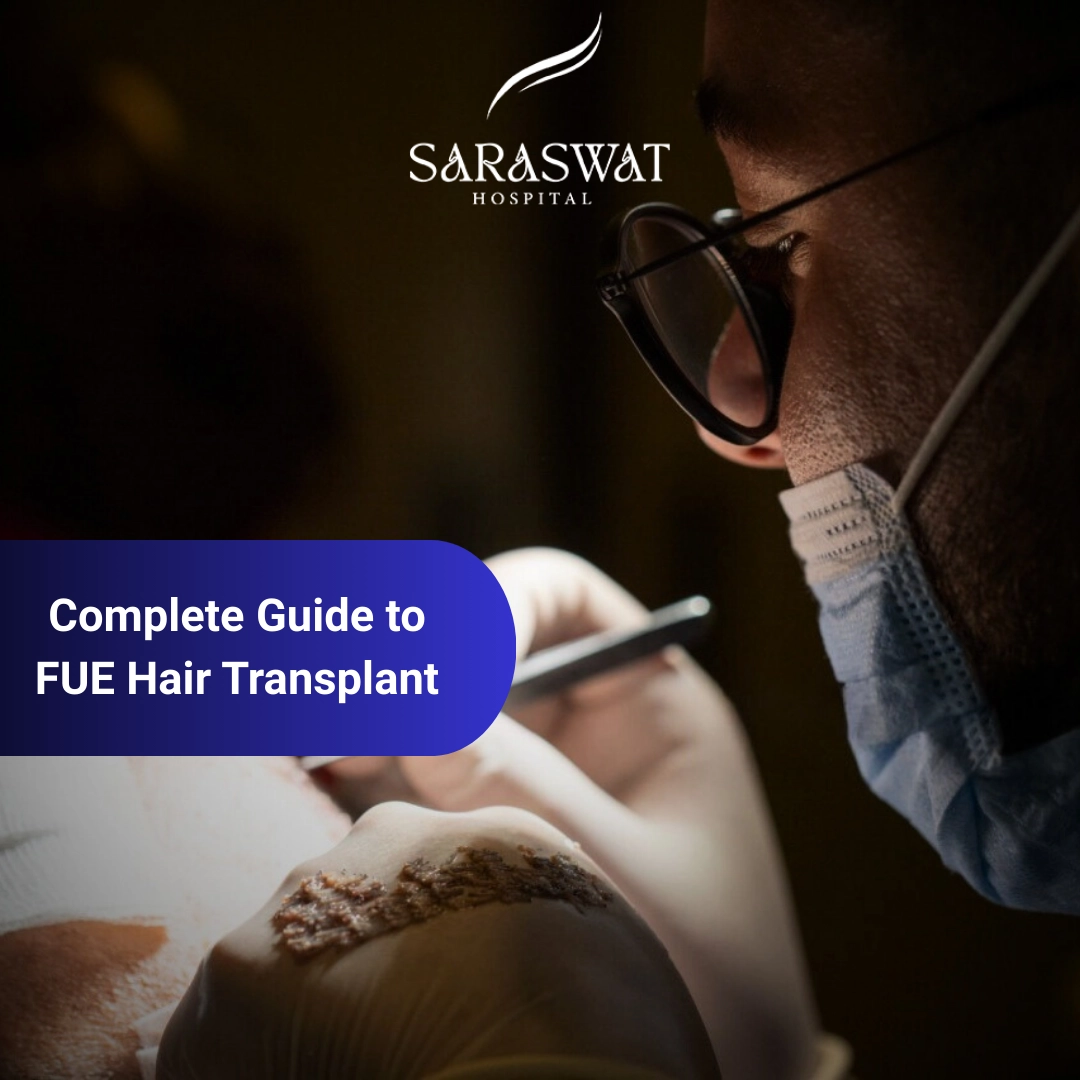
FUE is an abbreviation for Follicular Unit Extraction. It is a safe and comfortable hair transplant procedure for patients where individual hair follicles are extracted one by one from the donor site and then transplanted into the bald area.
This procedure does not involve any cutting or stitching of the scalp. Micro-punches are employed in this method, which cause dot-like scars that are barely visible after the surgery.
How FUE Differs from Traditional Methods
To make it clear, let’s take a simple example. Let’s consider an example of how you can pick some apples from a tree:
- FUT is like uprooting the entire branch and then picking the apples later.
- FUE is like picking the apples one by one from the tree.
- FUE is more accurate, safe, and has a faster recovery time with no linear scar visible.
How Does FUE Work?
Hairs on the human head are always found in groups, which are called follicular units. These units consist of 1 to 4 strands of hair. They are also resistant to baldness and are genetically programmed. When these units are transplanted into bald areas, they continue to grow and maintain their original properties.
The donor area is typically the back and sides of the head because the hair in these areas is not prone to baldness. The recipient site is the area where the hair is thinning or balding.
The success of FUE hair transplants is completely dependent on the quality of the donor hair and the skill of the surgeon.


Step-by-Step Procedure
Consultation: The first step starts with the consultation, in which the condition of the scalp and the density of hair are calculated with the help of trichoscopy. The hairline is also designed, and the expectations are set. This phase is very critical as it is the key to the success of the entire process.
Donor Area Preparation and Local Anaesthesia: The donor area was cleaned while local anaesthesia is administered, making it safe.
Hair Follicle Extraction: In FUE, a micro-punch device (0.6-1 mm) is used to carefully remove individual hair follicles. This is very helpful for extreme accuracy and expertise.
Graft Preservation: The harvested hair follicles are stored in a unique medical solution that maintains them alive and healthy until the time of implantation.
Recipient Site Creation: Tiny incisions are made in the balding area, according to the natural angle of the existing hair.
Graft Implantation: Each individual hair follicle is implanted one by one in the recipient site. This calls for extreme expertise to achieve a natural-looking hairline.
Post-Operative Care: The patients are given care instructions, medications, and follow-ups for a smooth recovery and the best results.
FUE Recovery Timeline
First week after procedure, you may notice:
- Swelling
- Redness
- Small scabs
These effects will resolve on their own in a couple of days.
First Month Post-Surgery: The transplanted hair may start shedding. This is called shock loss and is normal.
3 to 6 Months Growth Phase: In this phase, new hair growth starts in full swing. During this phase, you will see noticeable progress.
Final Results at 12 Months: Maximum growth and density are achieved. The hair looks natural, thick, and permanent.
Advantages of FUE Hair Transplant
Minimally Invasive Procedure: Modern hair transplant procedures are minimally invasive. This implies that there are no cuts or stitches involved. The procedure is very gentle on the scalp and does not cause much trauma.
Natural-Looking Results: The most significant benefit of contemporary hair transplant surgery is that it provides natural-looking hair transplant results. The hairline is created in a manner that suits the patient’s face, age, and hair. This ensures that the transplanted hair looks absolutely natural and blends well with the existing hair.
No Linear Scars: Contemporary hair transplant surgery does not cause linear scars. This means that patients can sport short haircuts without any worry of scars on the scalp. The small holes where the hair is extracted heal quickly and are almost invisible.
Faster Recovery: The recovery period is relatively short for minimally invasive hair transplant procedures. Patients can easily resume their routine work in 2-3 days. Redness or swelling may be experienced, but it will resolve on its own in no time, and patients can continue with their daily activities.
Permanent Solution: Hair transplant is a permanent solution for hair loss. The transplanted hair follicles are not prone to hair fall and grow normally for an entire lifetime. With complete care, you can get long-lasting results and dense hair.
Disadvantages
Higher Cost: FUE is way costlier relative to FUT hair transplant surgery. This is because FUE requires advanced technology and more skill on the part of the surgeon and his team. In this process, individual hair follicles are extracted, which is time-consuming, and hence the cost of FUE hair transplant is higher.
Time-consuming: FUE is a time-consuming procedure, especially when the recipient needs a lot of grafts. In such situations, the surgery may take anywhere from 6 to 8 hours or even longer, as each follicle is individually implanted into the scalp.
Limited Donor Area: FUE is not an option for patients who have a limited hair growth area. This is because FUE is a procedure whereby individual follicles from the donor area are implanted into the scalp, and a limited donor area may mean that a limited number of grafts are available.
Side Effects of FUE Hair Transplant
- Swelling
- Redness
- Itching on the scalp
- Mild sensation of pain
- Infection, which is rare
- Poor growth (very rare)
- Minor scarring
All these side effects are rare if the procedure is performed by a qualified surgeon.
Limitations of FUE Hair Transplant
Over-Harvesting: The first limitation of FUE hair transplant is the risk of over-harvesting. As the individual follicles are removed from the donor site, there is a risk of over-harvesting, which may lead to thinning of the donor site, making it look patchy and unnatural.
High Transection Rates: Another limitation is the high transection rate and the risk of damage to the grafts. As the follicles are removed, they may be partially or fully damaged if the procedure is not done accurately, which may affect the survival rate of the grafts and the final result.
Not Suitable For High Density: FUE hair transplant is also not suitable for high-density hair transplants because the individual follicles are extracted and separated. Therefore, it becomes quite difficult to achieve high density compared to other hair transplant procedures.
Demands a Qualified Surgeon: FUE requires a skilled hair transplant surgeon who has a lot of skill and precision.
Pre and Post Procedure Tips
Before the Procedure
- Quit smoking & alcohol
- Get proper sleep
- Take the doctor’s considerations
After the Procedure
- Avoid any strenuous activity
- Avoid sun exposure
- Use the prescribed medications & shampoo
- Regular follow-ups with the doctor
Common Mistakes to Avoid After FUE
- Touching grafts
- Excessive sweating
- Smoking
- Skipping medications
Who Is the Best Candidate for FUE?
Age and Hair Loss Pattern: Suitable for people aged 22-55 years with stable hair loss.
Health Considerations: You should be in good health condition and not have any serious medical problems.
Realistic Expectations: FUE increases density, not magic. This is very important to understand.
India offers world-class expertise at an affordable cost, making it one of the most sought-after destinations for medical tourism. At Saraswat Hospital, patients receive world-class treatment at an affordable cost.
FUE vs FUT vs DHI – Which one to Choose?
| Criteria | FUE (Follicular Unit Extraction) | FUT (Follicular Unit Transplantation) | DHI (Direct Hair Implantation) |
| Procedure Type | Individual follicles are extracted one by one | Strip of hair removed from scalp | Follicles are implanted directly using a Choi pen |
| Scarring | Tiny dot scars, barely visible | Linear scar at the donor area | Minimal scarring similar to FUE |
| Recovery Time | Fast (5–7 days) | Moderate (10–14 days) | Fastest (4–6 days) |
| Pain & Discomfort | Mild | Moderate due to stitches | Least discomfort |
| Hair Density | Moderate to high | High density possible | Very high and precise density |
| Cost | Moderate to high | Most affordable | Most expensive |
| Shaving Required | Yes | Partial or not always | Yes |
| Suitable for Large Bald Areas | Good | Best | Limited |
| Graft Survival Rate | High | High | Very high |
| Ideal Candidate | Mild to moderate baldness | Advanced baldness | Small areas, hairline design |
Why Prefer Saraswat Hospital for FUE Hair Transplant?
The importance of a certified and experienced surgeon is crucial in a hair transplant. Saraswat Hospital is better known for the following factors:
- Advanced and latest equipment with expertise
- Latest FUE technology
- High magnification tools
- International standards
- Patient-Centric approach
- Personalized care for patients
- Ethical detailed counseling
- Natural hairline creation from the doctor himself.
Following aftercare is just as important as the surgery itself. FUE hair transplant is one of the safest, most effective, and most natural solutions for hair loss available today. When done by an expert like Dr. Satya Saraswat at Saraswat Hospital, it becomes a life-changing experience.
Saraswat Hospital is widely recognized for its FUE hair transplant procedure. You can get your desired result with the best success rate and minimal discomfort. Get in touch with us through online consultation and discover more information about the FUE hair transplant.
Follow us on:- Facebook, Instagram, Pinterest, Youtube