
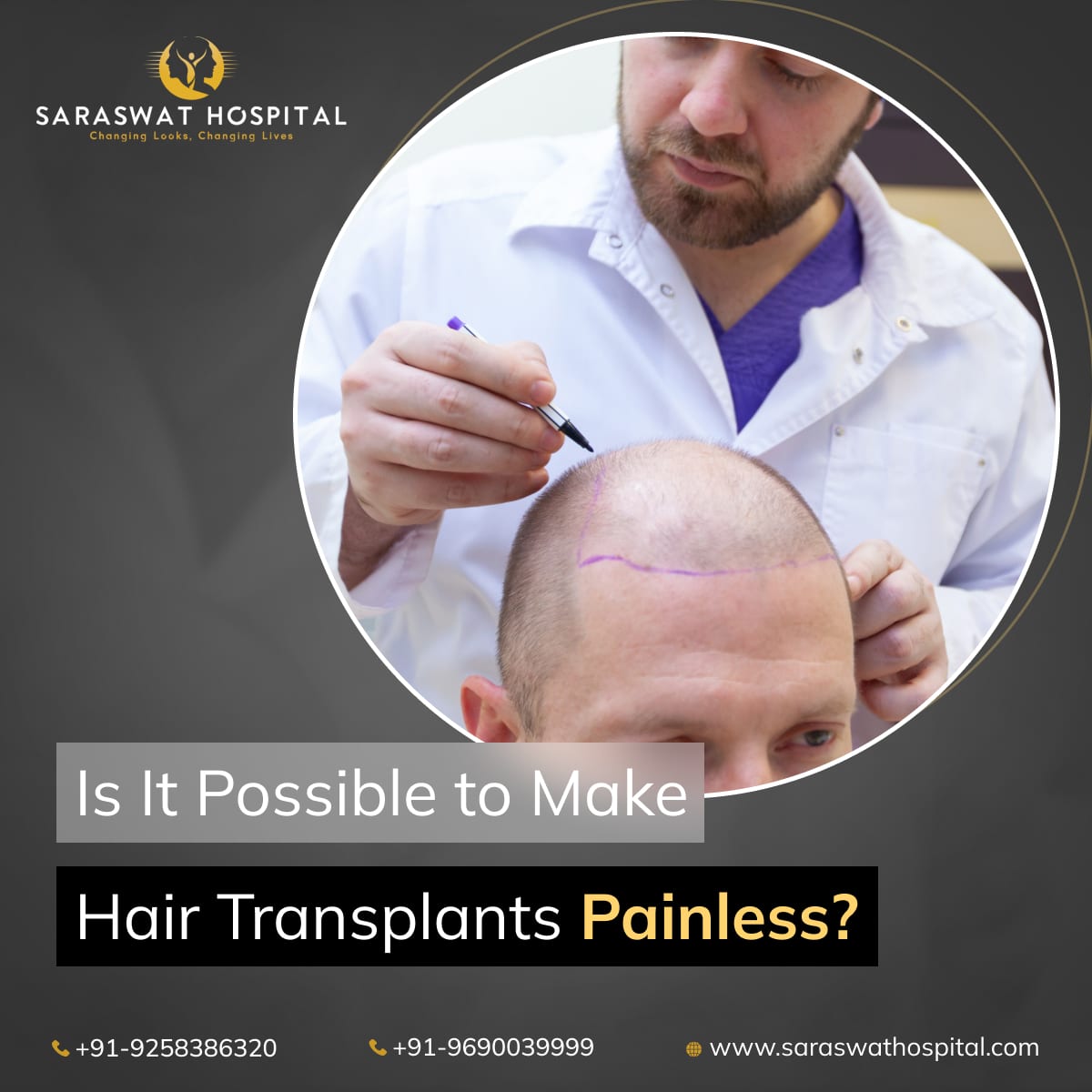
In the quest for regaining a head full of natural-looking hair, many individuals find themselves pondering over a question: Are hair transplants painful? The fear of pain associated with surgical procedures is common, but it often leads to hesitation and many doubts. If you are planning to get hair transplants in India or elsewhere, you should first separate fact from fiction to uncover the reality.
Hair transplants are an effective way to get your natural hair back and permanently get rid of baldness or thinning hair. Nowadays, many people are aware of the benefits of hair transplants in India and the rest of the world, with the help of the internet and major social media platforms. Just like the benefits, many myths and misconceptions are also circulating nowadays surrounding this hair loss treatment. So, it’s better to know the reality now, as it will help you make an informed decision.
What Is a Hair Transplant, and How Is It Done?
A hair transplant is a surgical procedure in which expert doctors remove hair follicles from the safe donor area and then transplant them to the recipient area (where the patient has baldness or hair thinning). Hair transplants are suitable for both men and women. In 2021, 703,183 hair transplant procedures were performed globally, according to ISHRS (1). In India, approximately 3,50,000 hair transplant procedures take place every year (2). The demand for successful hair transplants in India and other countries has been rising rapidly.
Two popular methods of hair transplantation are follicular unit extraction (FUE) and follicular unit transplantation (FUT). These procedures differ from each other and should be performed only by qualified surgeons with years of experience.
The FUE procedure involves extracting individual hair follicles from the donor site using a specialised punch tool, and then they are transplanted in the recipient area. In FUT, surgeons cut a thin strip of scalp containing hair follicles, typically from the side and back of the scalp. After that, the strip is dissected into smaller grafts and transplanted into the recipient site.
Both hair transplant procedures require careful planning and advanced skills and expertise to ensure natural-looking results. Before the procedure, doctors will administer anesthesia to keep the procedure pain-free or discomfort-free for patients. The hair transplant recovery period may vary from one patient to another, but most patients can resume their work within one to two weeks.
Are Hair Transplants Painful?
Now we come to the actual concern of whether the procedure is painful or not. Every surgical procedure has its own complexity and may cause pain for the patient. Whether you need to face pain or discomfort depends on how your doctor has planned the procedure for you. At Saraswat Hospital, Dr. Satya Saraswat, Dr. Preeti Saraswat, and their team always take the best measures to keep the entire procedure pain-free for patients.
Doctors should educate the patient about the entire procedure, including the hair transplant side effects, to help them make an informed decision. Many patients feel anxious before the procedure, and expert doctors know how to make their patients feel confident and set up a positive mindset.
Doctors start the hair transplant procedure with local anesthesia. They directly inject the numbing solution into the scalp using a fine and sterile needle to prevent patients from feeling any sort of pain during the procedure. At Saraswat Hospital, doctors also use vibration devices to reduce pain sensations. This is the only step where a patient may feel a bit of pain during the entire procedure.
Can One Experience Pain After the Hair Transplant Procedure?
After the hair transplant procedure, a patient might feel mild discomfort or pain.
- Once the effect of anesthesia fades away, patients might feel mild discomfort or dizziness for some time. The heavy feeling will go away after a few hours.
- The mild pain or discomfort may last for three to five days. Doctors prescribe painkillers and suggest other pain management methods to ensure comfort and a faster recovery for the patient.
- Generally, most patients do not feel pain during the recovery phase. Some minor discomforts, like swelling or heaviness, can be present. When the scabs start to dry, the patient might experience itchiness.
- Also, note that some people have higher pain thresholds and may experience zero to little pain during or after the procedure. Patients with lower pain thresholds may experience more pain. However, advancements in anesthesia techniques and the skills of the surgeon keep the procedure pain-free for patients.
If you experience severe pain or abnormal swelling, immediately inform your doctor. The doctor may prescribe antibiotics or painkillers to manage the pain and ensure the success of the procedure.
Where Can You Get a Completely Comfortable Hair Transplant in India?
Hair transplants are effective in restoring your natural hair and getting rid of baldness. However, the procedure should also be easy and discomfort-free for patients. For successful hair transplants and pain management, it is crucial to choose the right hair transplant doctor. You should get the procedure done by doctors who are qualified and have years of experience.
Conclusion
Just like any surgical procedure, a hair transplant might also cause little discomfort or pain. However, an expert surgeon can plan the treatment accordingly and keep the journey pain-free for the patients. In order to get successful hair transplants in India, Saraswat Hospital is an ideal platform.
Book an online consultation with our team and learn more about hair transplant, and find out how many grafts are required in your case, and get a customized plan for a natural-looking hairline.
Sources:
(1) In 2021, 703,183 hair transplant procedures were performed globally. (ISHRS 2022 Practice Census Results)
(2) In India, approximately 3,50,000 hair transplant procedures take place every year. (Times of India)
FAQs
1. Can I touch my grafts after 7 days?
After 7 days, your grafts are stable, but you shouldn’t scratch or rub your scalp. It is fine to wash your hair, but refrain from aggressively touching any loose grafts. Follow your surgeon’s guidelines carefully.
2. How do I sleep after a hair transplant?
For the first week after surgery, rest your head at an angle of 45°. You can use a travel pillow or a reclining chair. This will prevent swelling and grafts from coming into contact with the pillow surface.
3. Who is a bad candidate for a hair transplant?
Candidates who have diffuse hair loss, inadequate donor hair, unpredictable hair loss, unrealistic goals, and skin conditions such as psoriasis or alopecia are not good candidates for hair transplants.
4. Is balding 100% genetic?
No. Genetics is important, but other factors like hormone levels (DHT), stress, poor nutrition, medical disorders, and medications can all play roles. Genetics only indicates vulnerability, not inevitability.
5. Will I go bald if my mom’s dad is?
No. The genes of your maternal grandfather do play a part due to inheritance via the X chromosome, but hair loss is polygenic and inherited on both sides of the family tree.
Follow us on:- Facebook, Instagram, Pinterest, YouTube
This article is for informational purposes only and does not constitute medical advice. Plastic, cosmetic, and laser treatments — including AI-assisted previews such as those generated by the Peek AI™ app — carry risks and results vary by individual. Always consult a licensed medical professional before undergoing any procedure.