
Book an
Appointment
Avatar photo

Dr. Satya Saraswat, MBBS, MS, MCh, DNB (Gold Medalist)

Dr. Satya Saraswat, MBBS, MS, MCh, DNB (Gold Medalist), FISHRS, is a cosmetic and plastic surgeon with an experience of over 20+ years and has performed 17,000+ cosmetic and plastic surgeries. He is a Diplomate of the American Board of Hair Restoration Surgery (ABHRS) and Fellow of ISHRS, as he has been continuously attending the International conferences and adopting the latest advancements in hair restoration science, and he has also submitted his research papers. His hands-on involvement ensures a natural hairline and high graft survival.

Articles by Dr. Satya Saraswat, MBBS, MS, MCh, DNB (Gold Medalist)

Facial Rejuvenation Treatments to Fight Acne Scars

We, as a society, place a lot of value on our appearance. We often judge people on their looks and hence, feel conscious about our self-image. Acne scars are one thing that causes a lot of grief to many people. They are stubborn and refuse to go away, which makes some people feel anxious about their looks. Thanks to advancements in cosmetology, one can now opt for advanced acne scar treatment through various facial rejuvenation treatments. At Saraswat Hospital in Agra, we have AAAM-certified cosmetology expert Dr. Preeti Saraswat, who offers personalised treatment options for acne and other skin problems.

Below, we look at some popular facial rejuvenation treatments that are effective in fighting acne.

Fractional CO2 Laser Skin Resurfacing

Fractional CO2 Laser method is an effective acne scar treatment. Laser beams are targeted on the intended part of the skin to create small puncture wounds and damage the upper layer of the skin. This triggers the body to produce a higher level of collagen, which helps in healing the tiny wounds faster. A new layer of skin is formed in its place, which is known as skin resurfacing. This new layer of skin has visibly reduced acne marks. The patient gets brighter, younger-looking, and a radiant skin. This treatment also works well for signs of ageing and pigmentation marks.

Subcision

When acne happens, deep fibrous bands are formed between the acne scar and its underlying skin tissues. In the subcision method, a specialised needle is inserted into the skin to break down the acne scar’s fibrous bands. This treatment is effective in dealing with depressed acne scars. The insertion of the needle also kickstarts the process of collagen production, which further helps in reducing the acne scars.

Microdermabrasion

A handheld device, like a derma roller, is used for this particular method. The derma roller is applied to the face in long, straight motion, which creates a pathway of tiny wounds on the skin. This causes the body to produce collagen and elastin at a much faster rate, helping the wounds to heal faster. New skin resurfaces in the process. This acne scar treatment is useful for mild acne scars.

Dermabrasion

This can help deal with severe acne scarring. A rapidly rotating device, such as a high-speed brush, is used to remove the uppermost layer of the skin. In the process, the surface-level scars get completely eliminated, and the deeper scars become less visible. The body also produces more collagen, which results in a new layer of skin resurfacing. This treatment can be used for all types of scarring, including hyperpigmentation.

Chemical Peels

In this method, purified fruit acids or synthesized chemical solutions are applied to the affected area of the skin. The solution is targeted at the concerned scar tissue with the intention of removing the upper layers of the skin. Applying the chemical peel stimulates more production of collagen in the body and promotes cell renewal to form new and brighter skin. This method visibly reduces the appearance of deeper acne scars.

Micro Needling

In this procedure, the intended part of the skin is repeatedly pricked by small microscopic needles over and over again. The goal here is to stimulate the production of more collagen and elastin in the body at a much faster rate. As the wounds heal and new skin forms, it visibly reduces light acne scars, fine lines, and wrinkles.

Conclusion

Acne scars are difficult to get rid of using over-the-counter cosmetic creams. At Saraswat Hospital, we have internationally certified experts specialised in facial rejuvenation treatments. We offer personalised acne scar treatment to patients based on the severity of their acne conditions. For more information, contact our team.

Follow us on:- FacebookInstagramPinterestYoutube

What are the Factors Influencing Cost of Laser Hair Removal?

Are you tired of making a salon visit every 3-4 weeks to wax your arms and legs? Feeling unsatisfied with the poor results of shaving your unwanted hair? Well, there’s no need to worry! You can choose the quick and effective solution of a laser hair removal procedure to get rid of your body hair. The laser beams completely destroy the hair follicles, thus giving you permanent hair removal results with zero side effects. At Saraswat Hospital in Agra, we have internationally-certified skin experts who guarantee a safe and painless procedure. But before you book your first session, it’s important to understand the cost of laser hair removal and what factors can make it vary from person to person.

Unwanted hair removal using laser treatment is applicable for both men and women. It is popular because it is safe, painless, hassle-free, saves time, and has no side effects. In terms of cost, laser hair removal can be expensive. But it is far more cost-effective in the long run because of the long-lasting results.

What is the Cost of Laser Hair Removal?

This is among the most asked questions by patients. The cost of laser hair removal actually depends on a variety of different factors. We discuss them below.

  • Size of the Treatment Area

Laser hair removal is suitable for almost every part of the body. This includes arms, underarms, legs, back, chest, face, upper lip, chin, and bikini line. The cost of the procedure will depend on which part of the body you want to get treated. If it is a smaller area like the upper lip, chin, or face, the cost will be on the lower side. But if you want to go for hair removal on a larger area like the back, chest, arms, or legs, then the cost will be higher.

  • Number Of Sessions Required

Since the laser beams are only effective against hair that is in the active phase of growth, the same area of the skin has to be treated multiple times to destroy all the hair follicles in that area permanently. So, the cost may vary based on the number of sessions.

  • Skin Colour

Your skin tone and skin colour are important factors in the effectiveness of laser treatment. Patients with darker skin tones need a greater number of sessions to complete a treatment as compared to patients who have lighter skin tones. As a result, the cost also increases.

  • Hair Colour

When the laser beams destroy a hair follicle, they are essentially trying to remove the hair pigment from your skin. So, patients with darker-coloured hair need fewer sessions than patients with lighter-coloured hair. This again influences the final cost of the procedure.

  • Hair Density

The price is also influenced by how much body hair a person has. People who have a higher density of body hair will have to pay more than people who have less hair. This is because the former will need a larger number of sessions to get rid of all unwanted hair.

  • Hair Texture

The texture of your hair is also a significant factor. A person with rough hair will need to go through more sessions of the laser procedure, vis-à-vis a person with softer hair. And if you have more sessions, then your cost will go up.

  • Choice Of Laser Equipment

The type of equipment used for laser hair removal is an important factor in determining the cost. You must choose a reliable and trustworthy clinic that only uses the latest and technologically advanced laser machine for the procedure.

  • Experience Of the Doctor

Qualified and certified doctors should perform laser-based procedures to ensure safety and effectiveness. When consulting with a qualified and experienced cosmetologist, expect to pay higher fees.

Conclusion

At Saraswat Hospital, we provide safe laser hair removal in Agra at affordable rates. While the cost of laser hair removal may vary for each patient, you can be assured that the many benefits absolutely justify the final cost. Book an appointment to find the best laser hair removal treatment for you.

Follow us on:- FacebookInstagramPinterestYoutube

How Soon Are Hair Grafts Secure After a Hair Transplant?

Recently, hair transplants have emerged as a highly popular treatment option among many hair loss patients. Notably, this cosmetic procedure is safe, painless, and minimally invasive. To ensure a successful outcome from the procedure, consider visiting Saraswat Hospital in Agra, widely regarded as the best place for hair transplants in India. Moreover, the clinic is led by ABHRS-certified surgeons, Dr. Satya Saraswat and Dr. Preeti Saraswat. Hair transplants are popular among patients because they give natural-looking and permanent results. But one question that all patients ask: “How Soon Are Hair Grafts Secure”?  Before finding out the answer to this, let us first understand the hair transplant process.

What is a Hair Transplant?

Hair transplant is a cosmetic procedure performed to restore the natural hairline of a patient. Initially, for the surgery, healthy hair follicles are carefully removed from the donor area of the scalp and subsequently implanted in the recipient area. Specifically, the donor area refers to the sides and back portion of the scalp, whereas the recipient area refers to the balding areas. Once the transplanted follicles begin showing signs of hair growth, the bald portion of the scalp gradually receives coverage.
It gives natural-looking and permanent results.

How is a Hair Transplant Surgery Performed?

Hair transplant procedures are performed under the effects of local anaesthesia. Notably, this approach is completely safe and painless, with minimal side effects. Furthermore, hair transplants can be conducted using two distinct techniques:

  • FUE

FUE, or Follicular Unit Excision, is an advanced method of hair transplant. Hair follicles are directly extracted from the scalp in this technique. No cuts or stitches are needed in this process. A specialised low-torque, low-RPM tool is used for removing the hair follicles. FUE hair transplant in India is more popular as it has a quicker recovery period.

  • FUT

FUT, or Follicular Unit Transplantation, is the transitional method of doing a hair transplant. A strip of skin containing healthy hair follicles is surgically removed from the donor part of the scalp. This strip of skin is then placed under the microscope to extract the hair follicles. This process leaves a long and linear scar on the back of the head from where the skin has been removed. FUT hair transplant has a longer recovery period as the stitches need time to heal.

How soon do the Hair Grafts Become Secure?

The newly transplanted hair grafts take between 10 to 14 days to get firmly secured. These grafts must settle nicely into the scalp to ensure successful hair growth results.

In the initial days after the hair transplant, the grafts are still in a vulnerable stage. Any sort of disturbance during this period could potentially dislodge the grafts and hamper the results.

Post-Op Tips to Secure the Hair Grafts

It is important to follow certain restrictions after a hair transplant surgery to ensure the hair grafts do not get damaged or dislodged. When you go to the best place for hair transplant in India, your surgeon will give you a list of important don’ts.

1. Do not wash your hair

Refrain from washing your hair for the first 48 hours after a hair transplant. Afterwards, make sure you are extremely gentle with your hair wash. Do not scrub your scalp too aggressively.

2. Do not sleep flat

For the first three days after the transplant, ensure your head remains in an elevated position. For instance, you can sleep on a recliner or use several pillows to maintain an upright position. However, take care not to rub your scalp against the pillows, as this could potentially dislodge the grafts.

3. Do not wear a hat

Avoid wearing a hat or any other headgear for the first three days after the hair transplant. After three days, you can wear a loose-fitting cap to cover your scalp. But make sure it is not too tight, otherwise it may damage the grafts.

4. Do not exercise

You must not participate in any physical exercise or other strenuous activity for the first seven days after your transplant. This is to ensure that your blood pressure and heart rate remain stable. Exercise can also lead to sweating, which is not good for the hair grafts. Hence, all types of heavy physical activities must be avoided.

Conclusion

Once your hair grafts become secure, then they can start the process of hair growth in the recipient site. You can start seeing short hair visible on the scalp 2-3 months after the transplant. And the complete results can be seen only 9-12 months after the hair transplant procedure. If you want to undergo a FUT or FUE hair transplant in India, book an online consultation today for the best results.

Follow us on:- FacebookInstagramPinterestYoutube

Top 7 Benefits of Laser Hair Removal Treatment

Unwanted body hair is a hassle that no one wants to deal with. In today’s society, where looks and grooming have become so important, people want to flaunt their smooth, hairless skin. Waxing and shaving are one way to eliminate body hair, but the results are often unsatisfactory. This is why many people nowadays opt for laser hair removal treatments. During this procedure, the high intensity of the laser destroys the hair follicle underneath the skin. It is a safe and painless procedure that ensures permanent hair removal results. We’ll explore the 7 benefits of laser hair removal and why it might be the perfect solution for smooth, hair-free skin.

Discover the 7 Benefits of Laser Hair Removal

Laser hair removal is more than just a beauty treatment—it’s an investment in convenience and confidence. Here are the top 7 benefits of laser hair removal that make it worth considering:

1. Saves Time

Other alternatives, like waxing and shaving, require a lot of time and effort. Both processes need to be repeated every 3-4 weeks to maintain completely hairless skin. One ends up spending a lot of their hours in the salon due to this.

With laser treatments, each session doesn’t take more than 30 minutes. Since the laser machine targets multiple hair follicles simultaneously, it becomes a quick procedure. The results are precise and effective, thus saving time.

2. Cost-Effective

In India, a salon appointment for hands and leg waxing charges between Rs. 800 – Rs. 2000 based on the kind of parlour you visit. Imagine spending this much every month! And if you prefer the shaving method, then calculate the estimated cost of razors, shaving creams, and lotions that you spend monthly.

Now compare the waxing and shaving costs to the one-time price of a laser hair removal procedure. Once you finish the treatment, the results are permanent. So, even if the price is a little on the higher side, think of it as a lifetime investment. Hence, laser treatments are cost-effective in the long run.

3. Painless

In waxing, the hair follicles are forcefully uprooted from their roots. It is an uncomfortable and often painful experience for most people. With shaving, there are chances of small cuts or nicks, which may cause minor bleeding.

Using laser treatment for unwanted hair removal involves zero pain. At the most, patients may feel a similar sensation of a small pinprick. There is no other discomfort or side effect. The laser hair removal procedure is completely safe, painless, and comfortable.

4. Personalised treatment

The settings in the laser machine can be customised as per the individual skin colour and skin tone of the patient. Always choose a reputable clinic where certified experts perform the procedure.

5. Precise results

Thanks to the advancement in technology, the laser machine targets only a specific part of the body. Hence, laser procedures are the best way to remove unwanted hair from selected areas such as the upper lip, chin, or bikini line. The procedure gives you precise results.

6. Stops hair ingrowth

In a laser procedure, the microbeams destroy the hair follicle from underneath the skin. The laser completely destroys the hair root from within, eliminating any chances of ingrown hair on the skin.

7. No waiting for regrowth

One big problem with hair removal via waxing is that people have to allow the body hair to grow up to a certain point. If there is not enough hair to pull, waxing cannot be done properly. With laser hair removal, there is no need to wait for this hair regrowth to happen. The procedure can be performed at any time if the hair is in the active (anagen) phase. Also, it’s important to follow proper laser hair removal aftercare to ensure the best results.

Why the 7 Benefits of Laser Hair Removal Make It Worth It

These 7 benefits of laser hair removal show why it’s the preferred choice for permanent hair reduction. It’s convenient, effective, and safe, helping you achieve smooth, confident skin with minimal effort.

Conclusion

Laser hair removal is a great way to eliminate unwanted body hair. But one must be very careful while choosing a cosmetic clinic. Make sure you find a reputable clinic that uses FDA-approved equipment to ensure a safe and painless experience. If you want a place for laser hair removal in Agra or nearby cities, then choose Saraswat Hospital in Agra. We have certified cosmetologists who offer personalised treatments.

Follow us on:- FacebookInstagramPinterestYoutube

5 Helpful Tips for Quick Hair Transplant Recovery

Hair transplants are regarded as fairly easy cosmetic procedures. They are safe, painless, and have a short downtime. And that’s why hair transplants in India and worldwide are becoming more popular each passing day. The chances of any complications arising are fewer. In a hair transplant surgery, healthy hair follicles are removed from the donor area of the scalp and implanted into the recipient area. The transplanted hair follicles restart the cycle of hair growth in the balding areas and gradually lead to a head full of hair. The procedure gives you natural-looking permanent results, which help improve your appearance and boost self-confidence. We will discuss tips for quick hair transplant recovery.

What is the Recovery Period After a Hair Transplant?

The average recovery period for most hair transplant patients is between 7-10 days. FUE patients can resume work after a week, while FUT patients might need some more time to recover due to stitches. When you get treated at the best place for hair transplant in India, such as Saraswat Hospital, patients are given detailed post-op instructions with a list of dos and don’ts.

5 Tips for Quick Hair Transplant Recovery

Patients who get hair transplants in India should follow these 5 tips for quick hair transplant recovery:

1. Avoid Exercise and Strenuous Activities

It is recommended to avoid physical exercise and other strenuous activities for the first 5-7 days after the procedure. The reason is to prevent an increase in blood flow to your scalp. So, it is advised to pause your regular gym sessions, jogging, or sit-up routine for a week after the hair transplant. Patients must also refrain from certain body movements. For example, you should bend down from your knees, not your waist. Any activity that causes sweating should also be avoided. An increase in blood pressure on the scalp or excessive sweating can loosen the hair grafts.

2. Don’t Wash Your Hair Immediately

It is safe to wash your hair 48 hours after a hair transplant procedure. You must not touch your scalp for the first two days after the surgery to avoid disturbing the newly planted grafts. While washing hair, be very gentle. Pour 2-3 drops of shampoo in a cup full of water and mix it. Then, pour this solution into your head and gently massage the scalp for cleansing. Avoid direct contact of the grafts with high-pressure water. Hence, do not put your head directly under the shower for the first week.

3. Skip Wearing a Hat

Once you undergo the hair loss treatment of a transplant procedure, it is natural to want to cover your shaved scalp. But please wait a minimum of 3 days to prevent any damage to your hair grafts. Once 3 days have passed, you can start wearing a loose-fitting hat. After 5 days of the transplant, you can wear tight-fitted headgear, such as a baseball cap.

4. Say No to Alcohol & Smoking

When you visit the best place for hair transplant in India at Saraswat Hospital, the doctor gives a list of restrictions to the patient that must be followed. Drinking alcohol leads to blood thinning and, hence, must be avoided for a week after the procedure.

Cigarettes contain nicotine, which constricts the blood vessels and decreases blood flow. Smoking can negatively impact hair growth after the hair transplant, and must be avoided for four weeks after the surgery.

5. Manage Swelling, Itching, and Sun Exposure

Swelling is a normal hair transplant side effect that lasts for the first 3–4 days. Keep your head in an elevated position for the first 72 hours to reduce the swelling. You can sleep on a recliner instead of the bed to avoid keeping your head flat.

As the wounds start healing, the scalp may become itchy. Patients must avoid scratching and allow the scabs to form naturally for a faster recovery.

Do not expose your head to direct sunlight for two weeks after the surgery. Wait for 5 days, and then you can wear a hat before going outside. Also, ask your surgeon for tips on how to keep new hair healthy after a hair transplant, and follow everything accordingly.

To know more about hair transplant side effects and complications, watch this video by Dr. Satya Saraswat:

Conclusion

Hair transplants are undoubtedly one of the best hair loss treatment options. A hair transplant successfully restores your natural hairline, providing the best results. But you need to follow these 5 tips for quick hair transplant recovery. At Saraswat Hospital in Agra, you get treated under the expertise of ABHRS-certified doctors. To book an appointment for hair transplants in India, call us today at +919258386320 or send an email to saraswathospitalagra@gmail.com.

Follow us on:- FacebookInstagramPinterestYoutube

How Soon Can I Do a Hair Wash After Hair Transplant?

Hair transplants are the most advanced treatment for hair loss conditions. They give you natural-looking permanent results for hair growth that sustains over a long time. It is a type of cosmetic surgery that has a direct impact on the patient’s appearance and looks. To ensure you get the best possible results, follow a hair wash after hair transplant and visit Saraswat Hospital in Agra to be treated by the best hair specialist in Agra. Dr. Satya Saraswat and Dr. Preeti Saraswat are Diplomates from the American Board of Hair Restoration Surgery (ABHRS) with over 20+ years of experience.

To ensure the best results after a hair transplant in India or elsewhere, it is important that you strictly follow the post-op care instructions. The main worry during this period is to avoid any damage or disturbance to the hair grafts.

How soon can you have a Hair Wash After Hair Transplant?

It is recommended to wait 48 hours after the surgery before you have your first hair wash after hair transplant. During these two days, you must avoid touching your scalp at all. Remember to keep the transplanted hair grafts out of harm’s way.

Before doing your hair wash, make sure you consult the doctor first. At our hair transplant clinic in Agra at Saraswat Hospital, our surgeons and medical team provide a detailed after-care routine for the patient. You have to be extremely gentle during the hair wash and be careful not to disturb the newly planted follicles. Even after recovery, be careful about your hair grooming and styling to enjoy the goodness of hair transplants for an extended period of time.

Patients shouldn’t wait longer than 48 hours to have their first hair wash. After the hair transplant, the scalp may have a build-up of crust or blood formation, which shouldn’t be allowed to sit for a long time.

What to expect during your first hair wash?

You can wash your hair daily after the 48-hour mark is over. But remember: gentle is the name of the game. Use only your fingertips, not nails, to gently massage your head. Avoid too much scrubbing, as it can dislodge a hair graft.

For the first 5 days of hair washing, the only instruction to keep in mind is to be gentle. You must protect your recipient site and do not let any fast-flowing water directly hit the implanted grafts. This is why it is recommended not to allow your head to go directly under the shower head. Some showers can tend to have a high amount of water pressure.

At Saraswat Hospital, our best hair specialist in Agra recommends using the “pour” method for hair washing post a hair transplant. Fill a cup full of water and gently pour it over your head. Squeeze the shampoo into your palms and lather it well between your fingers before gently rubbing it onto your scalp. Or, you can pour the shampoo into the cup and mix it well with water. Then, pour this shampoo solution over your head and gently rinse the scalp clean.

It is important to keep the donor area of your scalp clean to avoid any scabs and itchiness. Be very careful while massaging the recipient area where the grafts are located. Also, don’t forget to ask your surgeon about tips for quick hair transplant recovery.

Hair Wash Dos & Don’ts

  1. During the hair wash, avoid scrubbing too hard so as not to dislodge any hair graft.
  2. Use only your fingertips for massaging the scalp; avoid sharp nails.
  3. Do not allow high water pressure to disturb the implanted follicles on your scalp.
  4. If using a comb, do not let it touch your scalp.
  5. Do not use any hair gels or hair sprays for the first 7 days of hair washing.
  6. Do not use the blow dryer for the first 3 days of hair washing.
  7. After that, if a dryer is used, keep the heat setting at a low or medium range.

For optimal hair transplant results, you should also focus on your diet and haircare habits. Try to eat protein-rich foods, as they help with better hair growth, and avoid hair products with harsh chemicals or any heat styling. Doctors also prescribe hair supplements, gentle shampoo, and other haircare products that help keep new hair healthy after a hair transplant.

Conclusion

No matter if you go through a FUE or FUT procedure, it is important to know when to hair wash after hair transplant and to pay special attention to your doctor’s post-op instructions to ensure a full recovery after a hair transplant. Saraswat Hospital is a leading and reputable hair transplant clinic in Agra with excellent post-operative care provided to patients. For a successful hair transplant in India, get in touch with us.

Follow us on:- FacebookInstagramPinterestYoutube

Are Hair Transplant Procedures Painful?

Is hair loss becoming a growing concern for you? Are you forced to deal with receding hairlines and hair-thinning problems? Then, you must seek advice from a professional expert at the earliest. Get a personalised consultation from ABHRS-certified doctors at the no. 1 hair transplant clinic in India at Saraswat Hospital in Agra. Worried about “are hair transplant procedures painful” or not? Below, we take an in-depth look at the procedure and find out if the patient feels any pain or discomfort.

What Is a Hair Transplant Procedure?

Hair transplants are cosmetic procedures that aim to restore the natural hairline of a balding person. The back side or two sides of the head are known as donor areas in the scalp. Healthy hair follicles are extracted from the donor area and transplanted to the recipient area, the balding portions of the scalp.

When you opt for a hair transplant in India, there are primarily two methods of performing the procedure.

  • FUE (Follicular Unit Extraction)

In this technique, hair follicles are extracted directly from the scalp using a low-torque, low-RPM machine. There are no cuts or stitches involved in this process. This type of surgery has a quick recovery process.

  • FUT (Follicular Unit Transplantation)

A thin strip of skin is surgically removed from the donor area of the scalp containing healthy follicles. The strip of skin is put under the microscope, and then hair grafts are collected. Stitches are required on the scalp in the area where the skin is removed. This type of surgery has a longer recovery period.

Are Hair Transplant Procedures Painful?

Hair transplant procedures are done under the effects of local anaesthesia. Once the numbing injection is given, the patient feels no pain or discomfort during the procedure. The surgery is a completely painless experience.

Once the anaesthesia wears off, the patient may feel slight discomfort or dizziness for some time. But this is nothing to worry about. The heavy feeling goes away after a couple of hours.

If you choose the No. 1 hair transplant clinic in India, patients are even allowed to go back home on the same day as the surgery. The pain is at a zero level, or minimal in some cases.

What Can Be Expected During the Procedure?

Surgeons perform hair transplants using local anesthesia. They administer a numbing injection to the patient before surgery to anesthetize the scalp area. This ensures that the patient does not feel any pain or discomfort during the procedure.

FUE and FUT methods are used for the extraction of hair follicles. FUE is the more advanced and non-invasive technique for doing a hair transplant. In this, the patient feels no pain or discomfort at all.

FUT is comparatively more invasive. The process requires stitches to be performed on the scalp. This may cause pain or discomfort to the patient during the recovery period.

Do You Experience Pain in the Recovery Period?

Hair transplant patients must take it lightly for the first 3-5 days post-procedure. Avoid exercising or any strenuous activities to give your body the time to adjust and replenish after undergoing the trauma of surgery (however minor it may be).

Typically, most patients do not feel any pain during the recovery period. At most, there might be some minor discomforts like swelling or heaviness. They may also feel scalp itchiness as the scabs start to dry on the head.

In case you experience any severe pains, immediately consult your doctor. He/she will thoroughly examine you and prescribe antibiotics or painkillers to manage the pain.

Conclusion

Are you looking for a safe and trusted clinic for hair transplant in India? Choose Saraswat Hospital in Agra and get treated by ABHRS-certified experts, Dr. Satya Saraswat and Dr. Preeti Saraswat. They provide personalised treatments at affordable rates.

Follow us on:- FacebookInstagramPinterestYoutube

Busting the Most Common Myths About Acne

Acne is a common sight. Tiny or large swellings that look reddish and are quite painful, break out on your face and give you an undesirable appearance. Most people tend to prick it, thinking it to be the end, but sadly, it is not so. Bursting acne causes trauma to your skin and leaves behind dark spots, or what we commonly call acne scars. Sadly, there are a lot of myths related to acne surrounding us. Before opting for any treatment, it is important to get a clearer view of the most common myths about acne.

Top 7 Common Myths About Acne Vs Facts

Getting to the depths of the common myths about acne will reveal the facts that remain shrouded and should necessarily surface. Here are those common myths that must be busted!

# Myth 1: Pollution causes acne

This is quite a common belief, but you need to know better. Acne occurs because of a bacterium called Propionibacterium acnes. Hormonal imbalances can also be held responsible for the acne outbursts, but it is not the only reason. Moreover, keeping your skin safe from pollution is a good thing, irrespective of the fact that it does not lead to acne.

# Myth 2: Unhealthy food habits trigger acne

People widely believe that excessive consumption of oily food items makes the skin unclear with clogged pores. This, in turn, leads to acne. But let us tell you that it is not so. Food items that have a high glycaemic index and dairy products give rise to acne eruptions. Research has shown that there is no link between oily food and acne outbursts.

# Myth 3: Acne eruptions are common only among teenagers

A man or a woman, a boy or a girl, all can get acne. There is neither any gender nor age for the acne outbursts. So, the belief that only teenagers suffer from painful acne outbursts is completely wrong. Adults in their 30s, 40s, and even 50s suffer from the brunt of acne. At Saraswat Hospital, we provide acne scar treatment for individuals who are above the age of 18 years old.

Acne Scar Treatment Results

# Myth 4: Blackheads are different from acne

You will be surprised to learn that blackheads are another form of acne. As a matter of fact, acne is an umbrella term for cysts, nodules, whiteheads, pustules, and blackheads. All these look different but are categorised under acne. Please remember it is advisable that you do not touch them with unclean hands or tamper with them, as it will cause you pain and might lead to severe scarring.

# Myth 5: Acne is a manifestation of a stressed mind

It might just be a coincidence that you get acne at the same time when you are stressed out. But there is no connection between the two. However, we can argue over this because when you are stressed out, your hormones might fluctuate, and as a result, you suffer from acne outbursts. If you keep getting acne that causes you pain and embarrassment, get professional help immediately.

# Myth 6: Avoiding makeup on acne is good

There is nothing good or bad about applying cosmetic products to the acne. It is just that putting makeup on acne only hides it from glaring on your face. Doing so will not cause any harm or prevent a series of acne outbursts from occurring. However, it is important to remove the makeup before going to bed as it helps your skin to feel fresh and breathe.

# Myth 7: Scrubbing and cleansing can help acne disappear

Yes, using a good face wash, a scrubber, a cleanser, and a toner is a good skincare regimen and keeps your skin replenished. But it certainly does not help the acne to subside or disappear. Especially using a scrubber might hurt the tender spots, causing further swelling, pain, and discomfort. If you really want the acne to leave your back, go for a specialised treatment.

Conclusion

Saraswat Hospital offers you safe and effective acne scar treatment at an affordable cost. The treatment diminishes acne scars, and also the progress of the sessions reduces the acne outbursts. If you are tired of seeing acne and acne scars on your face, you must visit Saraswat Hospital and get professional guidance from their AAAM-certified experts.

Follow us on:- FacebookInstagramPinterestYoutube

What is the Timeline for Hair Growth After Hair Transplant?

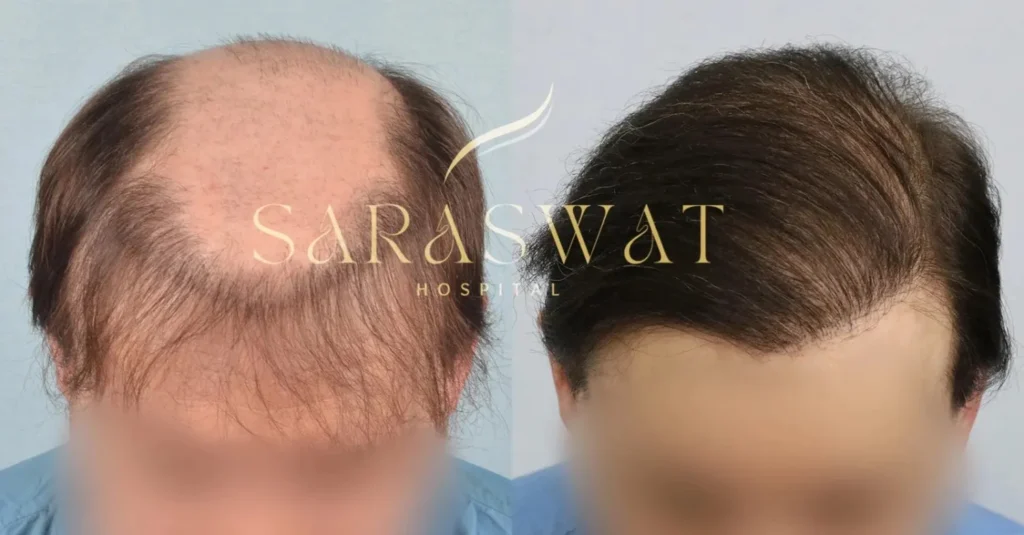
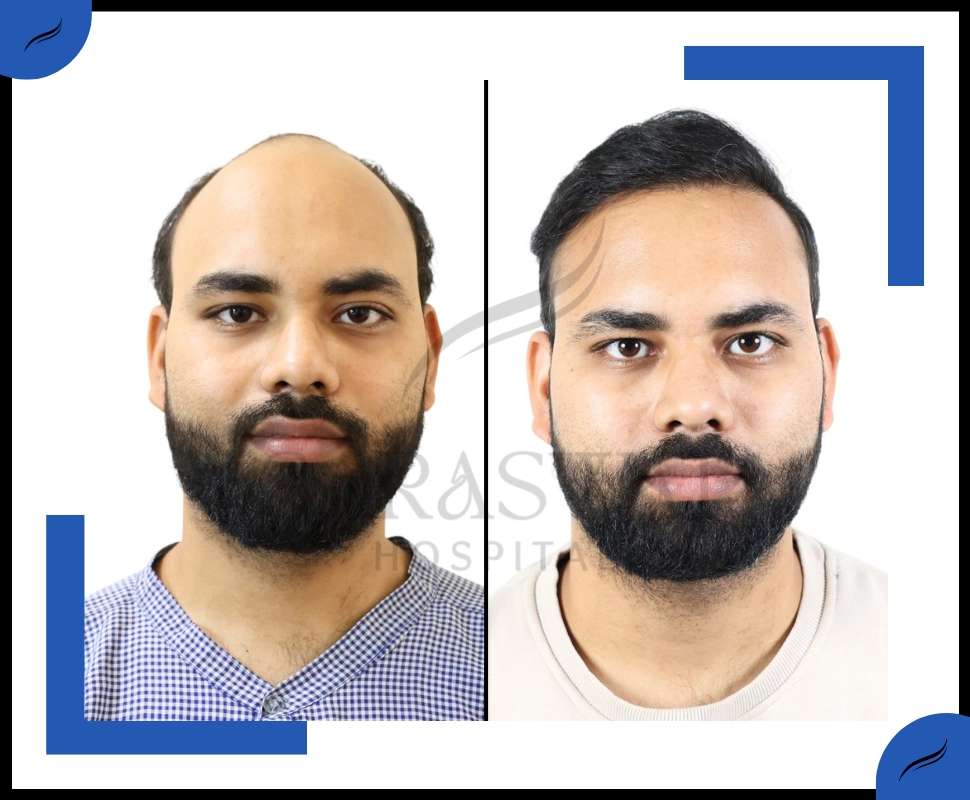
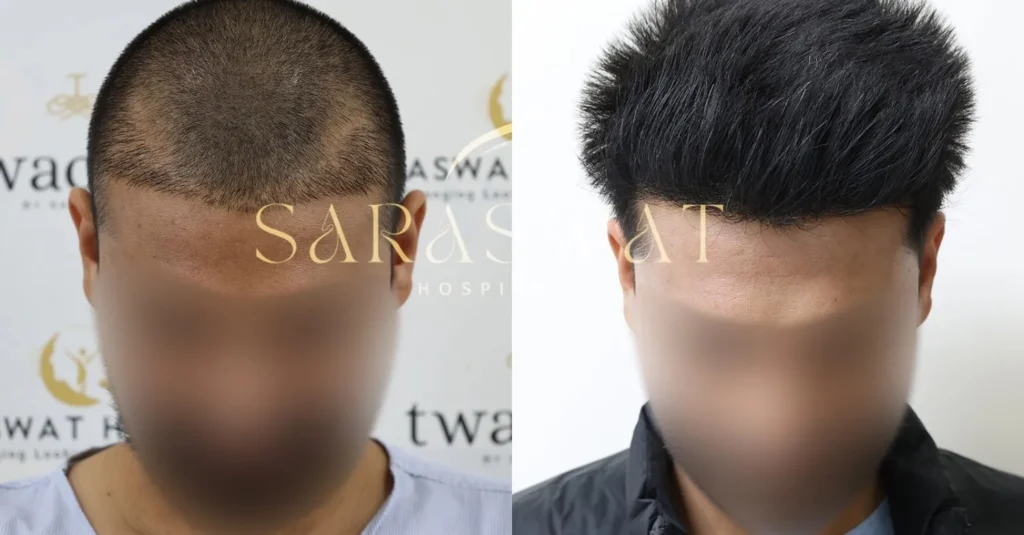
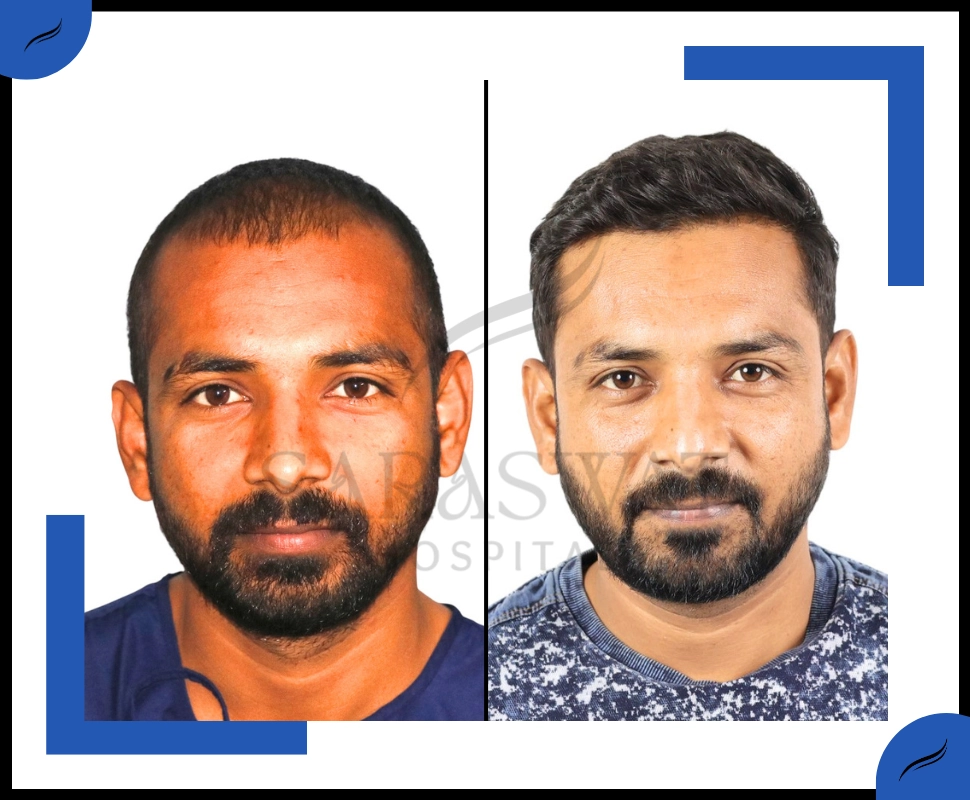
Hair transplants give you natural-looking hair growth results permanently. During the procedure, healthy hair follicles are extracted from the donor site of the scalp and implanted in the recipient site of the scalp. If everything goes as planned, the hair transplant before and after results will show a marked difference in the person’s scalp hair appearance. But how soon does this change occur? Typically, the timeline for hair growth is at least 9-12 months after the procedure before the full effects of a hair transplant can be completely seen.

Timeline for Hair Growth After a Hair Transplant Surgery?

When you undergo a hair transplant surgery in India at the Saraswat Hospital, the doctor will explain the complete process of hair growth post-transplant to the patient. Hair transplant results are not instant. It is the duty of your hair doctor to tell you the timeline for hair growth after the transplant so that you can manage your expectations accordingly. It takes time and patience before any visible results start showing.

Below, we look at the usual timeline of hair growth post a hair transplant procedure.

First 7-10 Days: Recovery

The first week after the surgery, you must focus on your physical recovery. Patients get a comprehensive list of Dos and Don’ts after transplant from the doctor, which must be followed. Some common precautions include not taking a shower for the first 48 hours after the surgery, keeping your head in an elevated position while sleeping, not wearing a hat or any tight headgear for the first 3 days, and so on. At the end of the first week after the surgery, the scabs on your scalp at the donor area will begin to fall off. After this, you can expect the donor hair to grow nicely as per its normal hair growth cycle.

6-12 Weeks: Hair Shedding

The first 6-12 weeks after the surgery are the hardest for some patients. Your hair roots have just been transplanted and are in their resting phase.

In many cases, patients often experience hair loss in the recipient area. This means, instead of new hair growing in, the existing hair also falls off. This is known as the ‘shock loss’ phase. While this might be alarming, there is nothing to panic about. It is normal and totally expected. Your hair roots have gone through a shock after the surgery, and the hair loss is a reaction to that.

Depending on the area of your hair transplant, the shock loss can last longer or shorter. For example, the crown of your head may experience shock loss for up to two months. But if you have done a hairline transplant, then shock loss lasts only for a few weeks.

3-4 Months: Slow-Growth Phase

As you touch the 3-month mark after the surgery, the first visible signs of your hair transplant before and after results start showing. Short hair starts growing from the transplanted roots in your recipient site. In the initial stages, it might look thin and curly. Also, since your follicles are in different stages of growth, the short hair growth might look patchy. Patients are not to be worried by the wiry-looking hair, as it is expected.

4-8 Months: Real Growth Phase

The real hair growth in the transplanted area of the scalp happens 4-8 months after the surgery. The thin and wiry hairs grow and become strong and healthy. The balding portions start to fill in nicely, and your scalp shows a prominent amount of hair growth. This is the stage when your appearance starts changing slowly.

8-12 Months: Hair Growth Maturity

Depending on your natural hair growth cycle, the full results of a hair transplant start showing between 9 and 12 months after the surgery. Once your transplanted hair reaches the maturity stage, it starts growing as per your normal hair growth rate. On average, it shall grow 1-2 cm every month.

The patient’s hairline is restored, and the scalp fills in nicely. The new hair grows thicker and denser, giving incredible transformation results after the transplant.

Conclusion

If you’re thinking about getting a hair transplant surgery in India, choose Saraswat Hospital in Agra for the best results. The clinic is run by Dr. Satya Saraswat and Dr. Preeti Saraswat. Both come with over 19 years of experience and are Diplomates from the American Board of Hair Restoration Surgery (ABHRS). They provide personalised hair transplant treatments based on the patient’s hair loss condition and expectations.

Follow us on:- FacebookInstagramPinterestYoutube

Dos & Don’ts of Fractional CO2 Laser Treatment

Acne is one of the most common skin problems that affects individuals irrespective of gender and age. While some people suffer from acne during puberty, many struggle with acne scars throughout their lives. Acne scars can have a very bad impact on people as they can lower their confidence and make them feel insecure. However, fortunately, people nowadays don’t have to live with their acne scars, unlike in yesteryears. With acne scar treatments such as Fractional CO2 Laser Treatment, one can bid goodbye to their acne scars. However, one should keep in mind to get such treatments from reputed cosmetic clinics such as Saraswat Hospital for the best results.

What is Fractional CO2 Laser Treatment?

Fractional CO2 laser treatment is a non-invasive skin treatment for treating acne scars. With the help of laser beams, the physicians reduce the appearance of acne scars. To explain clearly, in the affected area, doctors send laser microbeams to create tiny punctures. These microscopic holes on the skin trigger the body to produce more collagen that heals the tiny wounds completely and allows new skin to develop naturally in their place. The new skin covers the wounds, reduces the acne scarring, and adds a healthy and glowing look to the area. Since the process is non-surgical and allows the skin to heal naturally, it is one of the safest acne scar treatments available.

The effectiveness of the Fractional CO2 Laser Treatment lies in the fragmented nature of the procedure. As it is a spot treatment, the laser beams are not passed over all parts of the skin. This boosts the recovery time, and the effectiveness of the results increases.

Essential Dos & Don’ts Before and After the Procedure

A patient undergoing Fractional CO2 laser treatment must follow a few instructions before and after the procedure.

Pre-Treatment Instructions

Dos

  • Notify the doctor if you have a history of cold sores, so that you can take medications before the treatment day
  • Eat a light breakfast before the treatment
  • Make sure that someone is there to accompany you after the treatment
  • Wear comfortable clothes that are loose-fitting
  • Do make sure to bring a large hat with you when you visit

Don’ts

  • Don’t expose yourself to the sun. Keep in mind to avoid the sun one week before the treatment. Always make sure to wear a broad-spectrum sunscreen.
  • Don’t apply products that can irritate the skin, such as AHAs and retinoids, at least one week before the appointment.
  • Female patients should not wear makeup, lotion, or perfume around or on the area where they will receive the treatment. Male patients can shave in the morning, but should not apply any lotion or aftershave on or around the area on the appointment day.
  • Don’t wear contact lenses. They should be removed before the procedure. If required, patients can bring their eyeglasses.

Post-Treatment Instructions

Dos

  • For the first 2 to 3 days, apply an ice pack wrapped in a clean and soft cloth to the area that has received treatments. Apply these 1 to 5 times a day. After 3 days, apply the ice pack as and when required.
  • Gently wash the area with diluted white vinegar and water in the morning and the doctor’s prescribed soap at night or as suggested by the doctor.
  • Only apply the doctor’s prescribed ointments.
  • Use distilled water to clean the treated area.
  • Keep the treated area covered with a band-aid and change it two times a day after cleaning the area.

Don’ts

  • Avoid direct sunlight.
  • Don’t rub, pick, or scratch your eyes.
  • Avoid heavy exercise for a minimum of three days.
  • Avoid salty food.
  • Don’t apply makeup or sunscreen for at least three days.
  • Don’t apply any over-the-counter ointments to the area.
  • Don’t use sauna, swimming pools, hot tubs, or go for a bath for 1 to 2 weeks after the treatment.
  • Don’t shave the treated area.

Remember After Fractional CO2 Laser Treatment

After going through the fractional CO2 laser treatment, keep the affected area moisturised. This will help the skin to heal faster and better.

Conclusion

Fractional CO2 laser treatment effectively fights acne scars and also gives you rejuvenated, radiant skin. When you decide to go for such acne scar treatment, it is always better to know about the necessary dos and don’ts so that you can prepare yourself beforehand. However, make sure you choose a safe and respectable clinic for the best results. Book an appointment today to get the best laser treatment to keep your skin radiant and rejuvenated.

Follow us on:- FacebookInstagramPinterestYoutube

whatapp icon