
Hair loss can be a distressing experience, prompting many to explore solutions like hair transplants. Hair thinning and subsequent baldness can take a major toll on your self-confidence level and make you extremely conscious about the way you look. While you might have the urge to opt for wigs or hair recovery over-the-counter products, they provide temporary results. The good news is that with the advancement of medical technology, you get a permanent fix for your problem.
If you’re suffering from a receding hairline, hair loss, or balding in the form of Androgenetic Alopecia (genetic baldness), the best solution would be to opt for hair transplant surgery. Having said that, it is quite natural for you to have questions regarding the longevity of hair transplant results. In India, the surgery is taken care of by ABHRS (American Board of Hair Restoration Surgery) certified doctors at Saraswat Hospital who ensure you are aware of the entire process right from the first consultation.
Understanding Hair Transplants
A hair transplant is a surgical procedure where hair follicles are moved from a donor area (usually the back or sides of the scalp) to areas experiencing hair loss. The two primary techniques are Follicular Unit Transplantation (FUT) and Follicular Unit Extraction (FUE).
FUE vs. FUT
| Technique | How It Works | Scarring | Recovery Time | Long-Term Results |
|---|---|---|---|---|
| FUE (Follicular Unit Extraction) | Individual follicles were extracted one-by-one using micro-punch and implanted into recipient sites | Minimal; tiny punctate scars barely visible | 7-10 days | Permanent and natural-looking |
| FUT (Follicular Unit Transplantation) | Linear strip removed from donor area; follicles dissected and implanted | Linear scar (usually hidden by hair) | 10-14 days | Permanent and natural-looking |
Do Hair Transplant Results Last Forever?
The short answer is that yes, hair transplant results can be long-lasting, but they are not entirely “forever” in every case. Hair transplant is an outpatient surgery that extracts healthy hair grafts from the sides or back of the head (also known as the donor area) through two major techniques and then implants them in the balding zone or the recipient area. The donor area, situated at the back and sides of the head, is chosen for the extraction process due to the fact that the follicles in the zone are untouched by the hormones and thus are immune to Androgenetic Alopecia.
Now, when the follicles are extracted from that donor area, the properties of the follicles are transplanted along with them. This ensures that when the transplanted hair starts growing, it retains its permanent properties, making the results permanent. At this point, you also need to note that the newly implanted hair would grow as per your normal hair growth cycle.
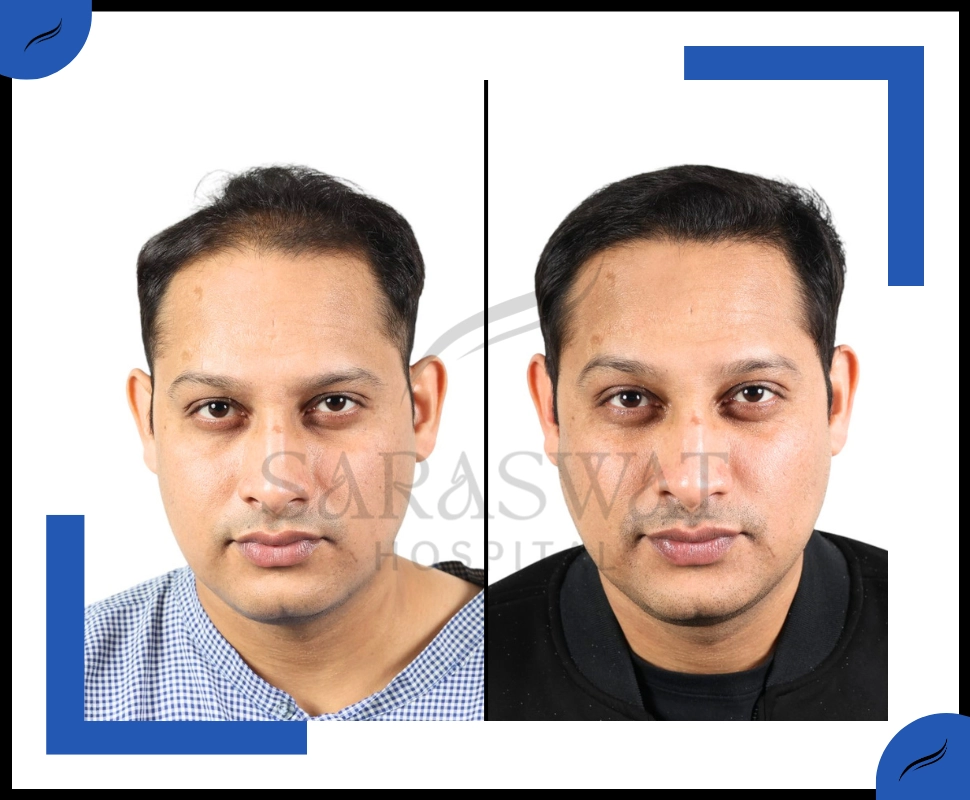
Click to check out hair transplant before-and-after results.
Timeline of Hair Transplant Permanence
| Time Period | What Happens | What to Expect |
|---|---|---|
| Immediately after surgery | Hair growth starts, but it is still patchy and thin | This is temporary and expected; follicles remain under the skin |
| 1-3 months | Hair shedding phase; grafts settling into scalp | Don’t panic—follicles are healing beneath the surface |
| 4-6 months | Initial regrowth begins; hair becomes visible | Hair growth starts but still patchy and thin |
| 6-9 months | Continued growth and thickening; noticeable improvement | Hair becomes fuller and more natural-looking |
| 9-12 months | Peak results achieved; full density visible | 90-95% of the final result is visible |
| 1-2 years | Final stabilization; results fully mature | Permanent, natural-looking density established |
| 10+ years | Results remain largely unchanged; natural aging occurs | Hair may turn gray or white; density maintained |
| 20-30+ years | Long-term permanence proven; minimal changes | Hair grows for lifetime like native hair |
Would You Need Another Hair Transplant Surgery?
Since one session of hair transplant surgery from the finest experts in the field would ensure you get permanent results, you would not need another session. However, undergoing the surgery, especially when you’re suffering from genetic hair loss, doesn’t mean that the area that hasn’t been touched during the first surgery won’t show symptoms. That is when you might have to undergo another surgery in the future, in a different part of the scalp.
Factors That Determine How Long Hair Transplants Last
Not all hair transplants have identical longevity. Several critical factors influence how long your results will last:
| Factor | Impact on Longevity | What You Can Control |
|---|---|---|
| Surgeon Expertise | High impact—skilled surgeons harvest and implant grafts correctly, minimizing damage | Choose ABHRS/ISHRS-certified surgeon |
| Graft Quality | High impact—quality of harvested follicles determines viability | Choose an ABHRS/ISHRS-certified surgeon |
| Surgical Technique | Medium-high impact—proper angle and direction of implanted grafts affect results | Verify surgeon’s experience with FUE/FUT |
| Age at Transplant | Medium impact—younger patients with unstable patterns may need revisions | Wait until pattern stabilizes |
| Genetic Severity | Medium impact—more aggressive family history may require multiple procedures | Discuss future hair loss planning with surgeon |
| Post-Op Care & Aftercare | Medium impact—proper healing prevents infection and graft damage | Follow all post-op instructions carefully |
| Medication Adherence | Medium impact—finasteride/minoxidil preserve surrounding hair and overall density | Take medications as prescribed |
| Lifestyle Factors | Low-medium impact—smoking, poor nutrition, stress affect hair health | Maintain healthy lifestyle |
| Scalp Health | Low-medium impact—infections or poor healing reduce graft survival | Keep scalp clean and healthy |
Why Choose Saraswat Hospital for Hair Transplant?
Saraswat Hospital is one of the most sought-after places for hair transplants. With a team of experts certified by the American Board of Hair Restoration Surgery (ABHRS) and over 20+ years of experience at the helm, the doctors at the hospital ensure customized services based on the patient’s requirements and needs.
Conclusion
In most cases, the transplanted hair is permanent, offering a long-term solution for hair loss. Hair transplant surgery can be defined as a path-breaking technique used by ABHRS-certified, experienced doctors to treat Androgenetic Alopecia, which leaves excellent results without any side effects. If you want to know more about the subject, book an online consultation with the experts.
FAQs
Q1: Does a hair transplant last permanently?
Yes. Hair transplants are permanent. Transplanted follicles retain their genetic resistance to hair loss and continue growing for life. Results peak at 9-12 months and remain stable for decades. Surrounding native hair requires protection with finasteride and minoxidil.
Q2: What happens 20 years after a hair transplant?
Natural hair loss may continue. But hair transplant longevity can last for 20 years after the surgery. The transplanted hair usually grows back and is very healthy. But it needs constant care.
Q3: Is a hair transplant 100% safe?
Hair transplants are generally very safe with experienced surgeons. Infection, scarring, or permanent side effects are rare. Temporary swelling, shedding, and itching are normal. Choose board-certified surgeons (ABHRS/ISHRS) to minimize complications and ensure optimal safety.
Q4: How many hair transplants go wrong?
Roughly 1–2% of procedures have significant complications. Poor surgeon skill, unrealistic expectations, or improper aftercare are common causes. Choosing a certified, experienced clinic greatly reduces the risk.
Q5: Can a hair transplant be done twice?
Yes, multiple transplants are possible. 25%-30% of patients choose second procedures for additional coverage, to refine a previous hairline, or for fuller results. This is a choice, not a failure.
Follow us on:- Facebook, Instagram, Pinterest, YouTube
This article is for informational purposes only and does not constitute medical advice. Plastic, cosmetic, and laser treatments — including AI-assisted previews such as those generated by the Peek AI™ app — carry risks and results vary by individual. Always consult a licensed medical professional before undergoing any procedure.