
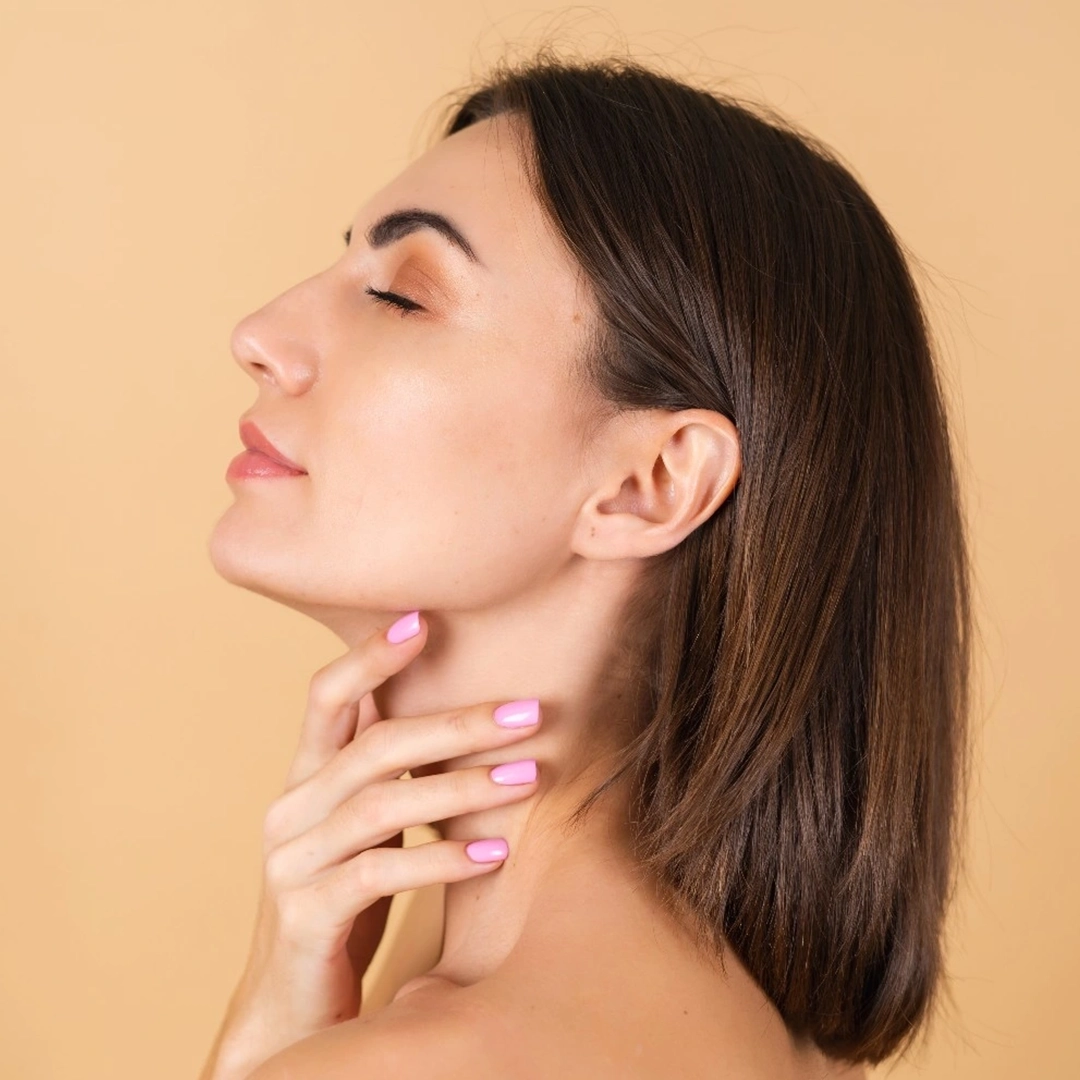
Neck Lift Surgery in India
A Neck lift surgery is a cosmetic procedure specialized in reducing wrinkles, contouring the jawline, or tightening sagging skin to give a more youthful appearance. This procedure gives long-lasting results while addressing concerns such as excess fat, loose skin, and visible muscle bands in the neck area.
What is Neck Lift Surgery?
A Cervical Rhytidectomy, commonly known as a Neck Lift, is a surgical procedure designed to enhance the appearance of the neck and jawline by addressing visible signs of aging, such as:
- Excess fat and skin relaxation within the lower face create jowls.
- Excess fatty deposits under the chin.
- Loose neck skin.
- Muscle banding in the neck, which created abnormal contours.
Many individuals neglect the appearance of their neck; however, the neck is one of the first places where signs of age start to show. Additionally, sun damage or extreme weight loss may contribute to the skin on a person’s neck looking loose, sagging, and aging. While we go to great measures to preserve or improve the appearance of our facial skin, it is equally important to tend to the neck. If your neck skin appears to have lost its natural elasticity and sags, or if there is excess skin or fat that you wish to remove, the best option is neck lift surgery.
The loss of young contours in the face and neck can be caused by various factors, including heredity, gravity, environmental conditions, and stress.
Some people feel they are not ready for a full facelift because the upper face is still pleasing. However, several patients can note excess wrinkling of the neck skin, a “turkey wattle” or chin, and jowl lines.
When the neck space doesn’t match the higher facial appearance, a neck lift surgery may be a good solution. Rejuvenate your neck with expert Dr. Satya Saraswat. Learn about this procedure to tighten loose skin and reduce signs of aging for a more youthful appearance.
What are the Benefits of Neck Lift Surgery?
The neck lift surgery benefits in various ways. Here are some of the benefits:
- Removes excess fat
- Reduces wrinkles
- Helps boost self-confidence
- Enhances skin elasticity
- Quick recovery procedure
- Provides Long-term rejuvenation
4 Best Methods of Surgery
1. Surgical Method:
Rejuvenation procedures that may be performed in conjunction with a neck lift are: a Brow Lift, to correct a sagging or deeply furrowed brow, fat transfer, to add fullness to the lips and cheeks, and reduce the appearance of wrinkles, or eyelid surgery, to rejuvenate aging eyes. Here is the information about the treatment:

Anesthesia
Medications are administered for your comfort during the surgical procedure. The choices comprise intravenous sedation and general anesthesia. Your doctor will recommend the best alternative for you.
The Incision
Depending on the degree of modification you’d wish to see, your neck lift choices include a traditional neck lift incision or a limited incision neck lift. A traditional neck lift incision often begins in the hairline at the level of the burnside, continues down and around the ear, and ends in the posterior hair. Fat could also be graven or decentralized from the jowls and neck. The tissue underlying the neck skin is repositioned, and normally the facial muscle is tightened. Skin is redraped over the elated contours and excess skin is trimmed away. A separate incision below the chin is usually necessary for liposuction of this area and for repair of the muscle. Sutures or skin adhesives shut the incisions.

Closing the Incisions
Incision lines are closed with sutures and perhaps skin glue. After a few days, the sutures may dissolve or have to be removed. Once cured, the incision lines from a neck lift are usually well hidden within the hairline and in the natural contours of the ear.

See the Results
The visible improvement of a neck lift appears as swelling and bruising subside. Your final result should not only restore a younger and rested appearance but also help you feel more confident about yourself.
2. Treatment of Platysmal Bands with Botulinum Toxin:
Within the lower third of the face, the mentalis and platysma are easily treated with Botulinum toxins. Even though the platysma is not technically part of the lower third of the face, the muscle functions as a depressor of this region, and its treatment greatly impacts the overall aesthetic of the entire face. Newer modalities of radiofrequency, fractional resurfacing, and laser can change the texture and color of the neck. Combining these with injections of botulinum toxin offers the opportunity to dramatically improve an area that has traditionally been recalcitrant to rejuvenation.
As with other Botulinum toxin treatments, proper patient selection is important when injecting the neck.
Details of the Treatment of the Platysmal Area with Botulinum Toxins:
- They describe the horizontal necklines that may be seen in younger patients with thick necks.
- Discrete bands
The platysma, as it invests the inferior sternum, also gives rise to wrinkles of the decollete. This area is one of the most frequently cited for cosmetic enhancement. Botulinum toxins have been successfully used to smooth this area.
Radiofrequency has been utilized for cosmetic enhancement of the neck with varying degrees of success. Recent advances in the settings used for this treatment and improvements in the tips have enhanced the ability of these devices to treat the neck successfully. When used in conjunction with Botulinum toxins, they may help to create a smoother contour of the neck.
Liposuction is a minimally invasive technique to reduce the fat in the neck. Following this procedure, the muscular bands may become more prominent. Botulinum toxin may be injected in this scenario to minimize the appearance of these bands, which may have been camouflaged by the adipose. Many patients undergoing liposuction of the neck will likely want to have this area treated with Botulinum toxins for optimal outcomes.
3. Treatment of Neck Laxity by Radiofrequency and Infrared:
Increased laxity of the neck area can be attributed to the progressive prominence of platysmal bands, bony loss in the chin, loss of mandibular bony mass in areas along the mandible, loss of fat, and loosening of the intervening tissues. Photo damage can be associated with progressive changes in solar elastosis, leading to rhytides, laxity, and poor texture. Major limiting factors in the treatment of the neck area are related to the anterior location of the thyroid and parathyroid glands.
Although the surgery is effective to a large extent, special care needs to be taken with respect to the lower neck region, as scarring is higher in comparison to facial skin, and such a situation needs to be treated with care. Refinements need to be incorporated into the techniques employed to perform the surgery.
In most cases, at least three sessions are necessary to achieve noticeable results from a cervical rhytidectomy, though some patients choose to undergo up to five treatments.
The level of patient satisfaction has varied depending on the technology and protocol used, between 30 and 70%.
Method of Device or Treatment Application
Monopolar Radiofrequency
Dab with alcohol, then remove the marking paper. Commence initial treatment level at 362.0 for the 3.0 cm2 ThermaTip TC. Apply coupling fluid and deliver the application of energy to assess pain tolerance. Titrate the setting based on the patient’s heat sensation feedback. Current recommendations are to perform several (4-6) passes at lower settings within each treatment area before treating the next area.
Postoperative Care
Skin tightening technologies do not require postoperative care. Postoperative erythema is good moisturization only expected and typically dissipates over minutes to hours.
Minimally invasive Radiofrequency can also be used.
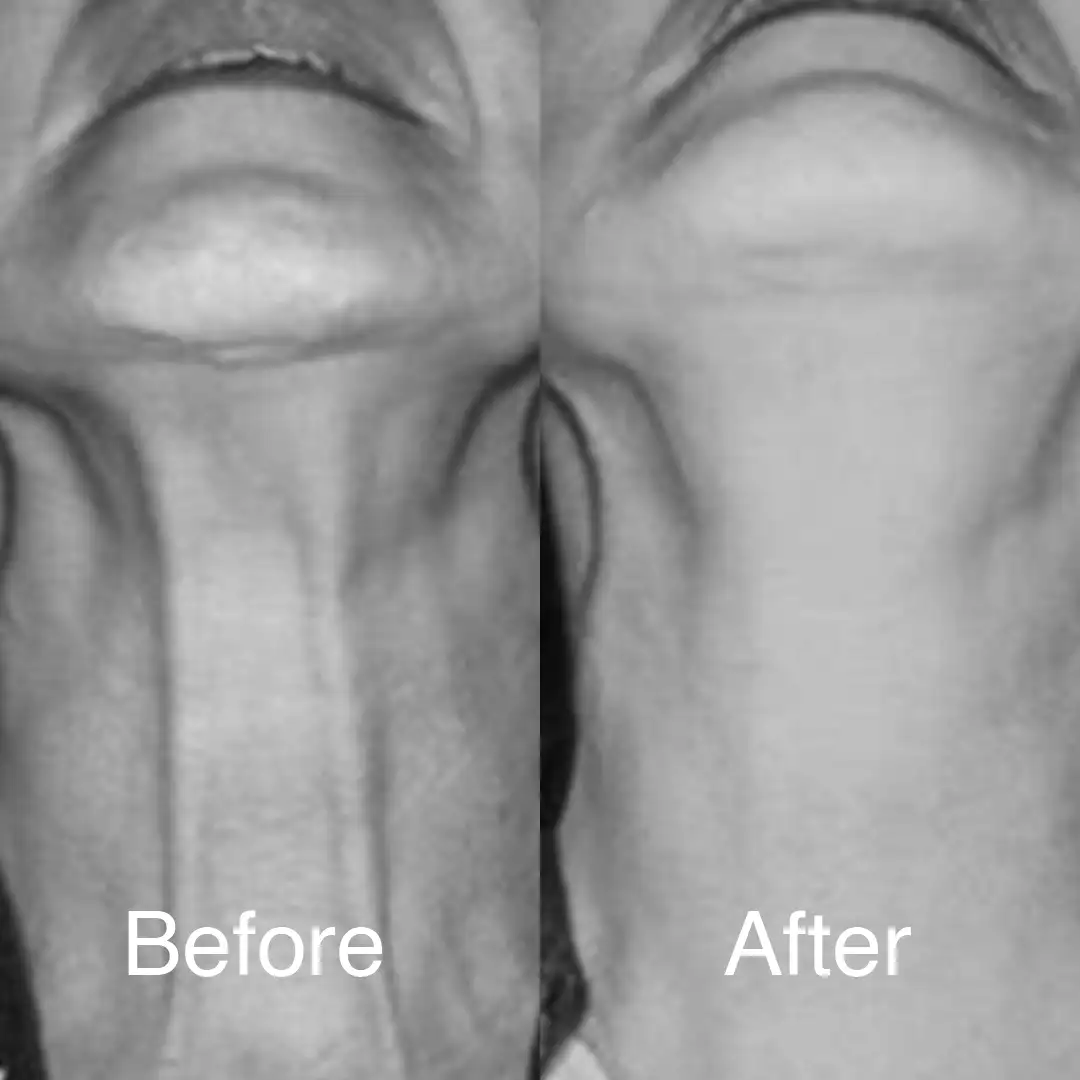
4. Treatment Of Neck Laxity with Therapeutic Ultrasound:
Ultrasound represents sound waves above the capacity for human hearing (16 kHz). Ultrasound may also be applied by a variety of means including curved transducers or phased arrays that enable the focusing of the waves. This method of application is known as High-Intensity Focused Ultrasound (HIFU). Depending on how these waves are focused, small, high-energy foci can be created at variable depths within tissue that result in coagulative necrosis and cavitation. This technique was first described in the mid-20th century and has subsequently been used clinically.
HIFU: A Non-Invasive Approach to Skin Tightening
As high-energy sound waves propagate through tissue a certain amount is absorbed by the tissue. This mechanical energy is converted into thermal energy causing selective tissue necrosis in a well-defined area. This depth depends on the size of the transducer, the frequency of the waves, and their angle of incidence. The ability to tailor the depth at which this coagulation occurs establishes the basis for HIFU as a potential means of noninvasive skin tightening. HIFU has been shown to elevate the brow and cause clinically appreciable results for facial rejuvenation.
Generally, higher frequencies are used for more superficial effects compared to lower frequencies which may penetrate tissue more deeply. The Ulthera System and the Hironic can administer ultrasound at 7 MHz on the neck to target the mid to deep reticular layer of the dermis and sub-dermis, sparing the overlying papillary dermis and epidermis. This device is specifically designed for the treatment of the dermis in comparison to previously available HIFU devices, which facilitate fat reduction. Based on the biophysical properties of the skin tissue, rapid heating of this focal zone to greater than 60 degrees C. This results in rapid denaturation of collagen, producing controlled regions of coagulative necrosis with an approximative volume of 1 mm3.
The ensuing wound-healing process will promote new collagen production.
Patient History and Clinical Examination
Candidates for the therapeutic ultrasound of the neck are patients who do not have active systemic or local infection, including labial HSV or folliculitis. Additionally, patients should not be on anticoagulants and should not taken isotretinoin within the past 6 months. The patient’s expectations must be addressed. The ideal candidates for this procedure are those with mild jowling, neck, sagging, and rhytides. Patients with severe neck laxity should be counseled that the desired effect may be beyond the capacity of this modality and offered full disclosure. Patients with obvious submental fat pads should be considered for liposuction before undergoing ultrasound therapy.
Treatment Technique
Because the zones of thermal injury are delivered to the mid-to-deep reticular dermis, patients are usually treated without any topical anesthetic before performing the procedure. Oral premedication with pain medications or benzodiazepines is seldom necessary.
The patient should be in a supine position to enable access to the neck and submental regions. Cool ultrasound gel is applied onto the transducer handpiece. Then the transducer is placed firmly on the targeted skin surface and pressed firmly to the skin surface.
Firing is then initiated. Erythema if observed compared to the deeper transducers resolves in 20-40 min after the procedure. The handpiece is moved approximately 2-3 mm up the neck before firing it again. This is repeated until the entire neck and submental areas have been treated. Typically two passes on either side of the trachea are sufficient. The submental area can be treated with one pass over the center of the submental area or bilateral passes that merge as we move the handpiece anteriorly. If the external jugular vein is appreciated this area is avoided. It is important to document how many lines were applied to each side of the neck. This ultrasound device therapy can be repeated every 30-45 days for up to three treatments. To obtain optimal results from subsequent treatments, patients may be recommended to wait at least 90 days for new collagen to be formed.
Postoperative Care
Practice gentle skin care. Patients may follow -up for additional treatments if they are desired. As with other non-invasive devices that cause collagen remodeling the patient should be counseled that changes to the collagen and thus, clinical improvements in neck laxity may take up to 3 months to observe. These improvements may persist for up to 10 months.
The early experience looks promising for non-surgical neck rejuvenation. The treatment is well-tolerated with mild intraprocedural pain, and transient redness and swelling. Ultrasound can penetrate deeper into the skin without significantly injuring superficial skin layers. The safe and effective treatment settings have been defined.
Certifications & Partnerships









The Saraswat Hospital Credentials

17000 +
Happy Clients

20 +
Years of Experience

98%
Hair Growth Rate

1500 +
Cases of Grade 5/6

4.9
Google Ratings
EXCELLENTTrustindex verifies that the original source of the review is Google. The results look natural and I am very happy with the outcome.Posted onTrustindex verifies that the original source of the review is Google. Very professional doctor consultation. The doctor explained everything clearly and suggested the right treatment.Posted onTrustindex verifies that the original source of the review is Google. Best decision choosing doctor for hair treatment. Honest advice and noticeable improvement in a short time. Truly cares about patients and their results.Posted onTrustindex verifies that the original source of the review is Google. Doctor is excellent for prp treatment. Very knowledgeable, professional, and explains everything clearly. The procedure was smooth and I'm already seeing great results.Posted onTrustindex verifies that the original source of the review is Google. Excellent service. The consultantion was thorough and all my questions were answered clearly.Posted onTrustindex verifies that the original source of the review is Google. Great consultation experience. Very professional, clear explanations and I felt comfortable the entire time.Posted onTrustindex verifies that the original source of the review is Google. Highly satisfied with the consultation. The doctor was patient, explained everything clearly and suggested practice solution. Truly worth it.Posted onTrustindex verifies that the original source of the review is Google. Great clinic, clean environment, and skilled doctors. My confidence is back thanks to this amazing team.Posted onTrustindex verifies that the original source of the review is Google. So happy with my hair transplant results. Staff was friendly and the whole process was smooth and comfortable.Verified by TrustindexTrustindex verified badge is the Universal Symbol of Trust. Only the greatest companies can get the verified badge who has a review score above 4.5, based on customer reviews over the past 12 months. Read more