
Hair transplant procedures are becoming quite common to solve the problem of hair loss. However, many folks ask the question about the chances of failure of a hair transplant. This is generally a pretty reliable treatment that will not work as well in some cases. In this blog, we review reasons for the failure of a hair transplant, prevention, and what to expect. Knowing these elements will be important for anyone looking to have this procedure done.
Why Do Hair Transplants Fail?
Hair transplant surgery maintains a clinical success rate of 90%+ in the overall world (1). However, at Saraswat Hospital, the success rate falls between 95% to 98%. Failure is defined clinically as the inability of transplanted follicles to survive the transition or the achievement of a density lower than the patient’s physiological potential. Results are typically categorized as failed if there is no visible growth 12 to 15 months post-procedure. Understanding these benchmarks requires a deep look into the biological environment of the scalp.
What Causes Hair Transplant Graft Failure?
Graft Desiccation: The drying out of follicular units is a primary biological cause of transplant failure during the out-of-body phase.
Environmental Sensitivity: Follicles are highly sensitive to temperature and hydration; they will die before implantation if not stored in a specialized tissue solution at low temperatures.
Mechanical Trauma: Improper tweezer handling can cause physical trauma, potentially crushing the delicate bulb of the follicle.
Technical Variable: These biological risks identify the choice of surgical technique as a critical factor in overall graft survival.
How Does Surgical Technique Affect Success?
FUE procedures currently account for more than 75% of all global hair restorations (2). High transection rates—where the follicle is accidentally cut during extraction—directly reduce the available donor supply and lead to sparse results. Advanced methods utilize low-torque machines to minimize this mechanical damage. This precision ensures that the spotting of failure is a rarity rather than a rule.
Recognizing the Signs
It is important to note that before undergoing hair transplantation surgery, one should keep in mind that the results will not show up on the same day. In fact, within several months, new hair grows. However, if even after one year, there is no noticeable improvement, this might hint at the failure of hair transplantation surgery. The following are some of its symptoms:
- Patchy Hair Growth: The most common symptom is patchy or thin hair growth.
- Poor Design of Hairline: A hair transplant usually fails because the hairline comes out unnatural.
- Scarring or Infection: Scarring and infection could be possible just because of poor surgical technique and poor post-surgical care.
How to Ensure High Graft Survival?
Stopping nicotine use at least four weeks before surgery is mandatory to prevent vasoconstriction that starves new grafts of oxygen. Post-operative compliance involves strictly avoiding strenuous activity for 10–14 days to prevent graft dislodgement. Surgeons at Saraswat Hospital utilize Trichoscopy analysis to assess donor density before the first incision is made. This clinical preparation is backed by global data regarding patient outcomes.
Advanced Techniques
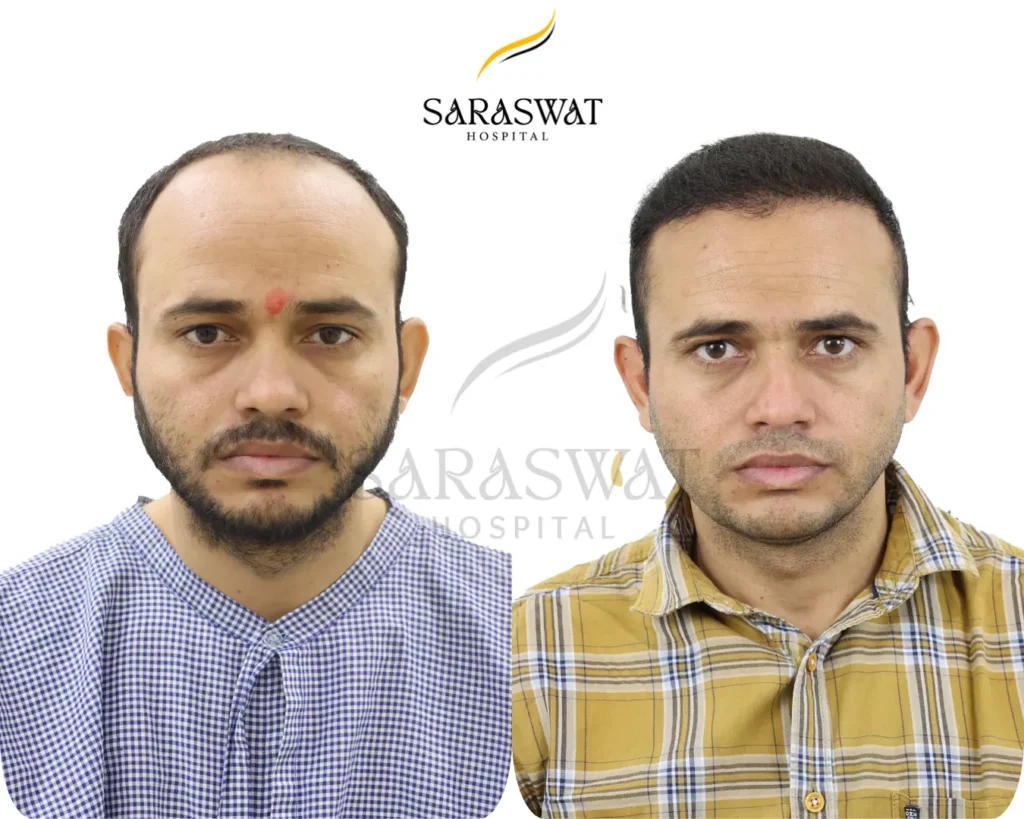
The use of advanced techniques such as Follicular Unit Extraction (FUE) with a low torque, low rpm machine, thus offering more chances of graft survival, therefore, has better results. This reduces the failure rate. The graft counter on the FUE machine serves as great transparency regarding the number of grafts harvested.
What Does ISHRS Data Say About Failure?
The 2025 ISHRS Practice Census reveals that repair cases for black market transplants have increased to 10% of all global procedures (3). These failures are predominantly caused by unlicensed technicians performing surgery without physician oversight. Specialized doctors are now seeing an influx of patients requiring corrective surgery due to these illegal clinics. When surgery is not an option for repair, patients must look toward medical alternatives.
What are Non-Surgical Hair Restoration Options?
- Primary Defense: FDA-approved medical treatments like Minoxidil and Finasteride remain the standard for slowing native hair loss.
- Adjuvant Treatments: Platelet-Rich Plasma (PRP) and low-level laser therapy (LLLT) are increasingly utilized to boost graft survival rates following surgical intervention.
- Clinical Safety Net: These non-invasive options provide a critical fallback for patients presenting with insufficient donor density.
- Prognosis: The integration of these therapies contributes significantly to the overall trajectory of long-term procedural success.
What is the Long-term Success Rate?
Two-thirds of all patients achieve their desired aesthetic result after a single, well-executed session. Success is a permanent outcome because the transplanted follicles are harvested from the safe donor zone, which is genetically resistant to DHT. While native hair may continue to thin, the transplanted hair should remain for the duration of the patient’s life. Maintaining this result requires a partnership between the patient and a qualified clinical team.
Real-Life Examples
There are lots of stories about patients who had their hair transplant fail. Most of them belong to people who have not done enough research on the clinic or surgeon they decided to go for, which led to disappointing results in the end.
Long-Term Maintenance and Follow-Up
Hair transplantation results are long-term but need follow-up and care. Follow-up with the surgeon is necessary after the initial healing is complete to evaluate the results and make modifications if necessary. This will also give the surgeon a better view of the healthy growth of the transplanted hair follicles and maintenance of good hair growth.
Ongoing care of the scalp, with follow-through as needed for any treatment or medication prescribed by a physician, can help to ensure that the transplant results last as long as possible. Failure to do so can compromise the outcome of the procedure as well and may result in failure of the Hair Transplantation.
Psychological Impact and Support
Many people identify themselves with hair; hence, failure of the transplant can emotionally deplete or lessen one’s self-esteem. Counseling or support groups enable dealing with such negative feelings and staying positive. Let’s not forget that hair restoration is a journey, and setbacks along the way are possible.
Conclusion
Yes, a hair transplant can fail, but these chances can be further minimized by several aspects: selection of a good and skillful surgeon, following the instructions for post-operative care, and having realistic expectations. The consequences of a hair transplant may thus fail; with knowledge about what contributes to failure, you may make informed decisions and probably try to avoid hair transplant failure. Book an online consultation with our team and find out how many grafts you will need to get your desired result.
Sources:
(1) Hair transplant surgery maintains a clinical success rate of 90%+ in the overall world. (Review of Factors Affecting the Growth and Survival of Follicular Grafts, Journal of Cutaneous and Aesthetic Surgery)
(2) FUE procedures currently account for more than 75% of all global hair restorations. (ISHRS 2025 Practice Census)
(3) The 2025 ISHRS Practice Census reveals that repair cases for black market transplants have increased to 10% of all global procedures. (ISHRS 2025 Practice Census)
FAQs
1. What are the common signs that a hair transplant has failed?
Signs would include bad distribution of hair growth, poor hairline design, visible scarring, and no improvement at all after one year.
2. Can a failed hair transplant be redone?
Yes, most of the time, the second procedure can fix the problems from the first; however, this is based on the recipient’s available donor hair and the reasons behind the failure.
3. How can I prevent a hair transplant failure?
You need to select a qualified surgeon, follow all the post-operative instructions, and also take care of any pre-existing medical conditions.
4. Is hair transplant failure a common occurrence?
Hair transplant failure is not a very common occurrence if performed by a qualified and experienced surgeon, but it can happen.
5. Are there other alternatives to a hair transplant?
There are some treatments available for hair loss, such as medications, laser treatment, exosomes, GFC, and PRP treatment for the existing hair on the scalp. For the balding areas, the only solution is a hair transplant.
Follow us on:- Facebook, Instagram, Pinterest, YouTube
Read More:- Do Hair Transplant Results Last Forever?
This article is for informational purposes only and does not constitute medical advice. Plastic, cosmetic, and laser treatments — including AI-assisted previews such as those generated by the Peek AI™ app — carry risks and results vary by individual. Always consult a licensed medical professional before undergoing any procedure.